This post contains affiliate links. As an Amazon Associate I earn from qualifying purchases.
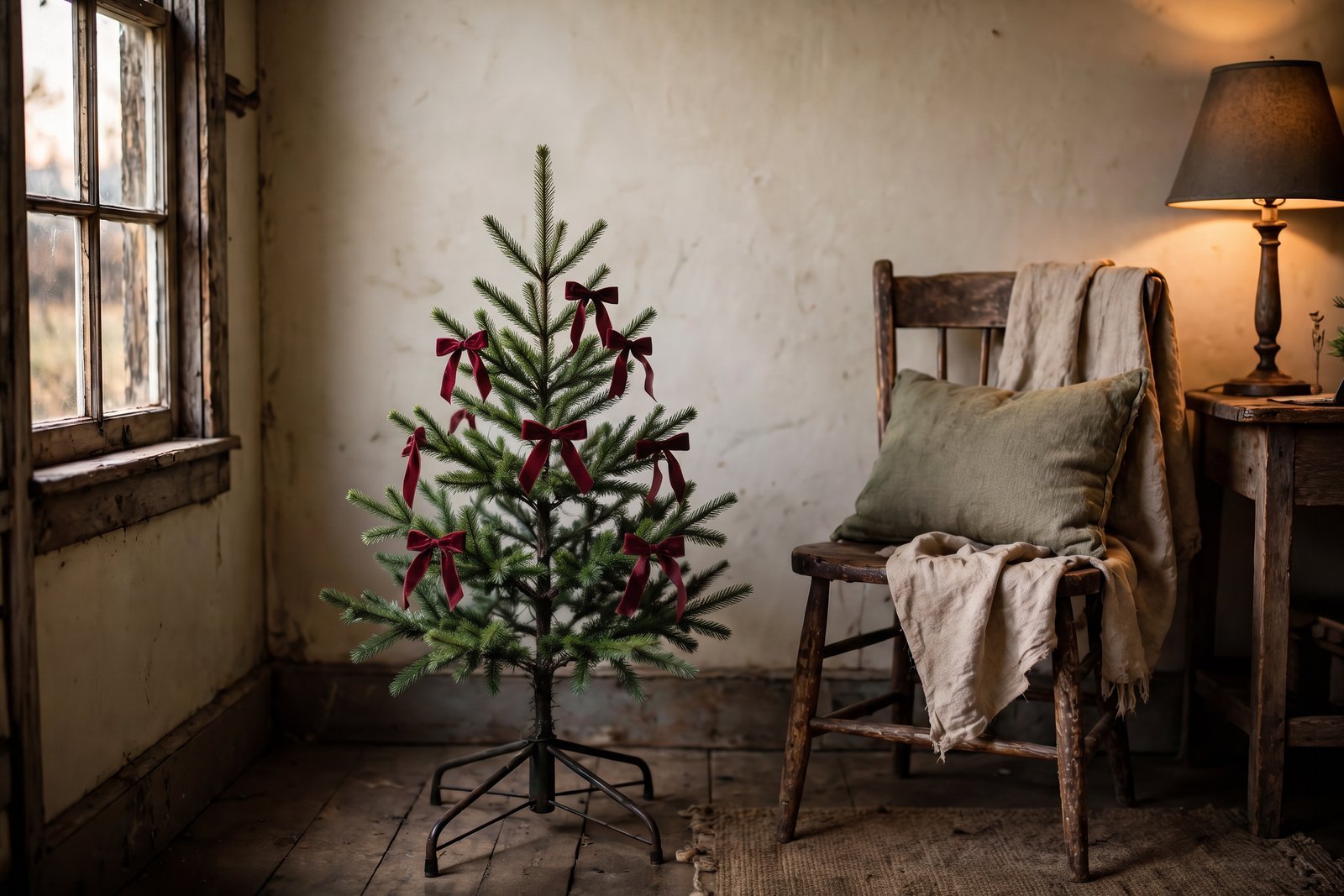
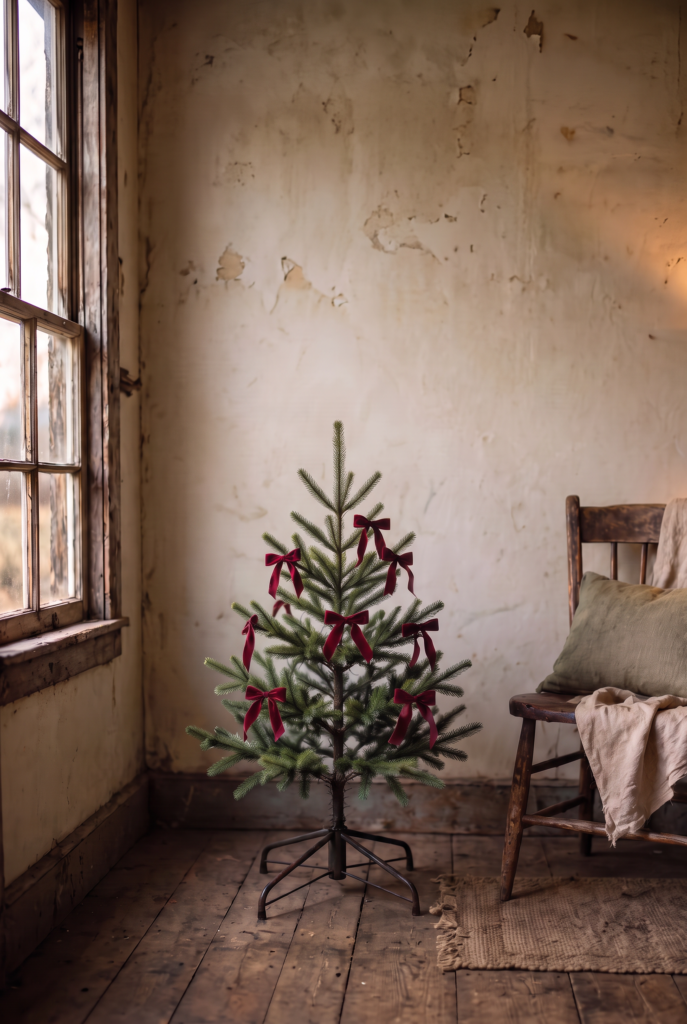
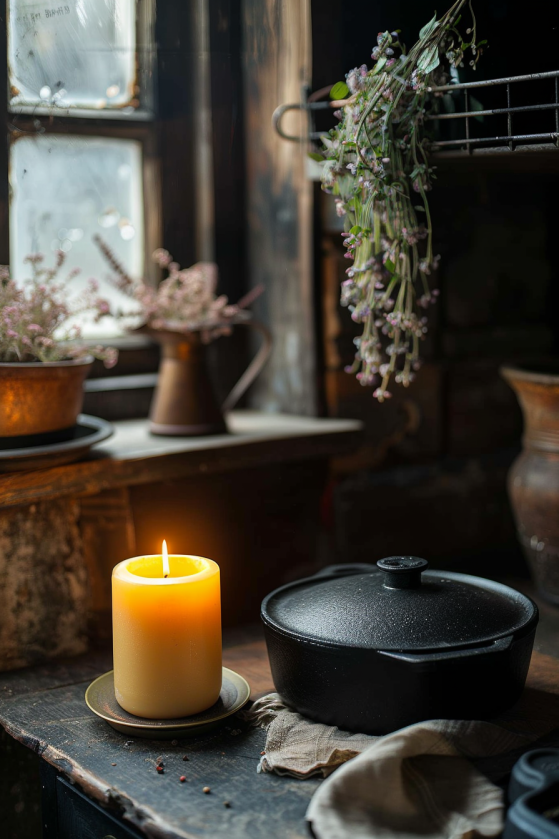
A dark cottage Christmas in a small home does not need a floor-to-ceiling tree. It can live in one quiet corner: a table, a chest, or the edge of the hearth, dressed with a compact green tree and a few soft burgundy bows.
The images here are AI-generated decorating inspiration, not product photography, and they are not pictures of the exact items linked below.
A 3-foot unlit mini tree for a tight corner
This look starts with a small, unlit tree you can place and then decorate yourself. The JTSIOV 3-foot green mini tree is an unlit artificial pine-and-fir style tree in emerald green, with PVC tips, a metal trunk, and a four-legged foldable stand. The listed footprint is about 12 inches by 12 inches, and the height is 3 feet, so it can sit on a tabletop or a low chest without taking over the room.
Because it arrives unlit, the glow can come from the room — a nearby lamp, a candle on a safe surface, or lights you add later — and the bows stay the main accent. Fluff the branches after you set the stand, then keep the styling close and simple.
Soft burgundy velvet bows, not stiff wired loops
The second piece is a deep burgundy ribbon meant for soft, hand-tied bows. The Ribbli 1-inch burgundy velvet ribbon, in the Burgundy and 1-inch options, is a 10-yard continuous spool of single-faced polyester velvet. One side is plush; the reverse is flat. It is not wired, so the bows drape instead of standing in crisp loops — a quieter finish for a small cottage tree.
Decorating inspiration, AI-generated. Not a photograph of the ribbon linked in the post.
Cut modest lengths, tie them where the eye already rests — near the tip, a mid-branch, or around the base — and leave the rest of the tree a little bare. Ten yards is enough for several bows without crowding a 3-foot silhouette.
What’s Selling on Pinterest Right Now
A compact holiday corner you can actually buy and style: a mini tree and one rich ribbon, not a whole-room overhaul.
Keep the scene small, then shop the two pieces
This is a two-product scene, not a full-home Christmas guide, and the images are decorating inspiration rather than a promise that any room will match them exactly. When you are ready to gather the pieces, start with the 3-foot unlit JTSIOV mini tree and the Ribbli burgundy 1-inch velvet ribbon.
This post contains affiliate links. If you buy through one of them, I may earn a commission at no extra cost to you. (paid link) As an Amazon Associate I earn from qualifying purchases.
There’s a moment when you step in from the cold — coat damp, boots heavy with mud, the outside world still clinging to you — and the house reaches out and holds you.
In the best mudrooms, it happens before you’ve even taken off your shoes.
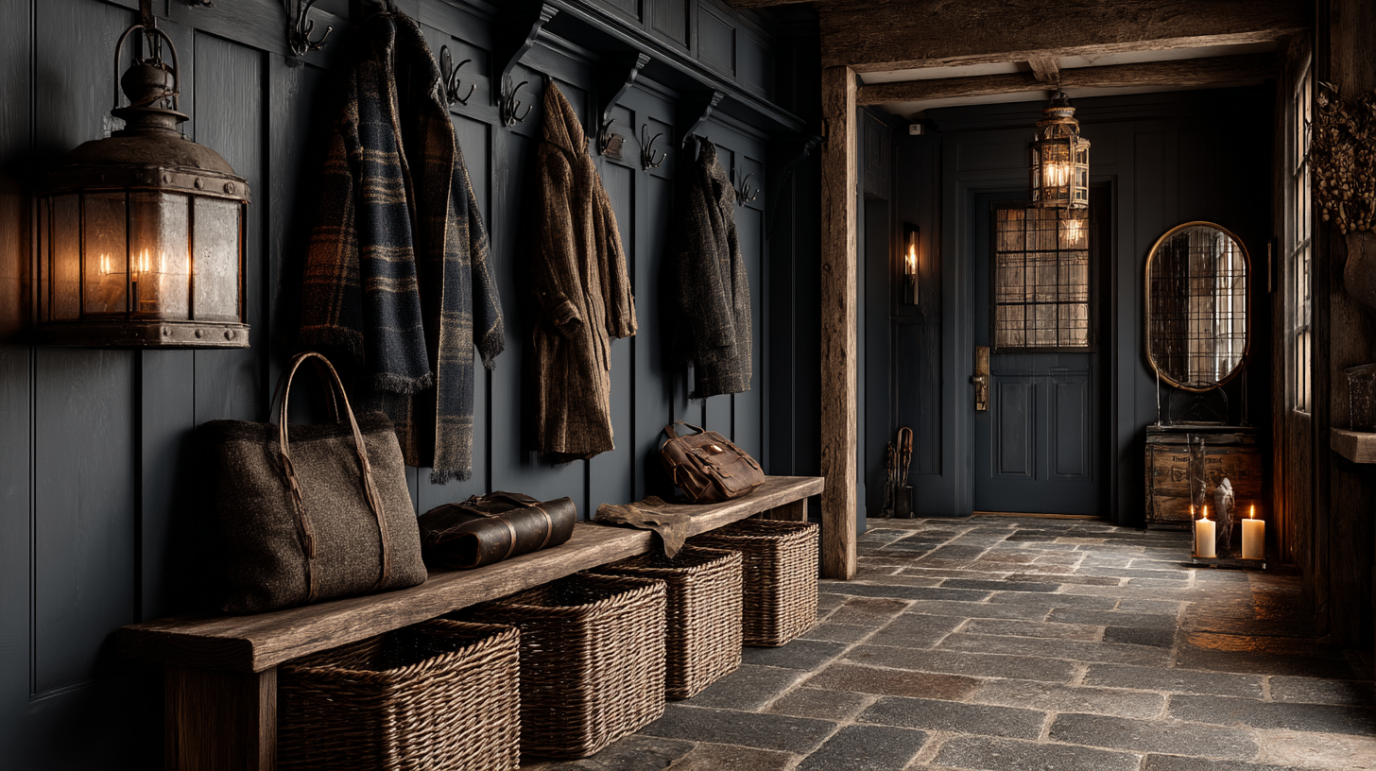
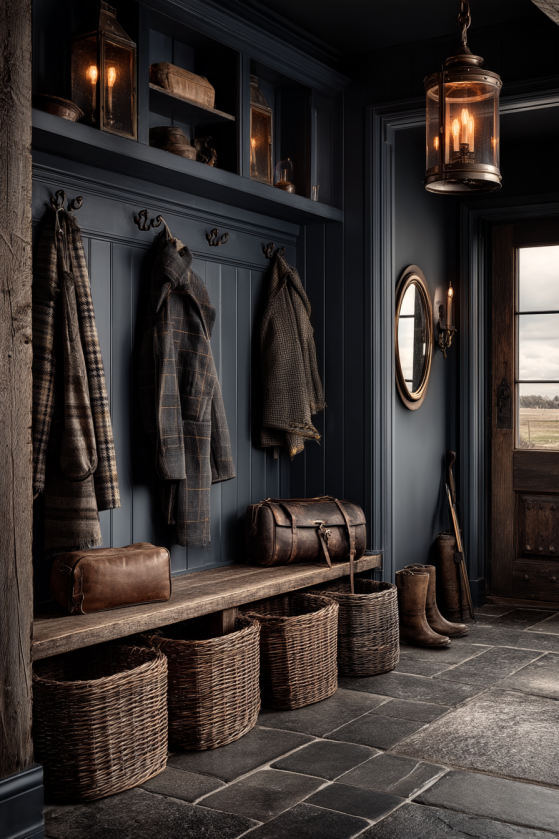
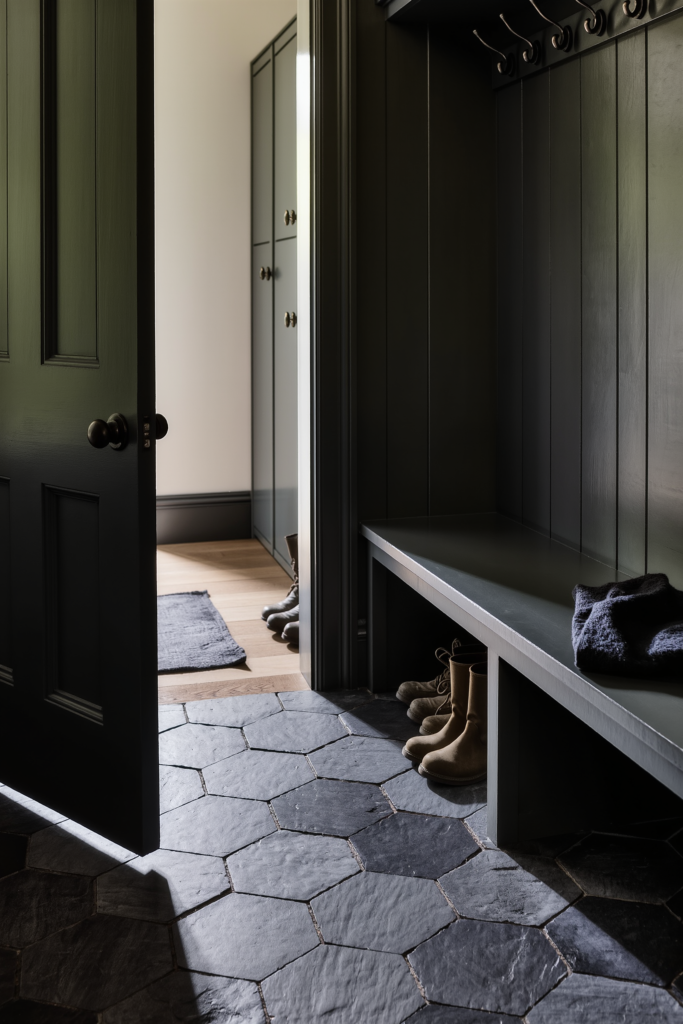
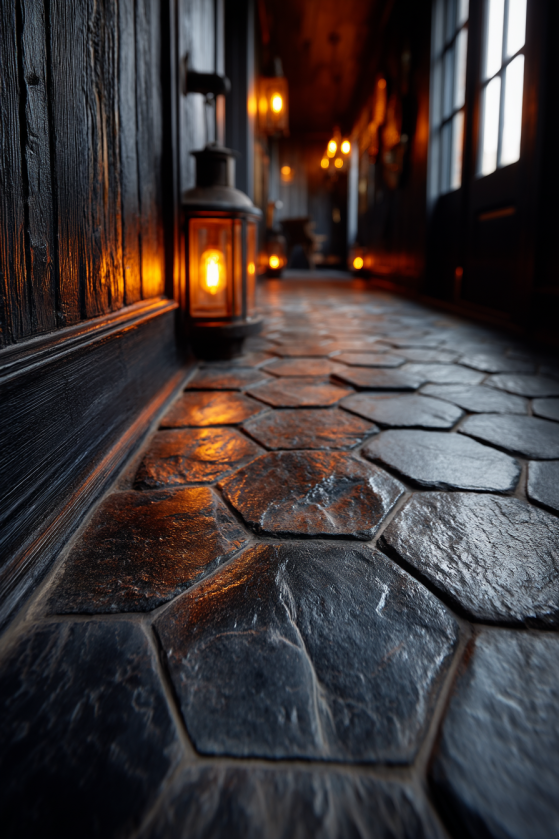
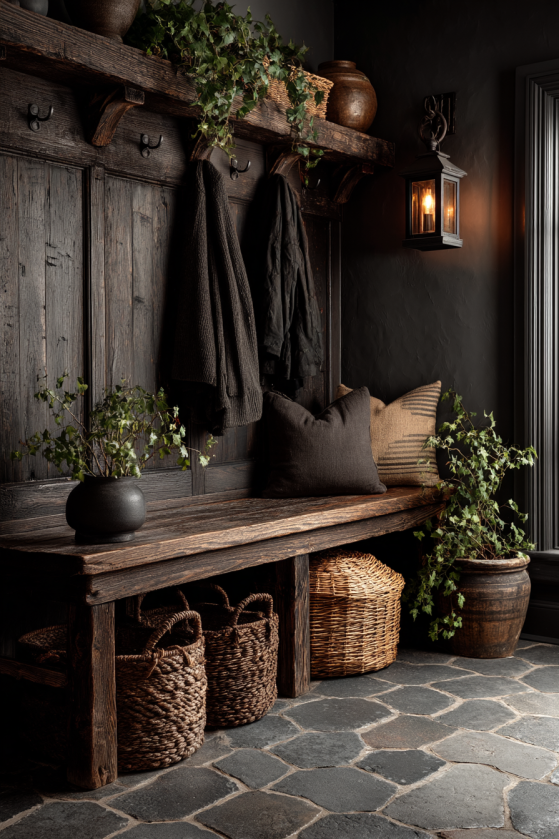
The amber glow of an iron lantern above. The solid thud of a cast iron hook as your coat finds its place. The cool, worn surface of slate underfoot. The faint scent of beeswax and old wood.
This is not a utility corridor. This is a threshold — the first room that says “you’re home.”
And if you’ve been dreaming of a space that feels as dramatic and intentional as every other corner of your house, this guide will show you how a dark farmhouse mudroom can be exactly that.
(This post contains affiliate links — I earn a small commission at no extra cost to you, and I only recommend pieces I would put in my own home.)
What Is the Dark Farmhouse Mudroom?
The dark farmhouse mudroom is what happens when the most hardworking room in your house finally gets treated like a design statement.
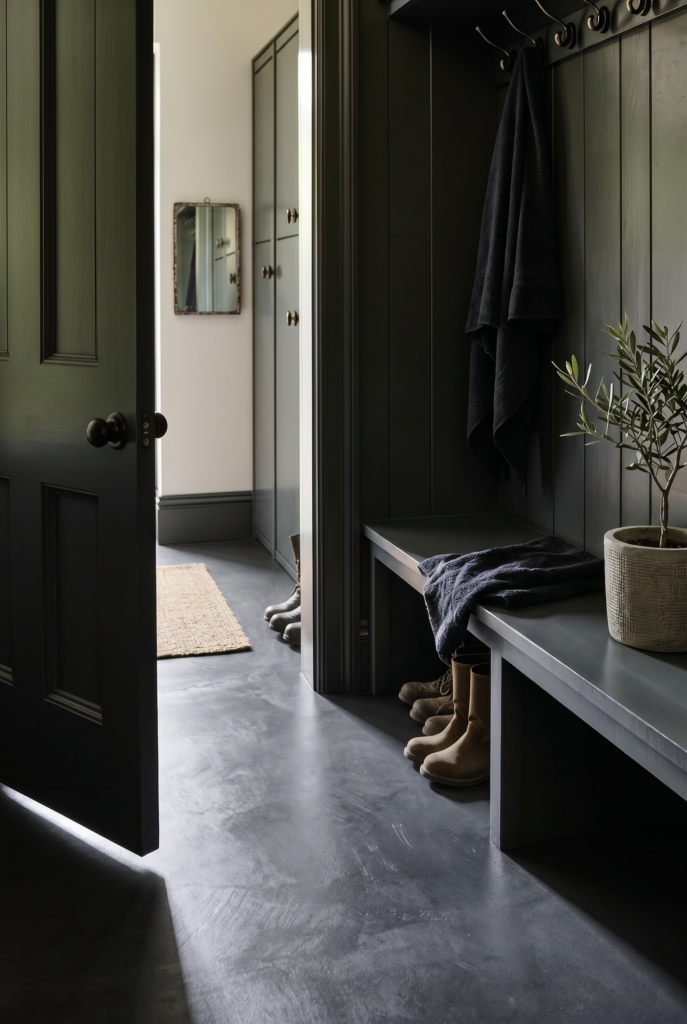
It borrows the bones of classic farmhouse style — shiplap walls, built-in benches, hook rails — and layers in a palette that is deep, moody, and deliberate. Think charcoal paneling. Forest-green painted shiplap. Matte black iron hardware catching the warm glow of a pendant lantern. Worn slate underfoot.
But more than a trend, this is about permission. You are allowed to have a mudroom that feels like a room you actually want to walk into. You are allowed to choose dark paint, iron hooks, and a lantern that casts everything in amber and call it functional design. In the dark farmhouse mudroom, beauty and function are not in conflict. They are the same thing.
The floor is the foundation of the whole aesthetic. Get this right and everything else builds naturally on top of it. Get it wrong — with a bright white tile or a high-gloss finish — and even the most perfectly dark walls will feel disconnected.
Slate Tile
Natural slate is the quintessential dark farmhouse mudroom floor. It is matte, irregular, and carries that beautiful grey-green-black variation that looks like it has always been there. It is supremely practical: slip-resistant, easy to wipe down, and hides mud and grit far better than lighter alternatives. Laying it in a staggered or random pattern adds to that aged, organic quality that no manufactured tile can quite replicate.
If natural slate is outside your budget or project scope, dark ceramic and porcelain tiles that mimic stone are an excellent alternative. Look for matte finishes in charcoal, dark grey, or iron-tone — avoid anything with a sheen. Larger format tiles (12×24 or 18×18) read cleaner and more intentional than small-scale patterns.
Larger format tiles (12×24 or 18×18) will read cleaner and more intentional than small-scale patterns.
Painted Concrete
For mudrooms with existing concrete subfloor, a deep charcoal or forest-green concrete paint or stain is a surprisingly beautiful choice. It is durable, water-resistant, and gives you that industrial-farmhouse crossover quality that layers perfectly with wood and iron elements above.
The walls of your dark farmhouse mudroom are doing two jobs at once: creating the atmosphere and holding everything up. Literally.
Choosing Your Dark – Wall Paint
The most transformative single decision you will make in this space is the wall treatment. Painted shiplap in a deep charcoal, navy, or forest green is the classic choice.
Wrapping the walls of the moody farmhouse mudroom in quiet drama, this deep matte wall paint makes every hook, every boot, and every shadow feel intentional and timeless—turning plain drywall into the perfect backdrop for dark wood and flickering candlelight. Shop This Moody Farmhouse Wall Paint Here (paid link) — simple, enduring, and utterly at home in the dark farmhouse hearth.
One quick note on light: dark walls in a small mudroom will feel intentional and cozy with warm lighting (more on that below). They will feel oppressive with cool overhead fluorescents. The lighting is what makes or breaks the dark wall — commit to both.
Cast Iron Hooks as Statement Objects
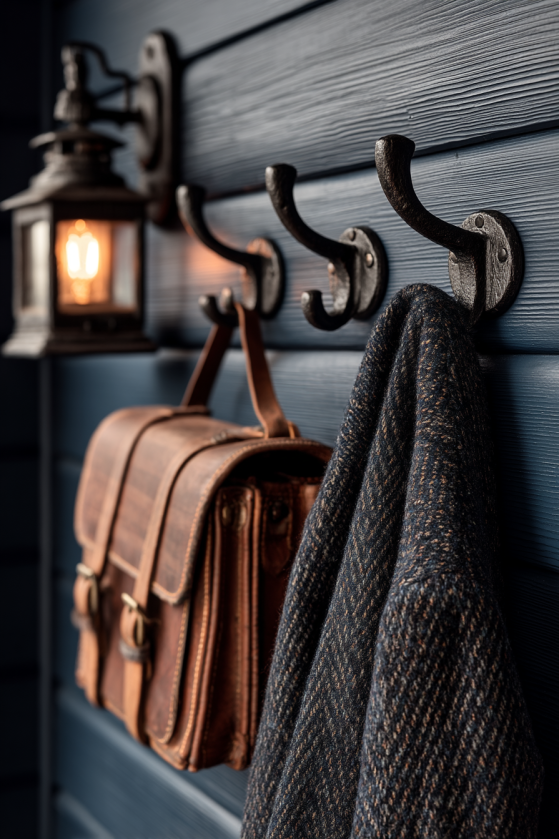
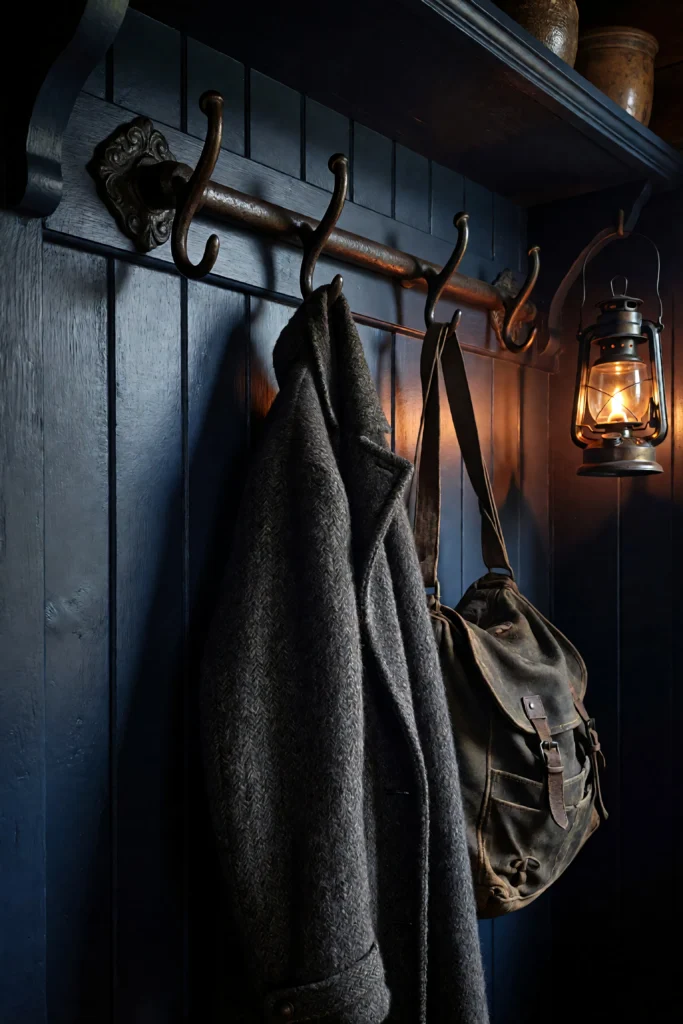
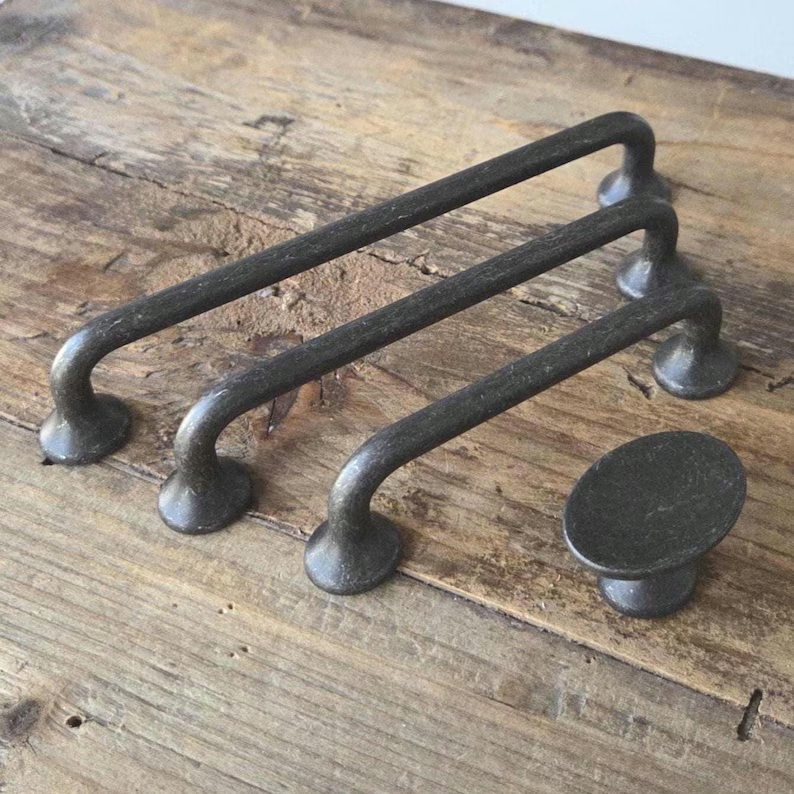
Your hooks are not an afterthought. In a dark farmhouse mudroom, a row of aged cast iron hooks — wrought iron, matte black, or antique brass — running the length of one wall is the room’s visual backbone. They catch the eye. They hold coats and bags with satisfying weight. They have the hand-forged quality that looks as if they were pulled from a century-old farmhouse wall and rehung with complete intention. Cast Iron Wall Mount Hook Strip, Matte Black — Individual Wrought Iron Coat Hooks
Install them at varying heights if you are mixing uses — higher for adult coats, lower for children’s bags and leashes, mid-height for baskets and totes. A single long hook rail is clean and architectural. A clustered arrangement of individual hooks has a more organic, collected quality. Either works. Both are beautiful.
Storage That Looks Deliberate
In most mudrooms, storage is purely functional — it is there to contain chaos. In a dark farmhouse mudroom, storage is part of the composition. Every piece should look chosen.
The Hall Tree or Coat Stand
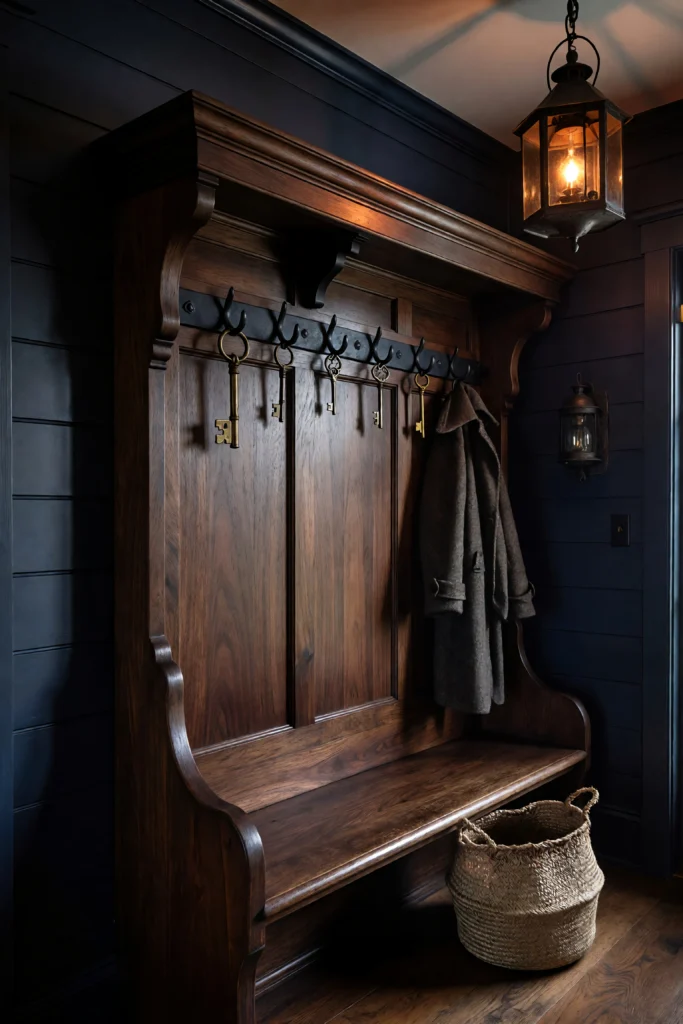
A Dark-Stained Wood Hall Tree With Seat – , upper hooks, and side storage is the anchor piece of this room. It consolidates everything — hanging space, a place to sit and pull on boots, a shelf or cabinet underneath — into one piece that reads as furniture, not utility shelving. Look for solid wood construction in dark walnut or ebony stain, with iron hardware details that echo the hook rail on the wall.
[AFFILIATE: dark wood hall tree with storage bench and hooks]
The Bench: Where Function Becomes Intention
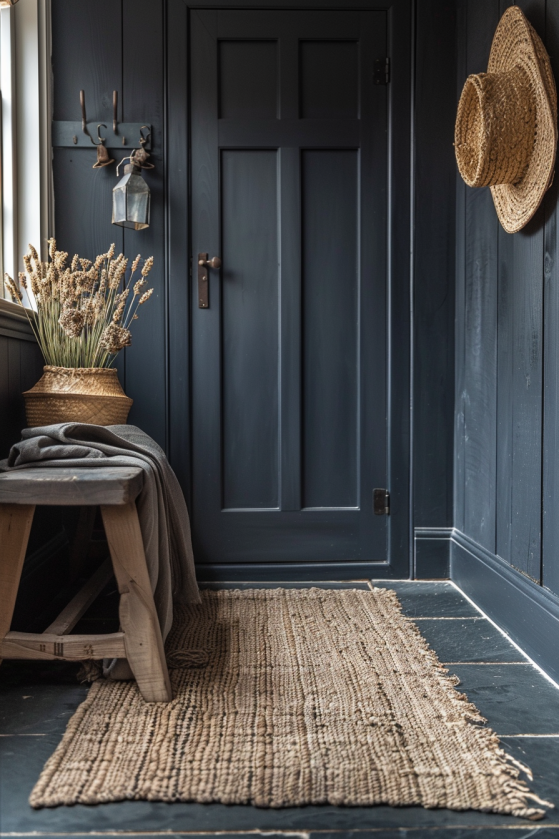
If you prefer a more built-in or modular approach, a standalone dark storage bench — dark oak, painted black, or reclaimed wood — with a flip-top lid or open cubbies underneath is a natural complement. Pair it with woven baskets or lidded bins in natural materials (jute, seagrass, or dark wicker) for a texture contrast that softens the palette without fighting the mood.
Dark Oak Storage Bench — Tucked beneath the wrought-iron hook rail where muddy boots and wool coats land, this dark oak storage bench becomes the hardworking heart of the moody farmhouse mudroom
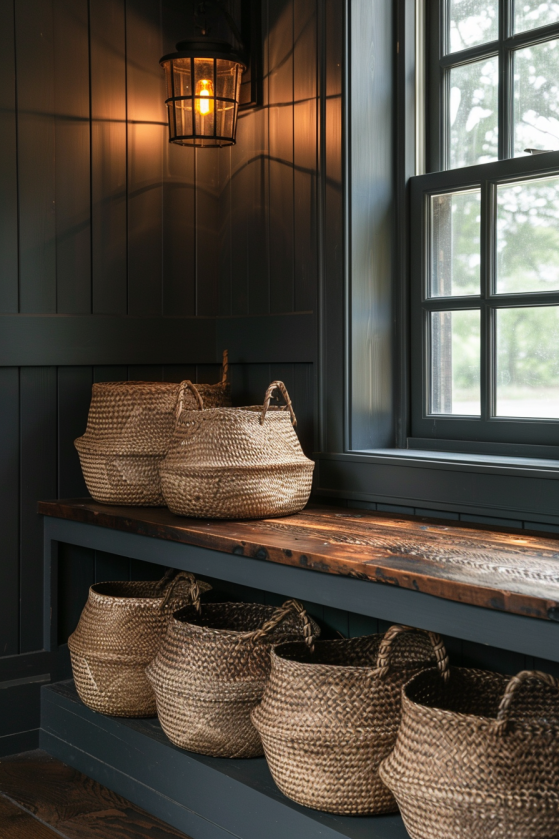
Baskets and Bins – Tucked neatly beneath the dark oak storage bench or lined along the painted concrete floor, these natural jute storage baskets gather muddy boots, wool scarves, dog leashes, and garden gloves without a whisper of clutter.
Never underestimate what a good basket does in a dark space. Woven natural-fiber baskets in tan, oat, or natural create warmth and organic contrast against deep walls. Use them for shoes, hats, gloves, dog leashes, and the general small chaos of daily entry life. Label them with small chalkboard tags for a farmhouse finishing touch that is both practical and charming.
Jute Storage Baskets – High Quality Long Lasting on Etsy Their earthy texture and soft woven warmth bring a touch of the barn and the wild herb garden indoors, keeping the moody farmhouse mudroom calm and quietly beautiful. Shop these natural jute storage baskets here — simple, enduring, and utterly at home in the dark farmhouse hearth.
The Light Source: Why the Lantern Changes Everything
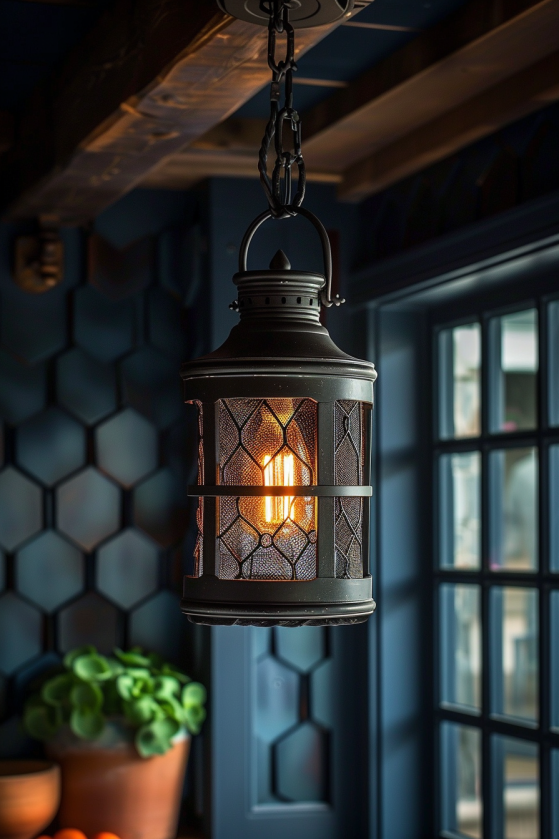
If there is one element that defines the ink-and-lantern quality of this aesthetic, it is the light fixture. Not a recessed can. Not a brushed-nickel flush mount. An aged iron pendant lantern — cage-style, barn-style, or vintage globe — hung low enough to cast a warm, intimate glow over the whole entry.
The warmth of the bulb is everything. Use Edison-style bulbs or warm LED equivalents at 2700K or lower. The goal is amber — the colour of a kerosene lamp, of firelight, of a welcome that reaches out from the ceiling and says the house is glad you came back.
Oil-Rubbed Bronze 12 in Farmhouse Barn Pendant Light (paid link) – Hanging low from the ceiling beams like a relic of old barns and quiet evenings, this aged iron pendant lantern in classic barn or cage style brings blacksmith soul to the moody farmhouse mudroom.
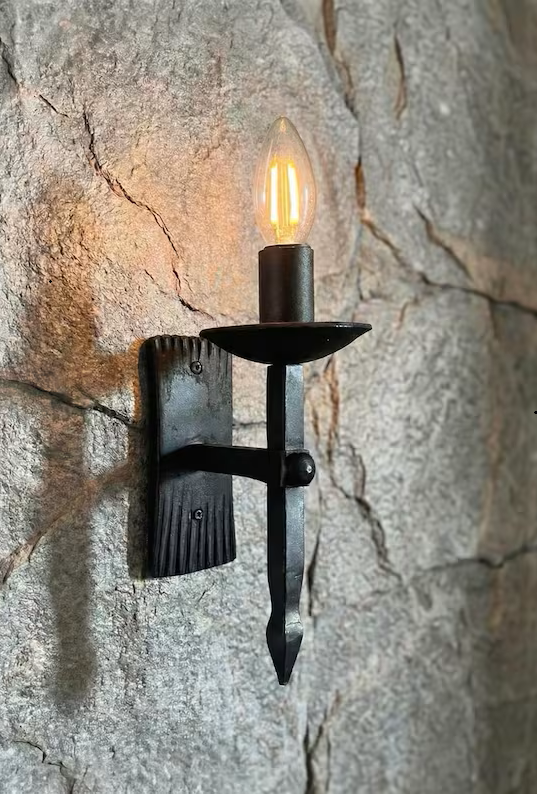
For spaces without a ceiling fixture, or with limited ceiling height, a wrought iron wall sconce on either side of the hook wall gives the same quality of warm, downcast light — and frames the coat hooks in a way that looks quietly theatrical.
Wrought Iron Wall Sconce, Black Finish – Mounted like silent guardians on the deep charcoal walls of the moody farmhouse mudroom, this wrought iron wall sconce brings raw blacksmith strength and quiet gothic drama. —turning the everyday entry into something ancient and alive simple, enduring, and utterly at home in the dark farmhouse hearth.
Wrought Iron Wall Sconce, Black Finish – Mounted like silent guardians on the deep charcoal walls of the moody farmhouse mudroom, this wrought iron wall sconce brings raw blacksmith strength and quiet gothic drama.
If you have a window in your mudroom, use it. A dark entry with a single source of natural light framed by deep painted walls carries a quality that photographs cannot fully capture. It is the kind of light that makes you pause on your way out.
Seasonal Touches: How to Keep the Mudroom Fresh
The finishing details are what separate a room that looks designed from a room that just looks dark.
Aged Mirror with Dark Frame
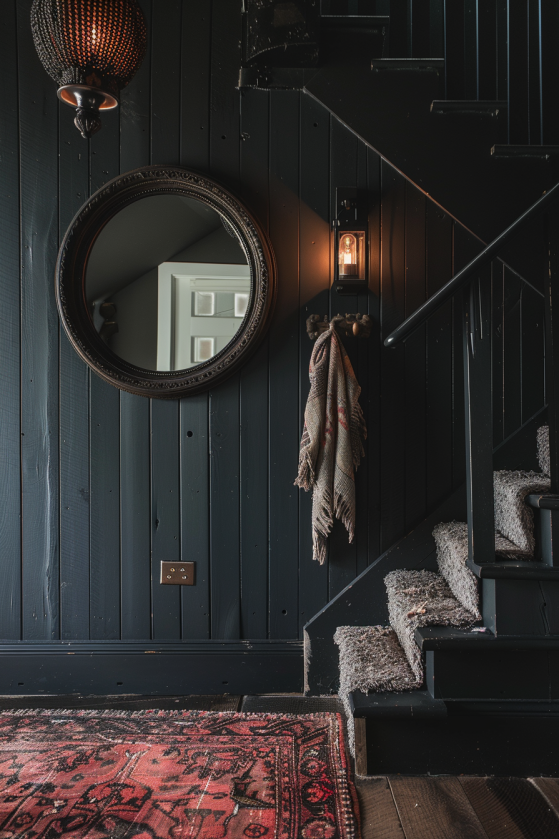
A Large Dark-Framed Mirror — iron, blackened wood, or antiqued — is both functional (your last look before you step out) and expansive. It catches and throws the warm amber lantern light across the charcoal shiplap, doubling the depth and drama of the mudroom in one quiet stroke. The reflection, the shadow play, the raw edge of the frame — this is dark farmhouse at its best. Save this and grab the exact product link in the post.
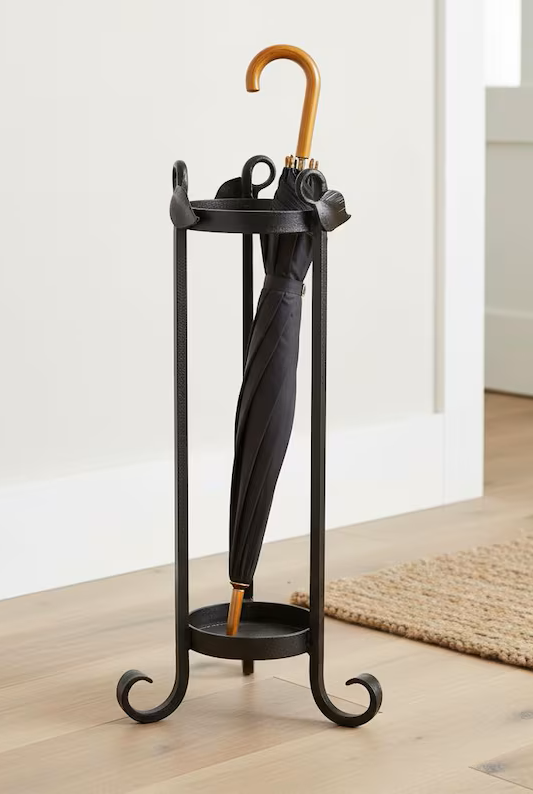
Dark Metal Umbrella Stand: Standing sentinel beside the dark oak storage bench where rain-soaked boots are shed, this iron umbrella stand brings sturdy blacksmith presence to the moody farmhouse mudroom. Crafted from matte-black wrought iron with clean, timeless lines — simple, enduring, and utterly at home in the dark farmhouse hearth.
Dark Metal Umbrella Stand:Standing sentinel beside the dark oak storage bench where rain-soaked boots are shed, this iron umbrella stand brings sturdy blacksmith presence to the moody farmhouse mudroom.
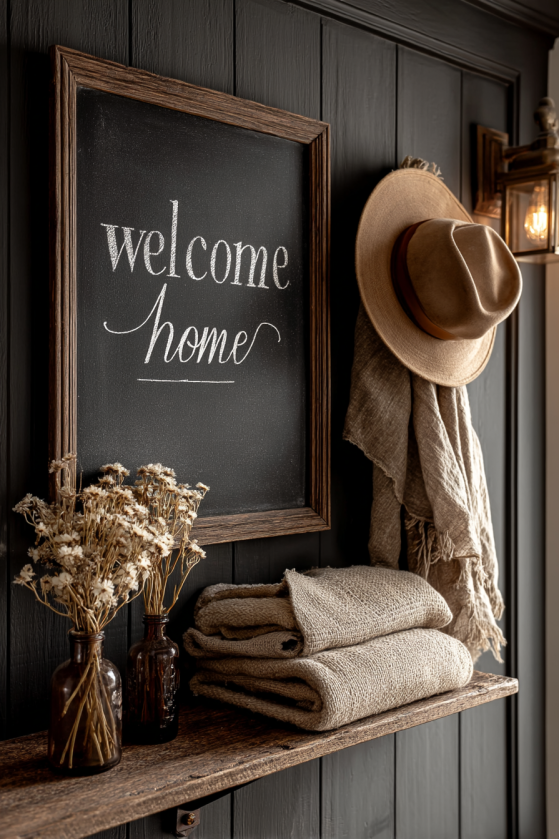
* **Seasonal styling:** A small dried botanical bundle tucked beside the hooks. A beeswax pillar candle on the bench — unlit, present for scent and form. A spring branch of dark-budded stems in a ceramic vessel. These small additions keep the space feeling alive with the season without requiring a full refresh.
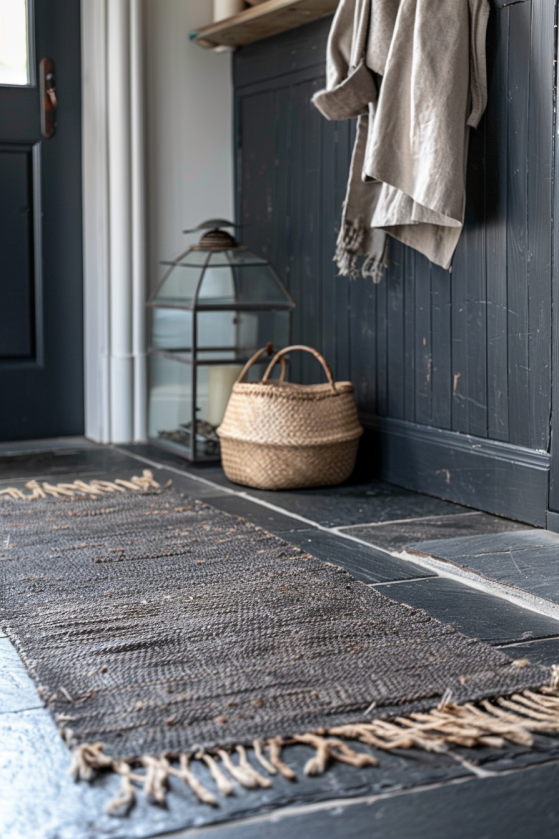
A warm styled mudroom corner — Black Metal Decorative Candle Lanterns, 8.5 in, Set of 2 (paid link)casting amber light over a dark bench with a woven basket, a flat-weave rug in charcoal, a small dried botanical arrangement, and a dark-framed mirror reflecting the hooks behind]
FAQ — Your Dark Mudroom Questions, Answered
“Will it feel claustrophobic?”
Only if you get the lighting wrong. A dark room with warm, well-placed light does not feel small — it feels enveloping, like the house tightening around you in the best possible way. The keys are warm-toned pendant or sconce lighting (never cool overhead fluorescents), a mirror to expand the perceived depth of the space, and, if the room is very narrow, leaving the ceiling in a lighter shade to draw the eye upward. Light is the variable. Get that right and the darkness works with you, not against you.
Better than a white one, honestly. Dark floors and walls hide dirt, mud, and scuff marks far more graciously than their light counterparts. Slate and matte tile do not show grime the way bright grout does. Dark painted walls do not show scuffs the way white beadboard does. Commit to a matte or eggshell paint finish on your walls — satin shows every handprint — and your maintenance burden actually decreases. This is one of the genuinely practical arguments for going dark.
“What if I rent or cannot paint?”
Dark removable wallpaper has come a long way. There are excellent peel-and-stick options in deep charcoals and botanical patterns that photograph beautifully and remove cleanly. Pair them with a freestanding hall tree, portable basket storage, and a swag-hook pendant lantern, and the room transforms fully without a single permanent change. Renters have built extraordinary dark farmhouse mudrooms with nothing but careful furniture choices and removable treatments.
Your Dark Farmhouse Mudroom Starts Here
Your mudroom has always had this potential. The bones were always there — the hooks, the bench, the floor, the door that opens to the outside world and closes again with a satisfying weight. All it was missing was intention. A colour that says *this is a room I chose.* A lantern that says *you are welcome here.* A cast iron hook that says *leave the world outside and come in.*
The dark farmhouse mudroom is not a trend you are chasing. It is a truth about what a threshold can be — functional, atmospheric, and entirely yours.
**Save this post to your mudroom Pinterest board** and explore more dark farmhouse inspiration across @DarkHomestead.
This post contains affiliate links. If you buy through one of them, I may earn a commission at no extra cost to you. (paid link) As an Amazon Associate I earn from qualifying purchases.
The Cottagegoth Kitchen:
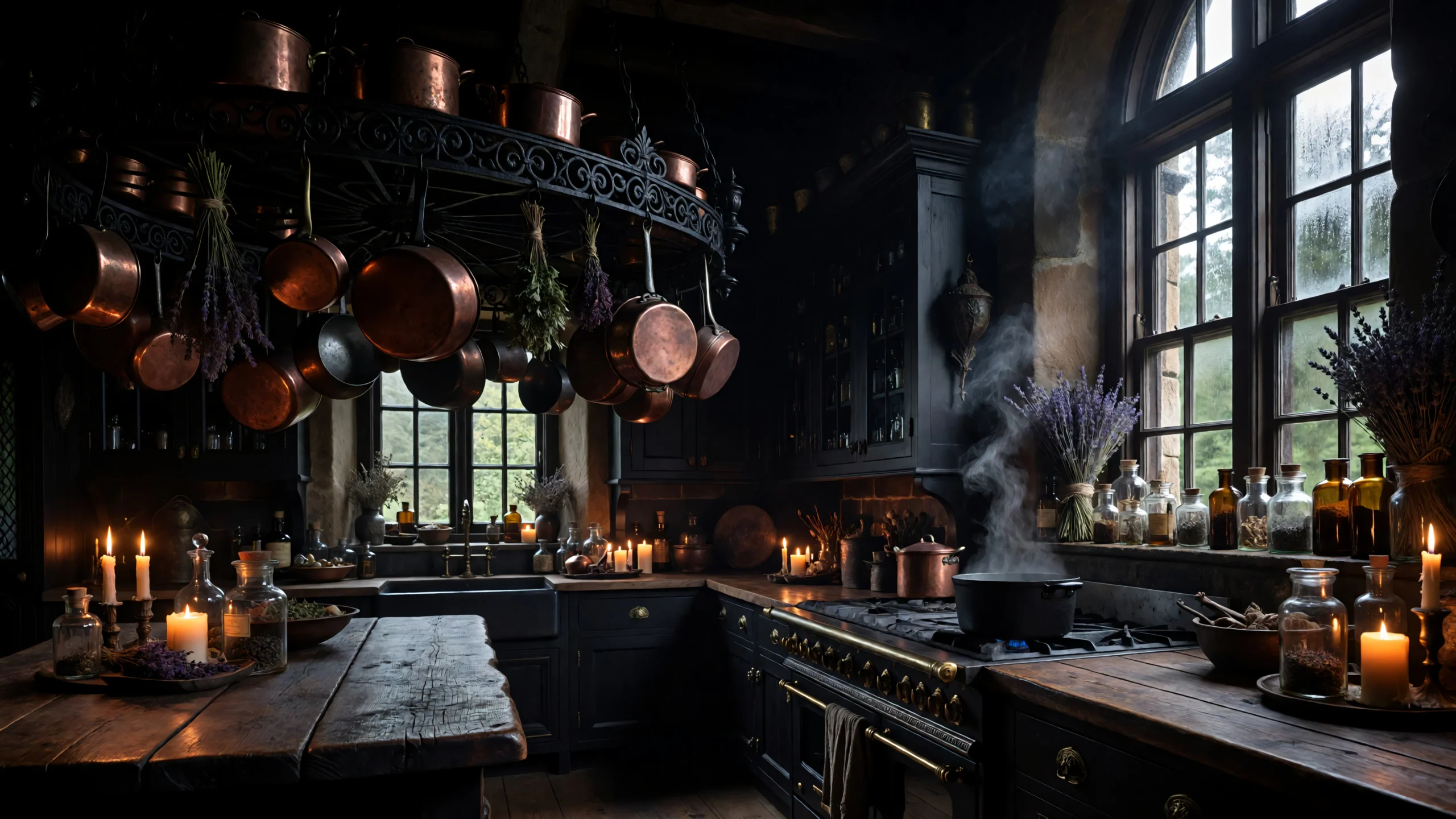
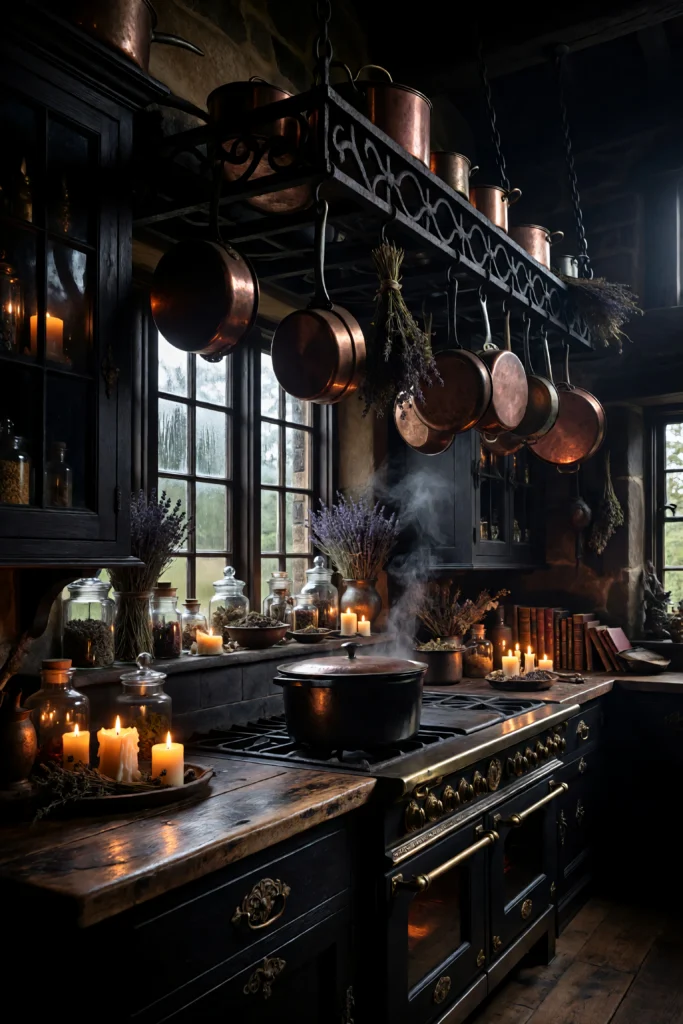
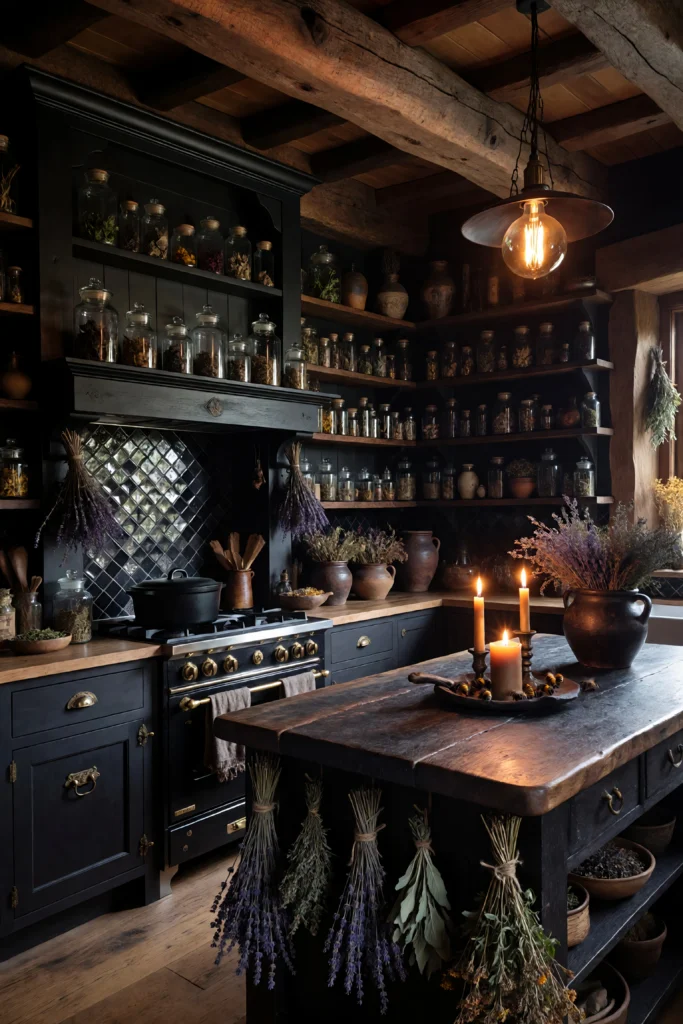
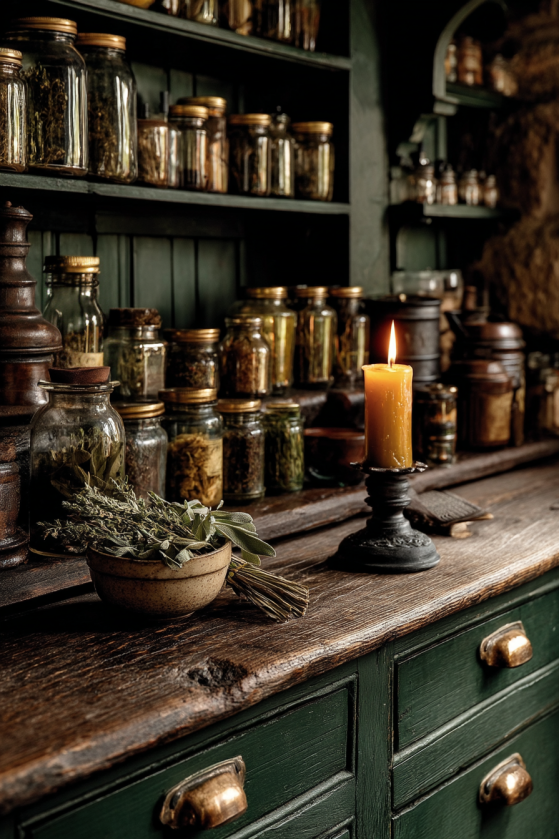
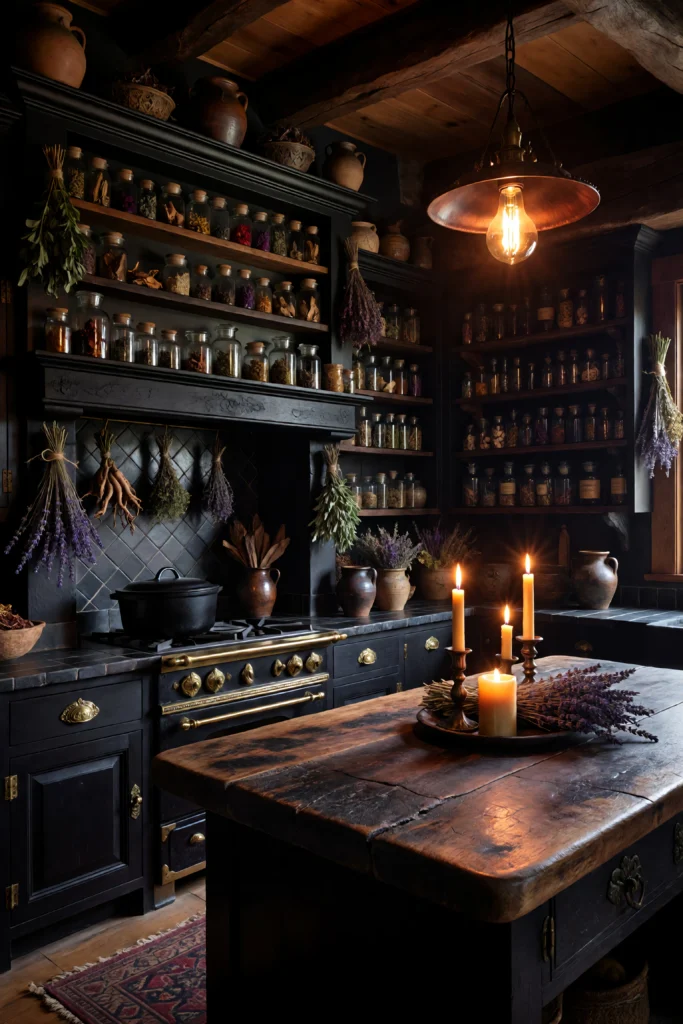
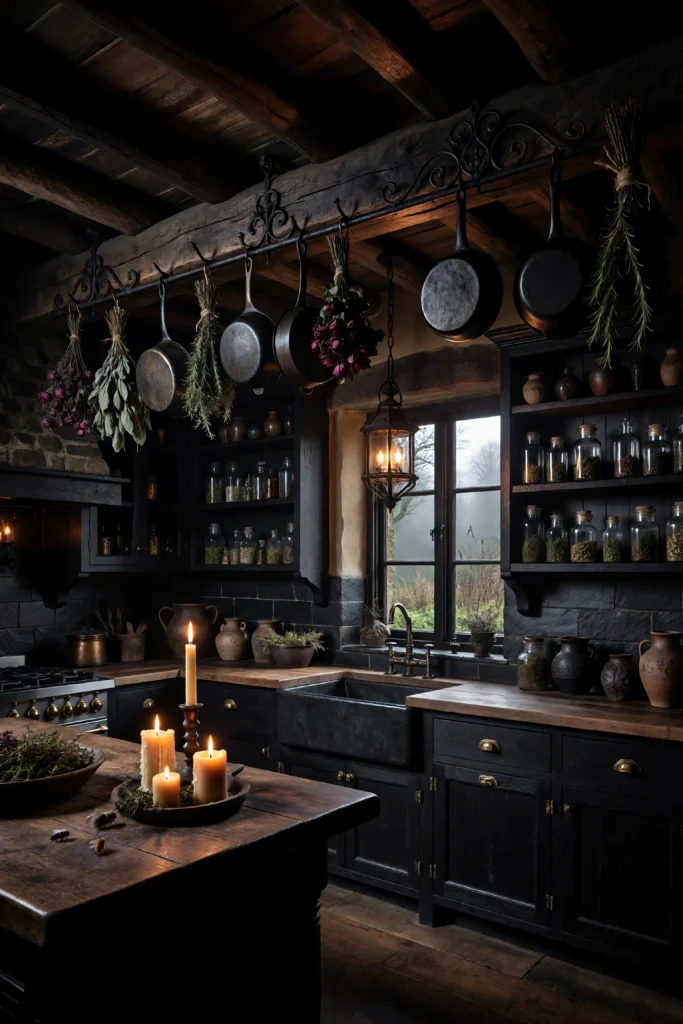
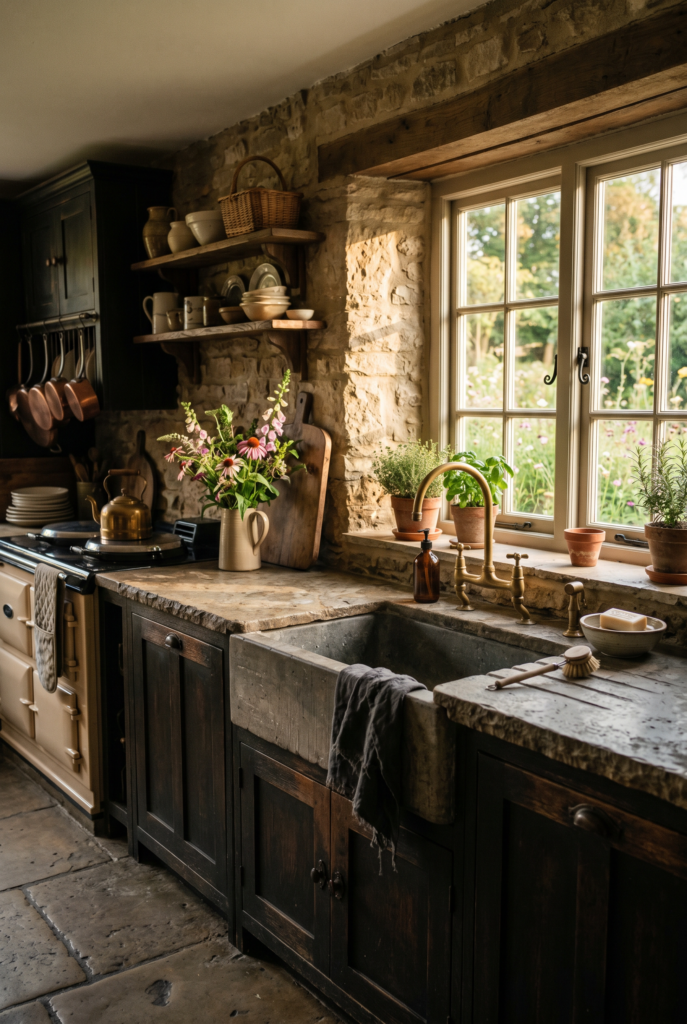
There is a kind of kitchen that exists in the space between old stories and lived-in warmth. It smells of woodsmoke and dried rosemary. The cabinets are dark — charcoal, or forest green, or the deep blue-black of a cloudy autumn sky — and the hardware is brass, worn soft where hands have touched it ten thousand times. Apothecary jars crowd the window ledge. A cast iron skillet hangs from an iron hook, heavy with history. The light here is never harsh. It comes from beeswax candles, from the glow of a range hood, from the grey morning pressing through glass thick with moisture.
This is the cottagegoth kitchen. And it is having a moment.
Not minimalist dark. Not industrial dark. Something warmer, stranger, more alive — a kitchen that feels like it belongs to someone who knows how to make something from nothing, who keeps dried herbs because they actually use them, who prefers candlelight not as an aesthetic choice but as a way of being.
If you’ve been staring at your white kitchen for five years and feeling like something is missing, it might be this.
For more than a decade, the reigning vision of the aspirational kitchen was white. White cabinets, white subway tile, white marble countertops, stainless steel appliances. Bright. Sterile. Easy to photograph. Easy to sell.
And then, slowly, something shifted.
The women leading the conversation on Pinterest, on cottagecore blogs, and in the darker corners of the internet started gravitating toward something different. Kitchens that felt inhabited. Kitchens that smelled like something. Spaces that acknowledged the kitchen for what it has always been — not a showroom, but the heart of a house. A place of transformation, where raw things become nourishing ones.
Dark cottagecore — and its slightly more dramatic cousin, cottagegoth — reclaims that original purpose. The moody palette isn’t trying to shock. It’s trying to root. To ground. To say: this kitchen has a history, and you are part of it now.
The aesthetic caught first among women who had grown tired of aspirational spaces that never seemed to belong to anyone. Moody farmhouse kitchen cabinets. Gothic cottage kitchen ideas. Dark farmhouse kitchen aesthetic. Each search tells the same story: someone looking for a home that finally feels like theirs.
Cottagegoth sits in the beautiful overlap between cottagecore — pastoral, handmade, soft around the edges — and darker aesthetics that carry a folkloric, slightly witchy undertone. It is not gothic in the maximalist, dramatic sense. It is grounded. Functional. The aesthetic does not perform; it simply is.
Think of it this way: if cottagecore is a sun-drenched afternoon picnic in a meadow, cottagegoth is the kitchen of the wise woman who lives at the edge of that meadow. She has herbs drying on every hook. Her cast iron is seasoned with decades of use. There are candles, yes, but there’s also a pot of something simmering low on the range. The darkness here is not decoration. It is depth.
Warm, low light: amber pendants, beeswax candles, never overhead fluorescent
The Six Essential Elements of a Cottagegoth Kitchen
You do not need to gut your kitchen to begin. The cottagegoth aesthetic is built in layers — some foundational (cabinet paint, hardware), some entirely accessible on a weekend afternoon with a trip to the hardware store and a bundle of dried lavender.
1. Dark Cabinets — The Foundation of Everything
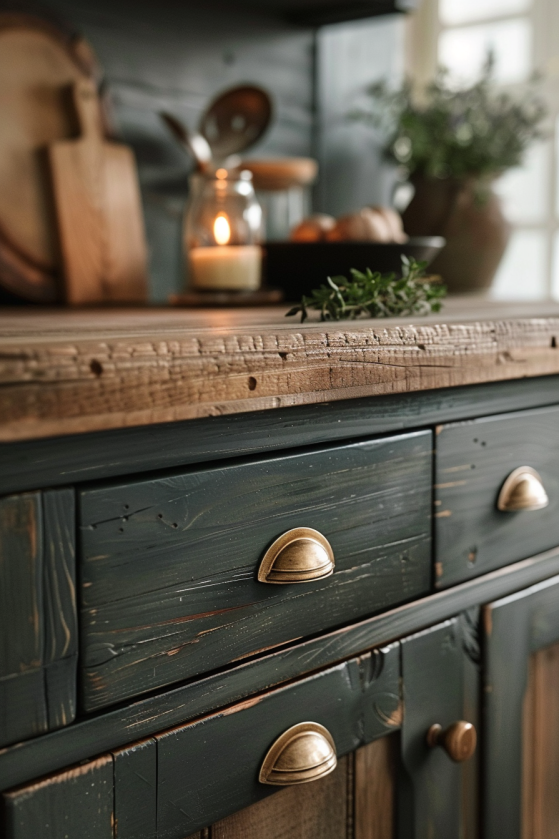
The single biggest visual transformation in any kitchen is the cabinet color. Charcoal is the entry point — versatile, warm in the right light, compatible with everything. Forest green reads more rustic and alive. Deep navy has a slightly more refined farmhouse-library quality. Near-black is the most committed choice. All of them work.
Cabinet paint — even for renters who own their own cabinets — is one of the highest-impact, most budget-accessible moves available to you.
2. Aged Brass or Blackened Iron Hardware
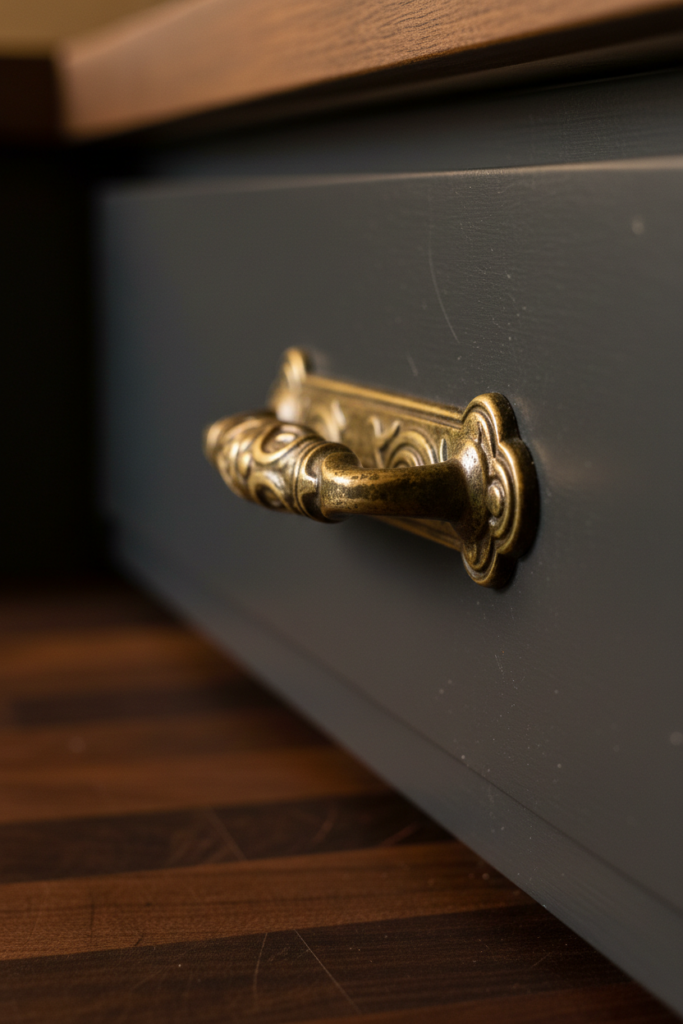
Nothing dates a kitchen faster than generic silver hardware. A swap to Aged Brass Hardware — warm, folkloric, softening beautifully over years of use — or Blackened Iron Hardware, which reads more dramatically, transforms the entire feel of the space. You can do an entire small kitchen for under $80 on a Saturday afternoon with a screwdriver.
3. Glass Jars and Open Shelving
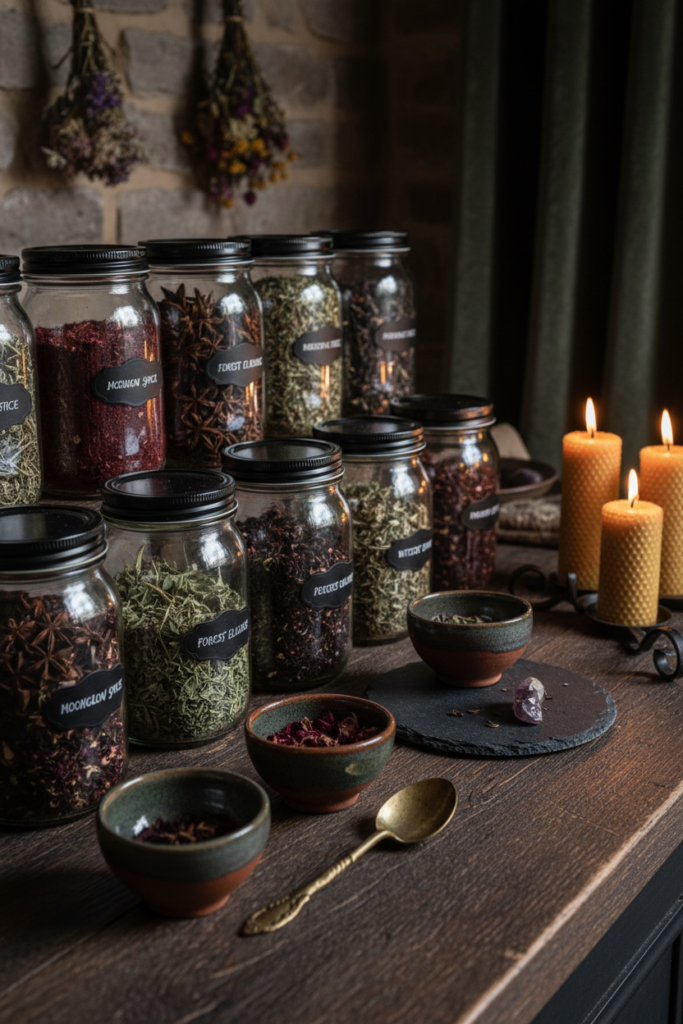
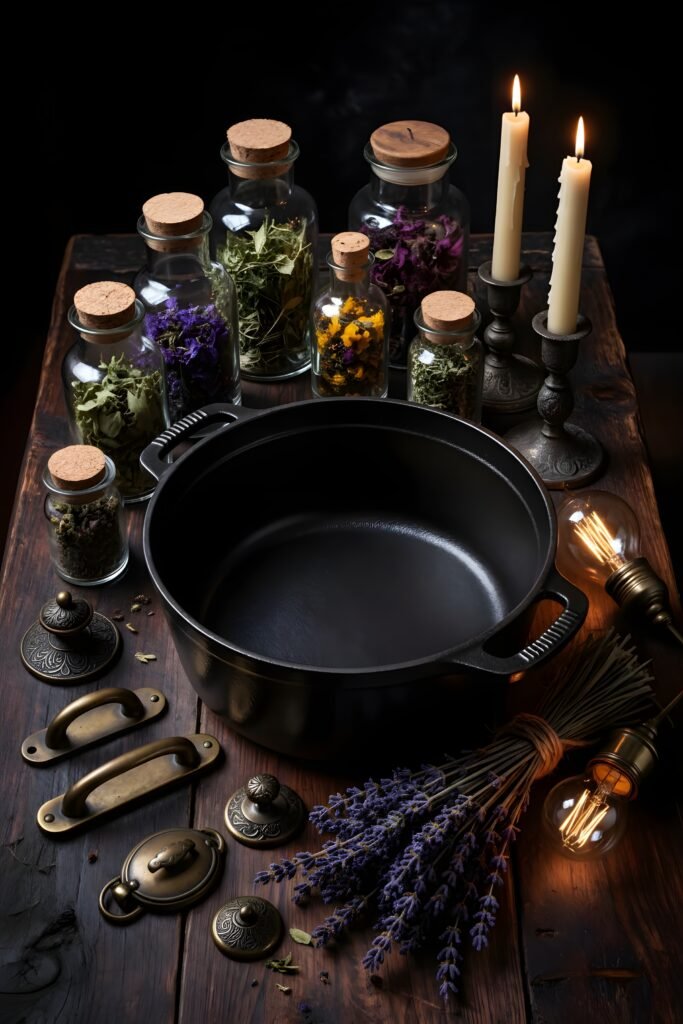
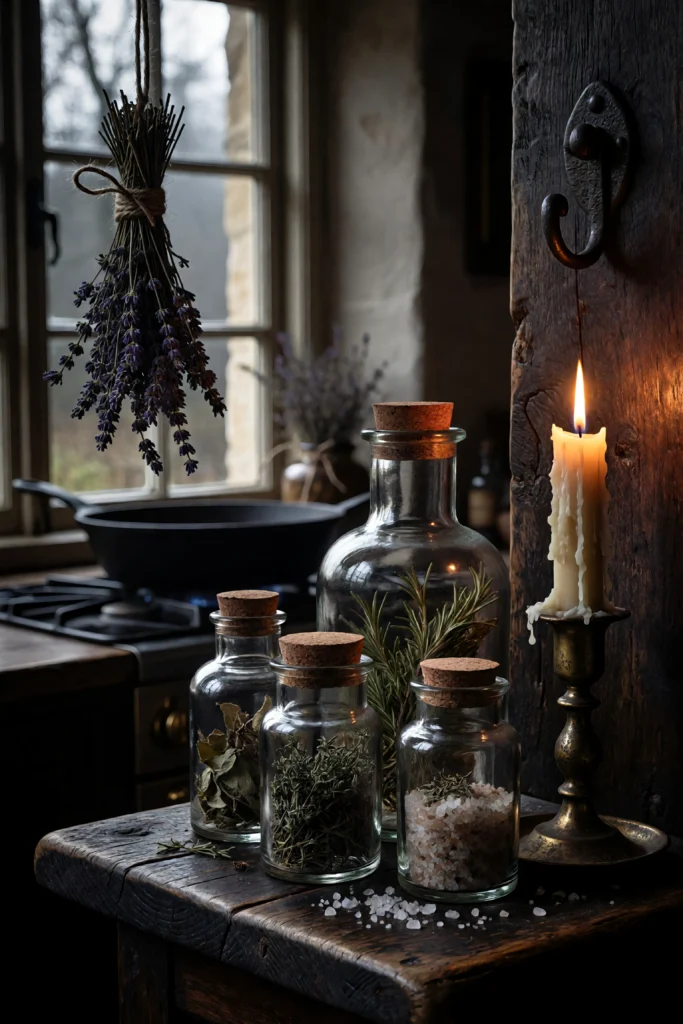
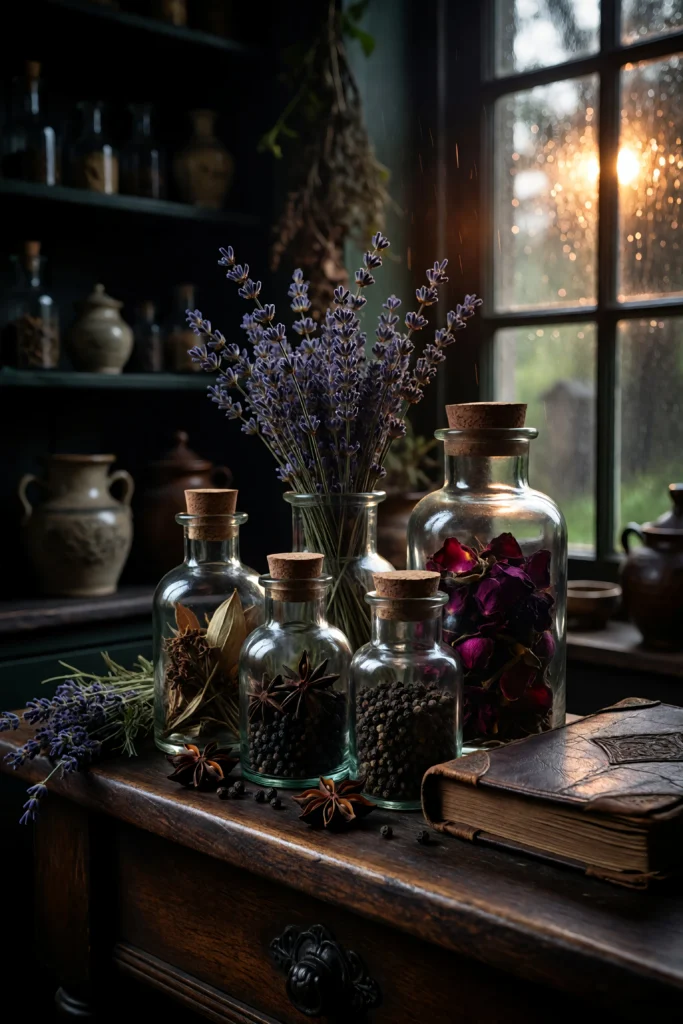
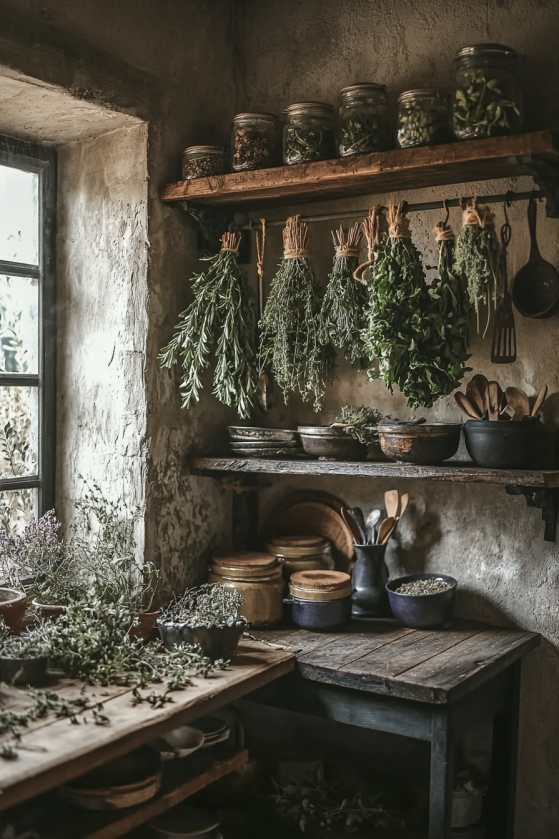
The cottagegoth kitchen does not hide its ingredients behind closed cabinet doors. Glass Food and Spice Jars — cork-topped, glass-stoppered, wide-mouthed (paid link)— filled with dried herbs, sea salt, whole peppercorns, loose tea, and spices are the visual signature of this aesthetic. Crowded on a window ledge or arranged on open shelving in descending heights, they suggest a kitchen that is used, that knows things, that has been tended.
4. Cast Iron — Displayed and Used
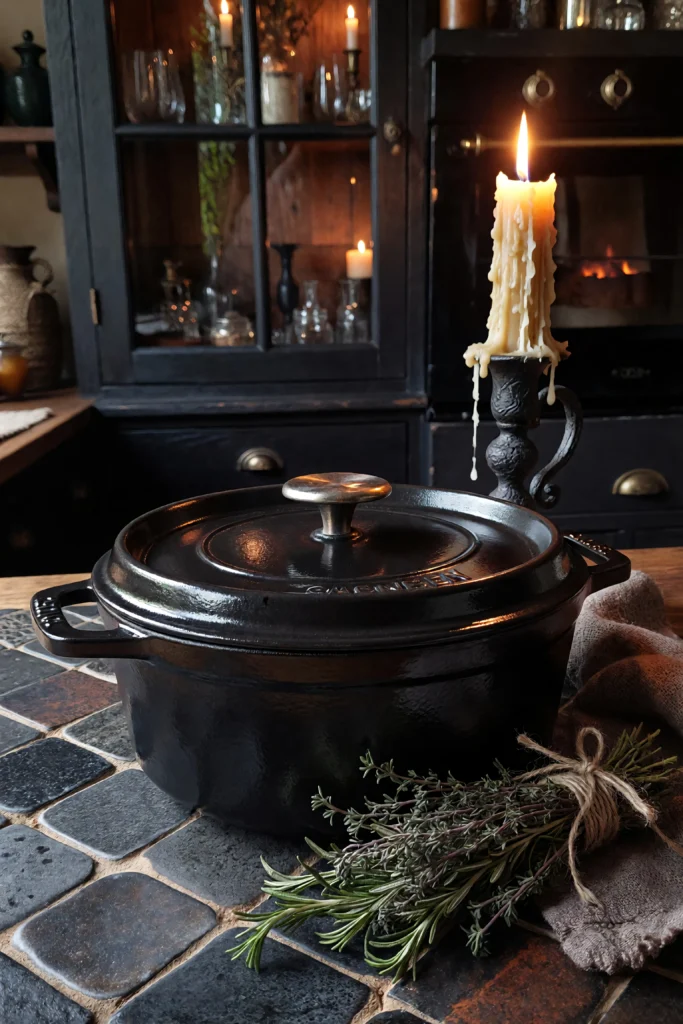
A well-seasoned cast iron skillet is the working symbol of the cottagegoth kitchen. It belongs on the stovetop, on a hook where it can be seen and reached without ceremony. A matte black Dutch oven, a small griddle — these are functional objects that also happen to be the most beautiful things in the room.
5. Dried Herb Bundles
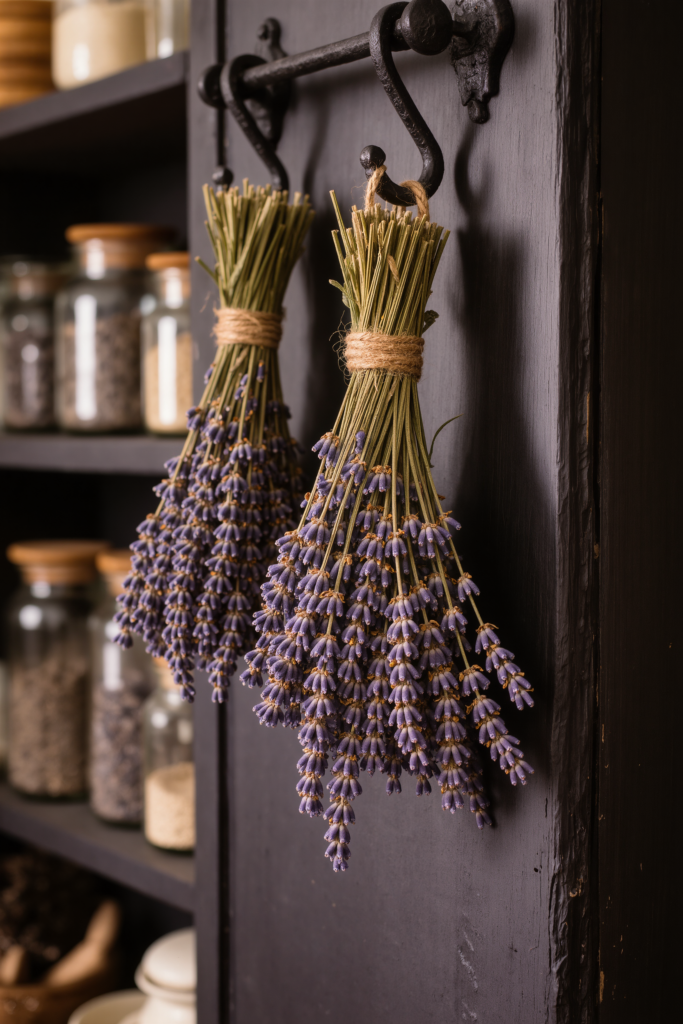
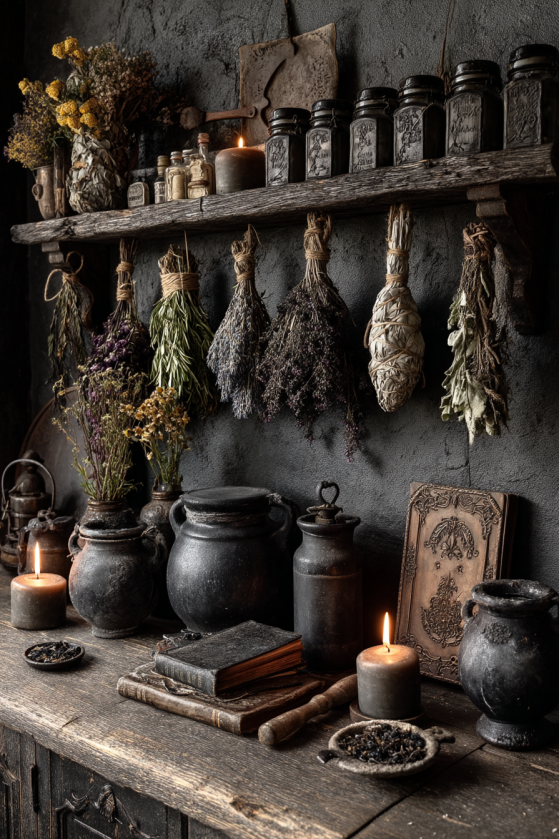
Hung from a hook on a rafter, tied loosely to a cabinet pull, or arranged in a dark ceramic vase — dried herb bundles add texture, quiet scent, and the unmistakable sense that this kitchen produces something. Lavender, Rosemary, Sage, Thyme, Bay Laurel Dried Bundles. Bundle them yourself from the garden or buy from an herbalist. They last for months and cost almost nothing.
6. Warm, Low Light
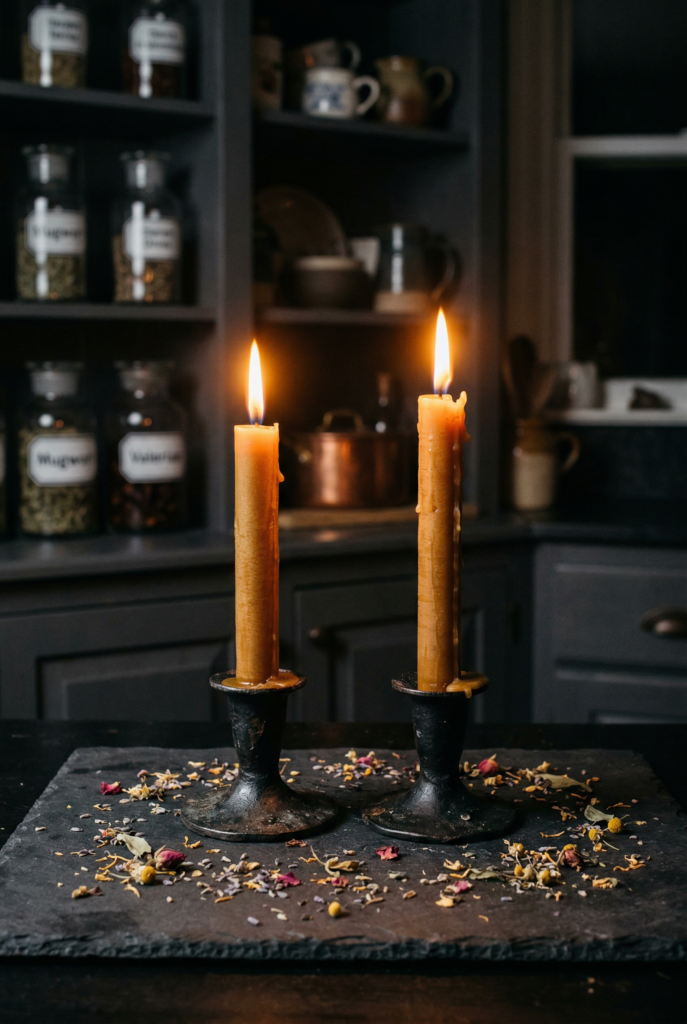
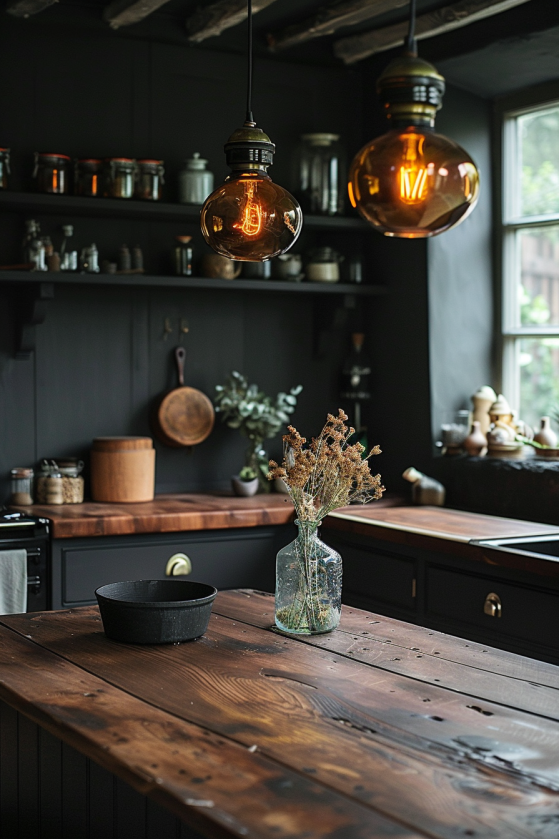
Overhead fluorescent lighting is the single greatest enemy of the cottagegoth kitchen. Supplement or replace with amber-bulb pendant lights over the island or sink, a small counter lamp, beeswax tapers in iron holders, or battery-powered LED candles where open flame isn’t practical. The 2200K amber bulb — one change, $10 — transforms the entire emotional register of a room.
How to Build the Cottagegoth Kitchen at Every Budget
The bones of the cottagegoth kitchen do not require a renovation budget. They require intention.
Affiliate Picks: Shop the Cottagegoth Kitchen
This post contains affiliate links. If you purchase something through these links, I may earn a small commission at no additional cost to you. I only recommend products I’d actually put in my own kitchen.
1. Le Creuset Enameled Cast Iron Dutch Oven — Matte Black (paid link) The quintessential cottagegoth kitchen investment. Heavy, beautiful, nearly indestructible. It goes from stovetop to oven to table and looks extraordinary at every stage. The matte black finish is exactly right — functional and deliberate rather than decorative. Built to outlast you.
2. Aged Brass Cabinet Pulls, Antique Finish, Set of 10 (paid link) The fastest single upgrade in any dark kitchen. Look for a warm, slightly worn finish — not polished, not bright. The older-looking, the better. A set of 10 typically runs $25–45 and takes an afternoon to install. The before and after is remarkable.
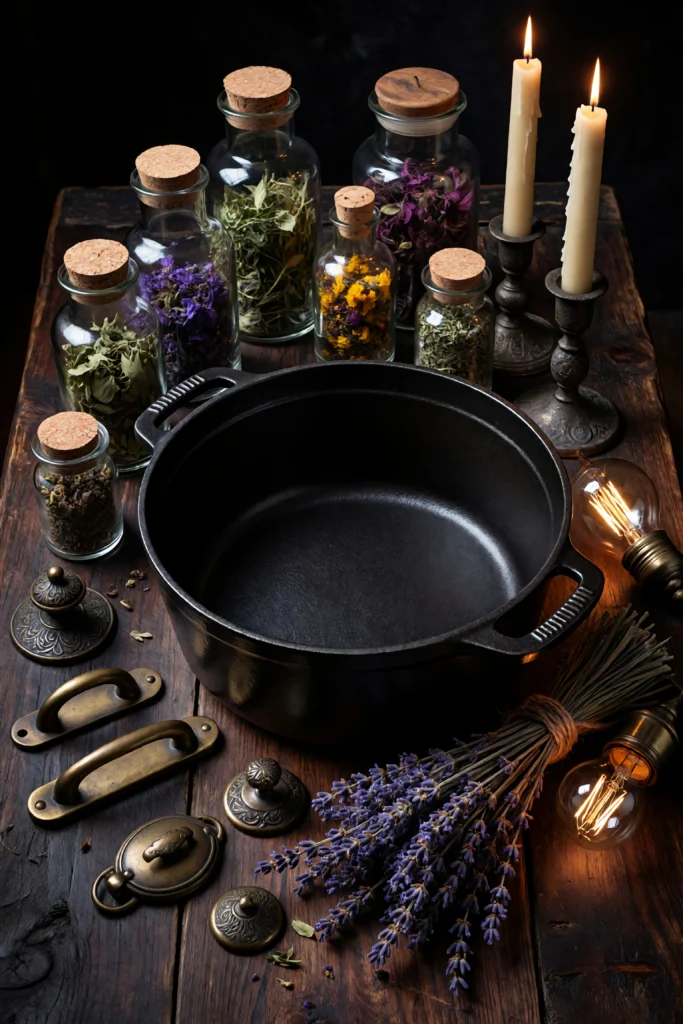
3. Glass Apothecary Jars with Cork Stoppers (paid link) Clear glass with natural cork tops. Fill them with dried herbs, sea salt, peppercorns, loose tea, or whatever you actually use. A set of six for $20–35 is the easiest entry point into the aesthetic and one of the most versatile.
5. Dried French Lavender Bundles Hung from a hook above the sink or tied to a cabinet pull, dried lavender is one of the simplest and most evocative moves in the cottagegoth kitchen. It costs almost nothing, lasts for months, and scents the room softly without overwhelming.
The Cottagegoth Kitchen Is Not a Trend — It’s a Return
The dark, folkloric kitchen has existed for as long as kitchens have. Long before white subway tile became the dominant language of domestic aspiration, kitchens were dim and warm and layered with the evidence of use. They smelled of something. They carried their own histories.
We are not inventing anything here. We are remembering something that got painted over.
The cottagegoth kitchen says: this space is mine. It carries the smell of herbs I dry and use, the weight of a pan I’ve cooked in a thousand times, the warmth of a candle lit not for a photograph but because it makes the room feel like the kind of place where real life happens. Where things are made. Where people linger longer than they planned to.
That is not a trend. That is a homecoming.
Save this to your dark cottagecore Pinterest boards and start gathering your cottagegoth kitchen inspiration. Explore more dark farmhouse interior ideas here on the blog — and if you’re building out a moody kitchen of your own, I want to hear about it in the comments.
→ Browse more dark home aesthetic posts → Shop all cottagegoth kitchen picks
This post contains affiliate links. If you buy through one of them, I may earn a commission at no extra cost to you. (paid link) As an Amazon Associate I earn from qualifying purchases.
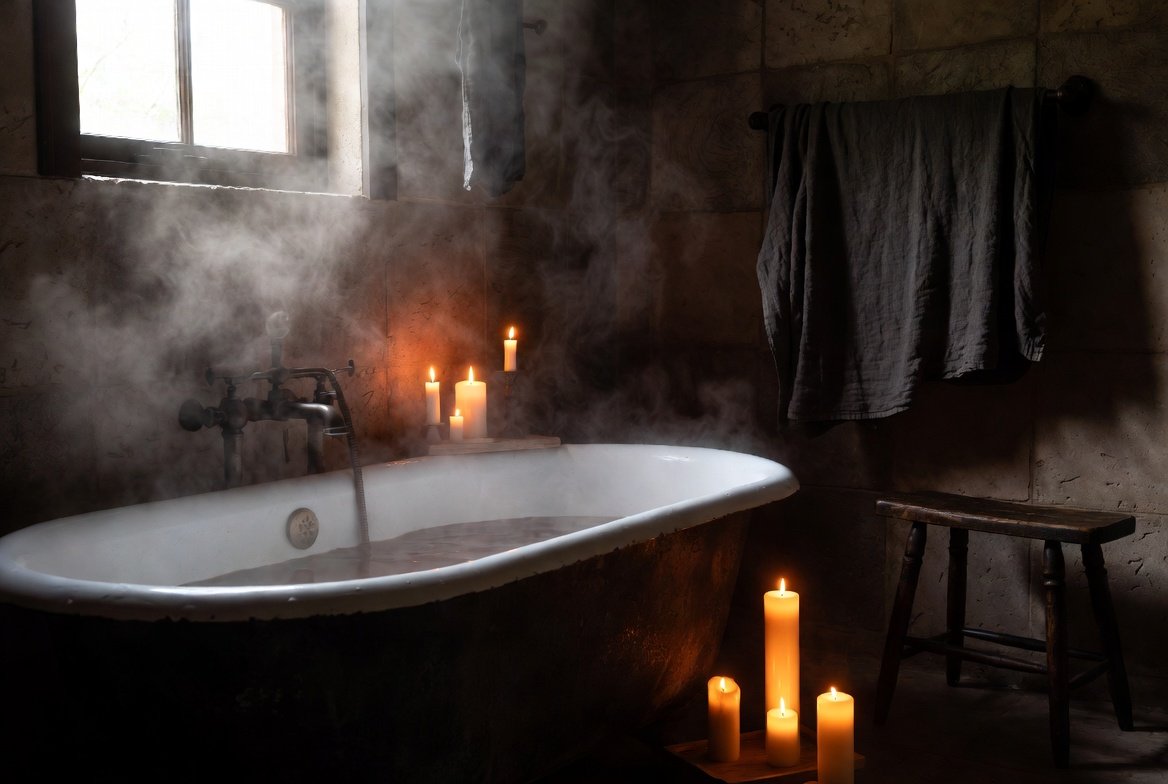
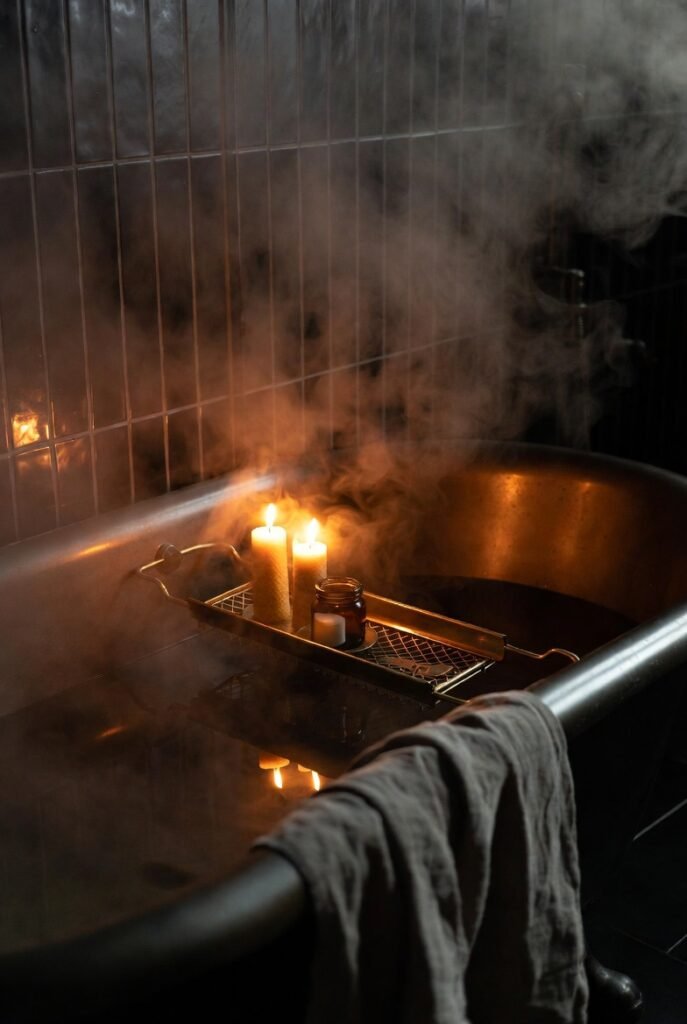
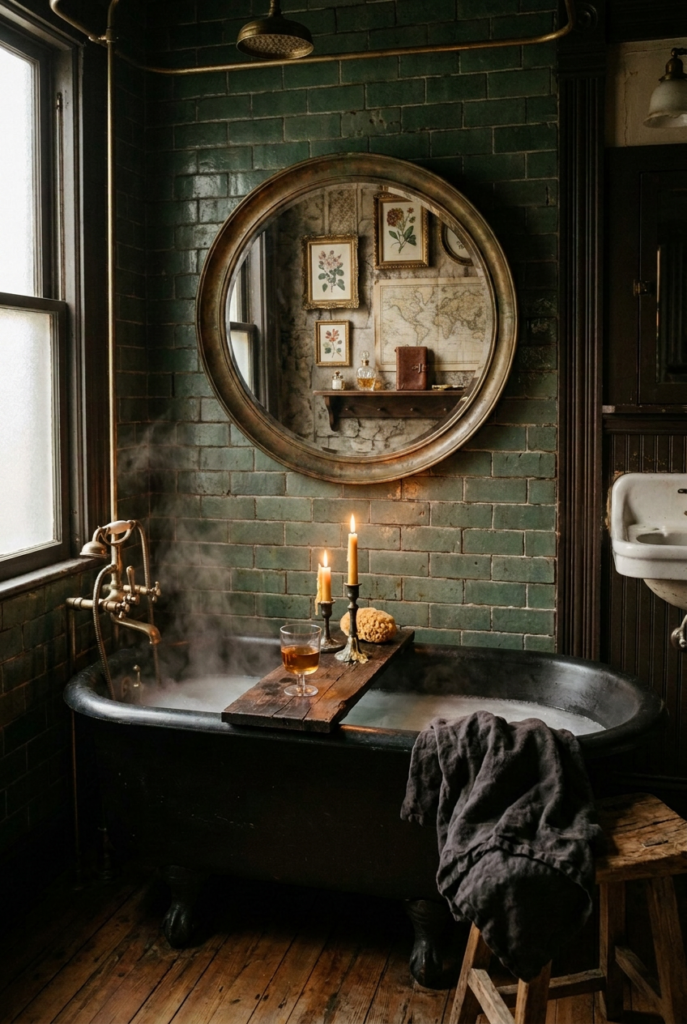
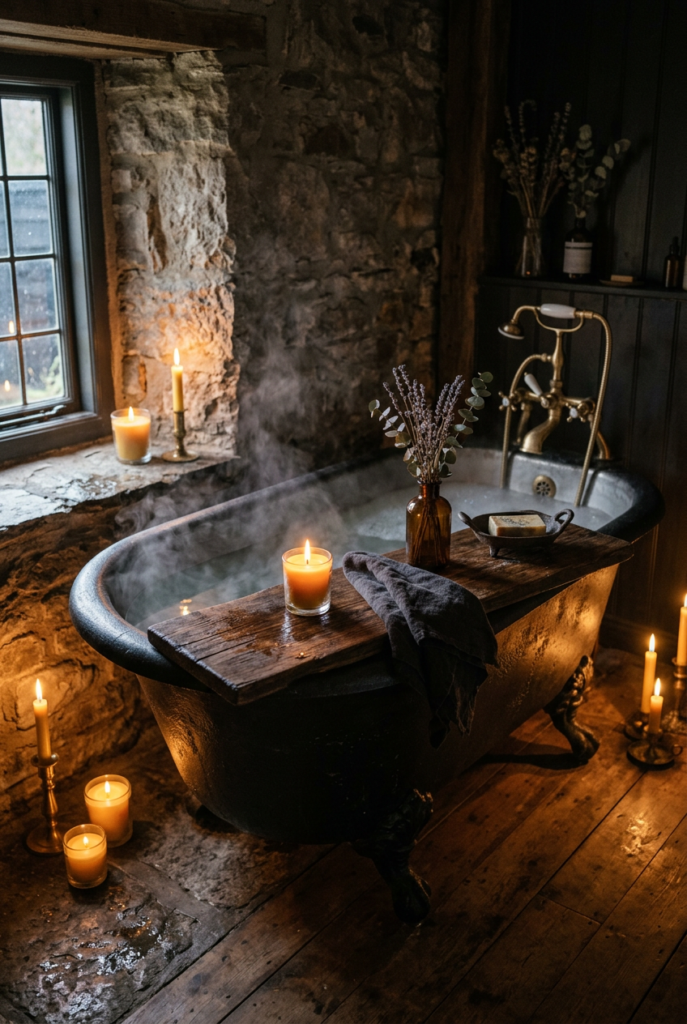
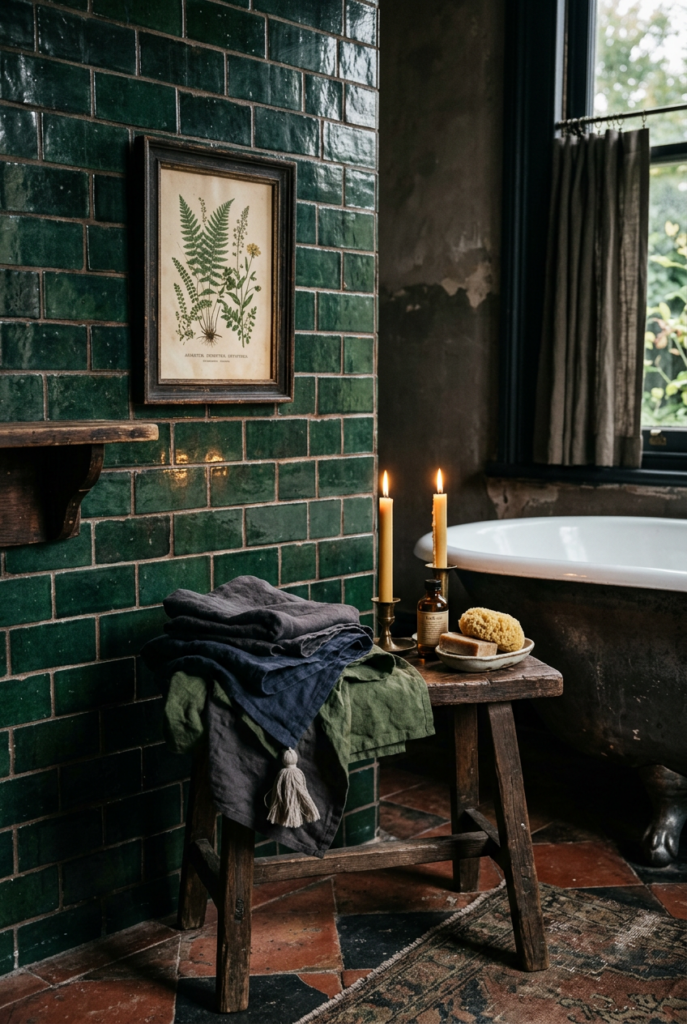
In the dark Victorian farmhouse bathroom, the iron clawfoot tub becomes the steady anchor of the morning ritual. Its curved sides and darkened feet have held bodies seeking warmth against the chill of stone for generations. Hot water fills it slowly. The steam begins its quiet work — softening the air, blurring the rough edges of the walls, and turning the small room into a private world where time loses its sharp edges.
The Tub That Holds the Ritual
An iron clawfoot tub like this one does more than hold water. It grounds the entire space with its weight and its honest patina. The metal takes the heat and gives it back slowly, so the soak lasts longer than you plan. Place a few beeswax tapers in simple iron holders along the rim or on a small wooden tray that spans the tub. Their flicker is not for brightness. It is the slow permission to stay until your fingers wrinkle and the water cools to the temperature of the room.
Stone Walls That Remember
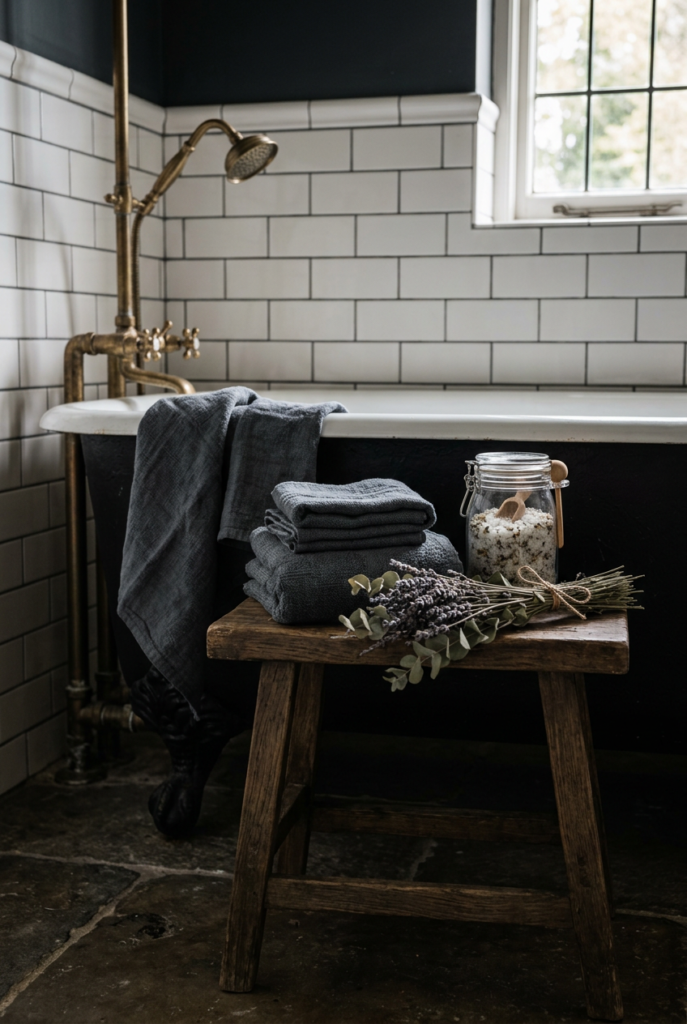
The stone walls do the rest. Rough and cool to the touch even after the water has heated the air, they contrast the heat and make the steam feel alive. In a working farmhouse where the days run long, this bathroom becomes the small ritual that returns you to yourself. A folded linen towel waits on a simple wooden stool. A bundle of dried lavender or eucalyptus rests nearby, its scent rising with the steam. The iron hardware has darkened with use. Nothing here is new or perfect. Everything has earned its place through morning after morning of quiet surrender.
Shop This Look
Iron clawfoot tub that anchors the ritual — search “cast iron clawfoot tub” or “slipper clawfoot tub” on Wayfair Iron Claw Tub or Amazon Iron Claw Tub (paid link) for classic styles with patina feet and durable construction (many options in the $800–$2000 range that develop beautiful character over time).
This post contains affiliate links. If you buy through one of them, I may earn a commission at no extra cost to you. (paid link) As an Amazon Associate I earn from qualifying purchases.
There is a particular kind of quiet that only happens in the afternoon.
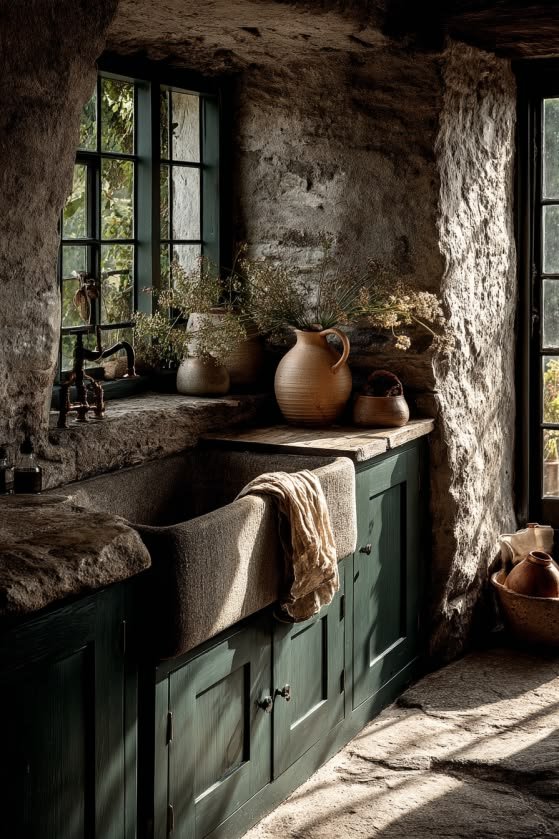
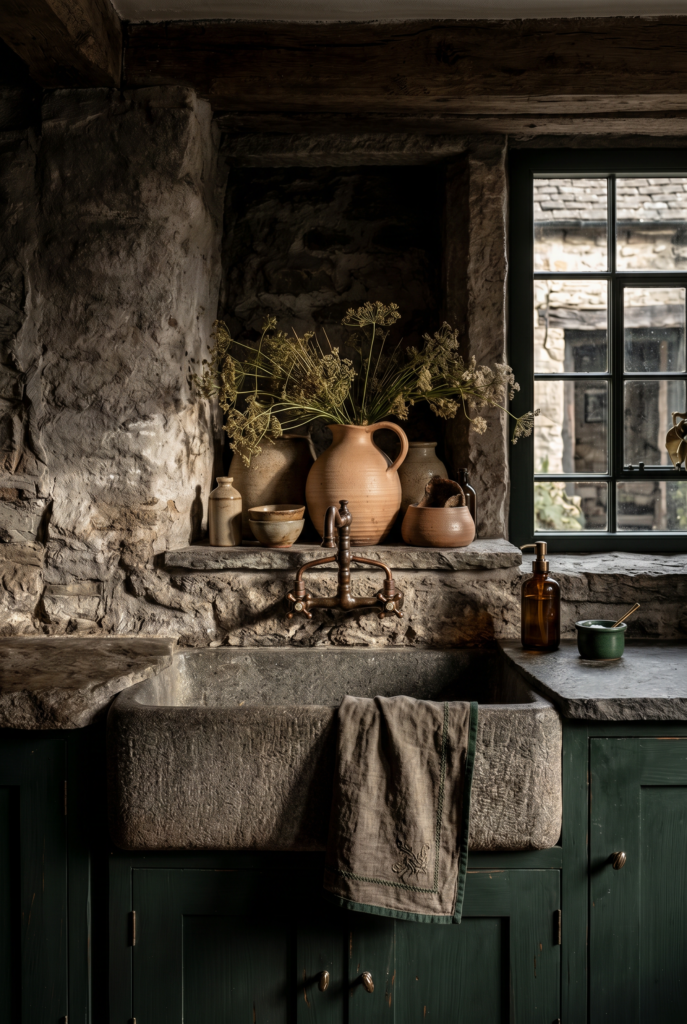
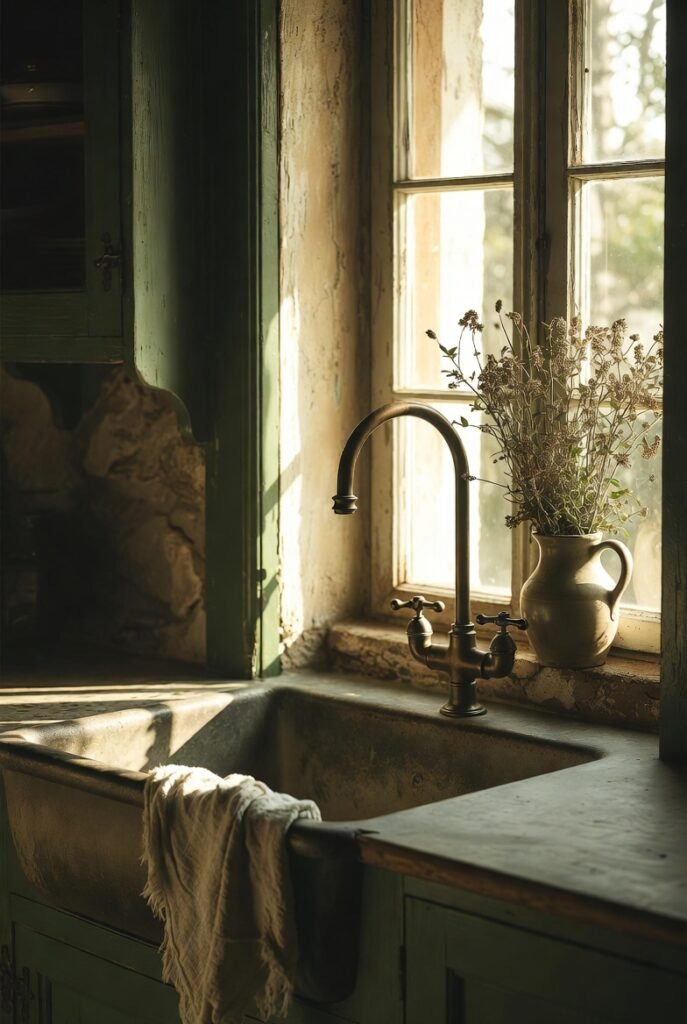
The light is soft and golden, slanting through the window and pooling on rough plaster and stone walls. A deep stone basin sink sits like an ancient altar, cool and solid under your hands. A single ceramic jug of wild herbs rests on the sill, stems still carrying the scent of the field. A linen towel drapes casually over the edge, waiting for the next small ritual.
This is the dark farmhouse kitchen at its most beautiful — not loud, not busy, but quietly alive.
A deep stone basin sink is more than a fixture. It is the quiet heart of the room. Its weight, its cool texture, its imperfect surface that has been worn smooth by years of use — these things make every small ritual feel sacred. Washing vegetables, filling a kettle, rinsing hands after gardening — all of it feels different in a stone sink.
The Afternoon Light
Afternoon light in a dark farmhouse kitchen is magic. It doesn’t flood the space; it grazes it. It catches on the rough stone walls, highlights every imperfection, and turns the room into something alive and breathing. This light makes the dark cabinets feel cozy instead of heavy. It makes the stone sink glow. It makes the whole kitchen feel like a sanctuary.
A single ceramic jug of wild herbs or dried flowers on the windowsill is the perfect finishing touch. It brings the outside in. It adds softness and scent. It tells the story that this kitchen is used, loved, and connected to the garden.
This post contains affiliate links. If you buy through one of them, I may earn a commission at no extra cost to you. (paid link) As an Amazon Associate I earn from qualifying purchases.
There’s one shelf in the kitchen that quietly works harder than anything else in the house — and somehow still looks like pure magic.
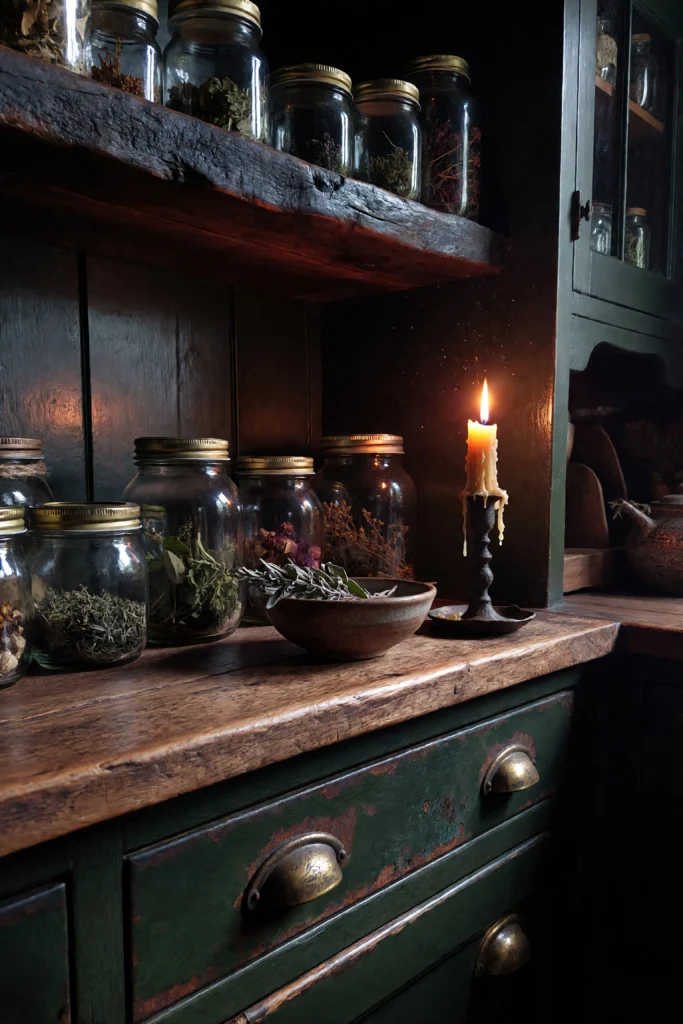
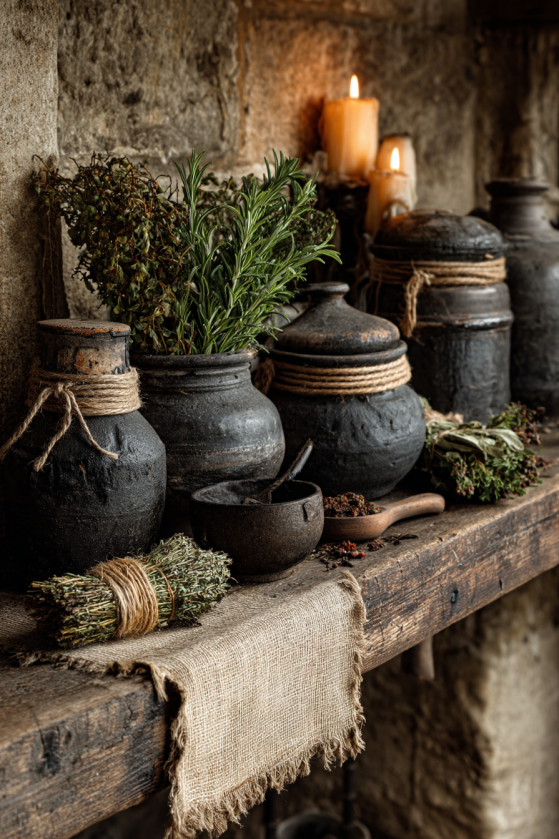
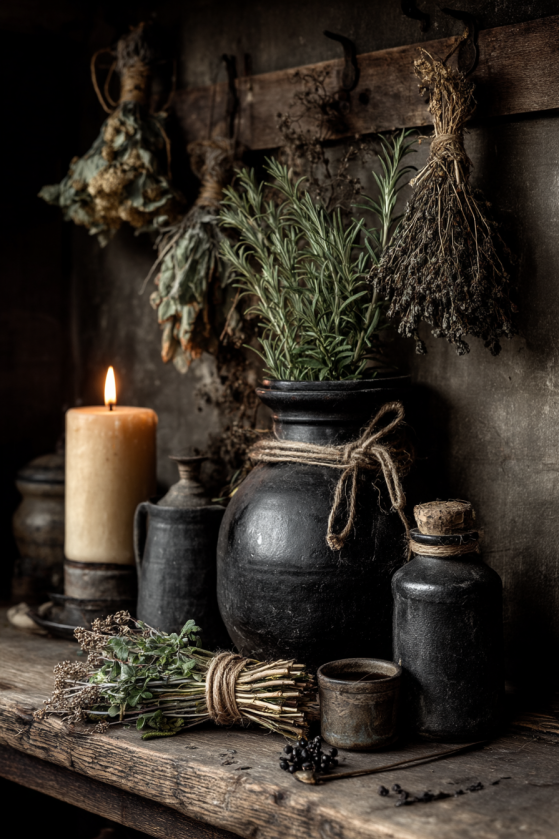
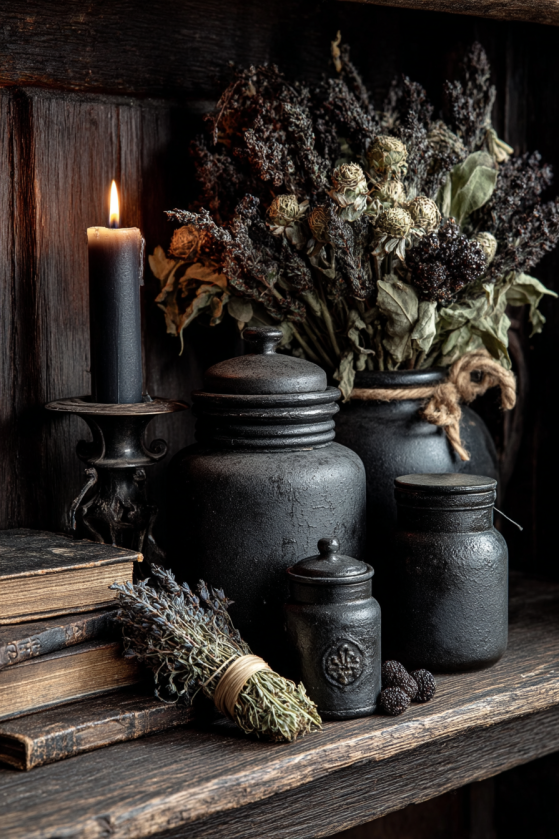
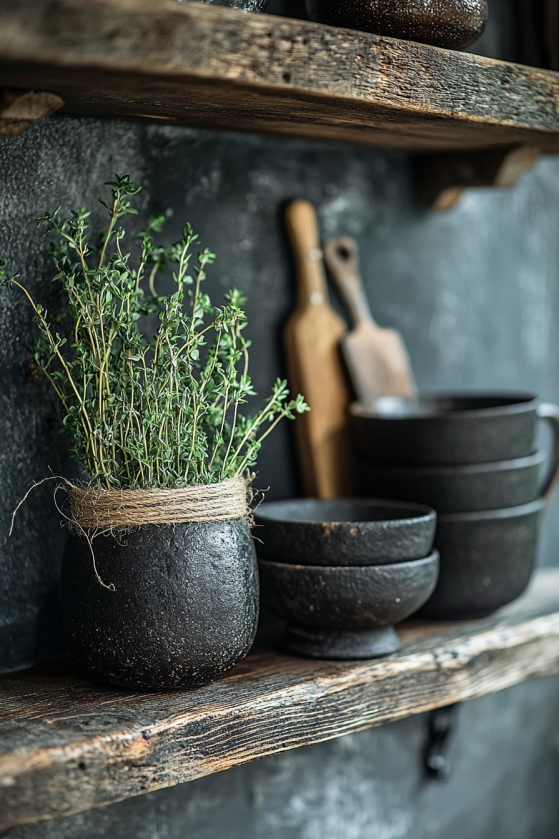
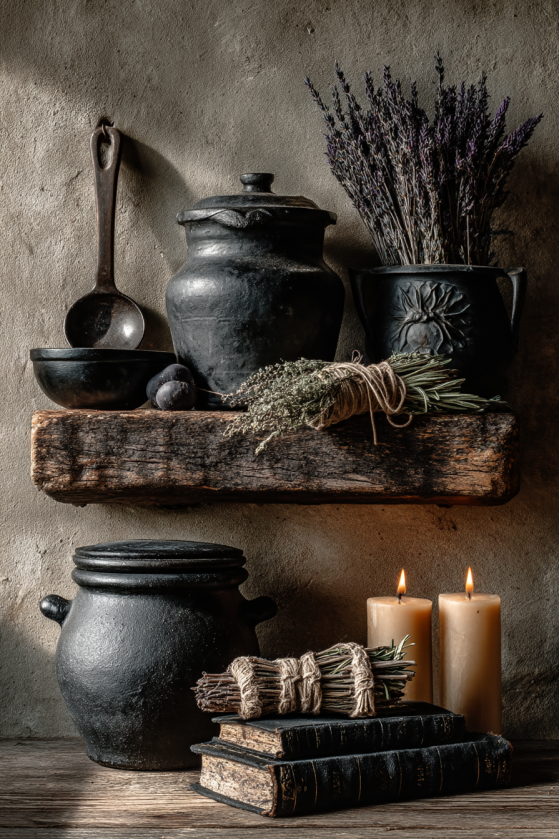
It smells like fresh rosemary and that cool, grounding scent of old iron. It holds bundles of winter thyme twisted tight with rough twine, and the satisfying weight of hand-thrown stoneware crocks in shades so deep and matte they basically swallow the light.
This is gothic farmhouse kitchen energy at its best: not a staged magazine set or a Pinterest board for strangers, but a real, living little altar to nourishment, creativity, and the slow turn of the seasons. It’s where utility meets beauty and they refuse to be separated. Every vessel carries the maker’s hand, and every dried stem holds onto the memory of summer.
This shelf has always been both pantry and altar. And now it can be yours, too.
THIS LOOK: DARK STONEWARE CROCKS, DRIED HERBS & GOTHIC FARMHOUSE MAGIC
The gothic farmhouse kitchen isn’t built in a single afternoon.
It is gathered — slowly, deliberately, across seasons and weekend markets and those quiet little “this is mine” moments when you spot the perfect piece of stoneware hiding at the back of a dusty shelf and you just know it belongs with you.
This is the kitchen witch aesthetic at its most grounded: not theatrical or costume-y, but deeply domestic and real. Every object has earned its place through actual use, through quiet beauty, and through the way it settles into the space and simply refuses to leave.
What makes a kitchen shelf feel truly alive instead of just arranged is the beautiful layering of textures — the rough drag of unglazed clay against a worn wooden surface, the crisp brittleness of dried herb stems brushing against the cold, satisfying weight of iron.
In a gothic cottagecore kitchen, nothing is purely decorative and nothing is purely functional. The crock holds your salt and it holds presence. The herbs scent the room and they are little packets of medicine and memory. This beautiful doubling — this refusal to be just one thing — is exactly what gives the gothic farmhouse kitchen its quiet power.
And the best part? You get to build yours exactly the same way — one meaningful piece at a time.
This Look: Gathered Dark Stoneware Crocks & Layered Textures
Dark Stoneware — Weight, Warmth, and the Maker’s Hand
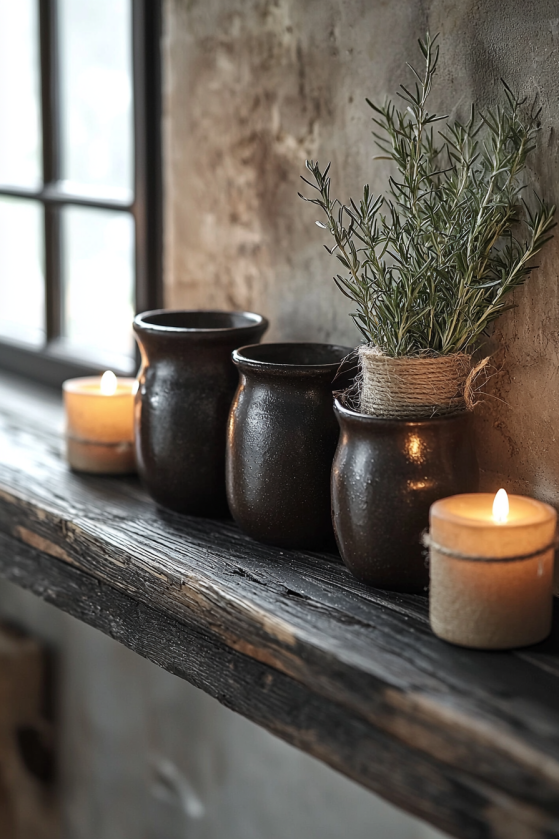
There is something about dark stoneware that resists the ordinary. A mass-produced ceramic sits quietly in a cupboard and asks nothing of you. It takes up space in the room differently, commands a different quality of attention. You notice it the way you notice a well-bound book or a very old tree. Matte Black Stoneware (paid link), Dried Herbs , Black Candles and Holders
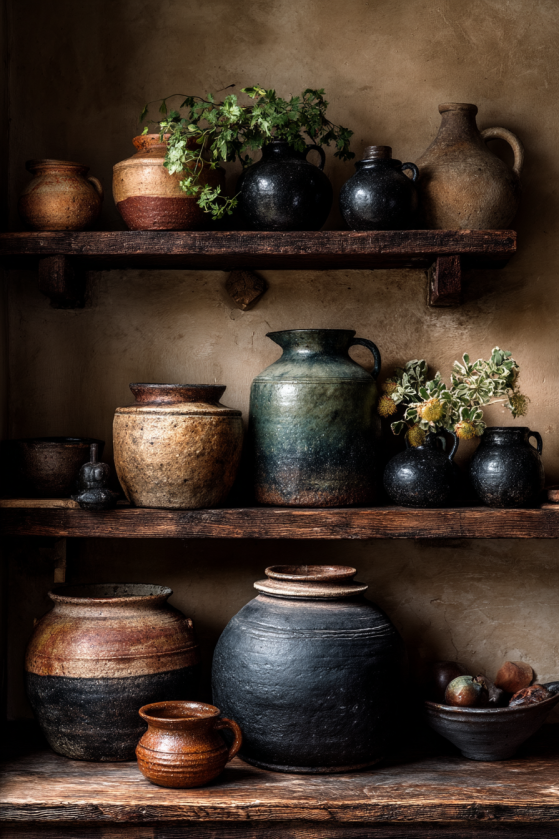
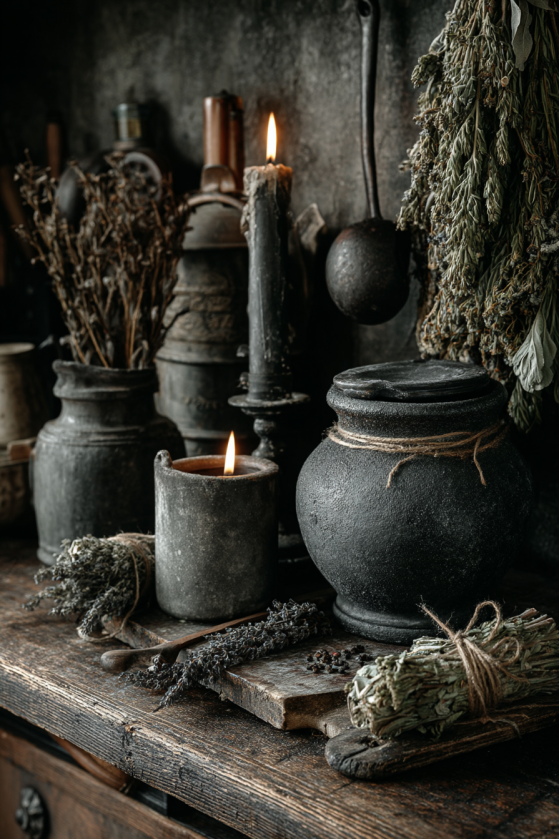
In the gothic farmhouse kitchen is the backbone of every shelf. The crocks that hold dried salt, ground pepper, and whole cloves. The squat lidded pot where the sourdough starter lives. The oil bottle with the dripped, almost geological glaze that has run down its side and hardened mid-motion. Dark Handcrafted Stoneware These pieces are the quiet heart of the kitchen witch aesthetic: objects that carry both memory and utility, that become more beautiful the more they are used.
Look for stoneware that shows the maker’s hand — slight asymmetry, visible throwing lines, finger marks at the rim. Perfection is not the goal here. Depth is the goal.
Dark Pottery of All Sizes . Choose pieces that show the maker’s hand — finger marks at the rim, slight asymmetry, visible throwing lines on the body.
Dark matte ceramic canisters (paid link) for kitchen storage become part of the aesthetic the moment they land on your counter or shelf — functional and visually strong.
Dried Herbs and the Gothic Kitchen Witch Aesthetic
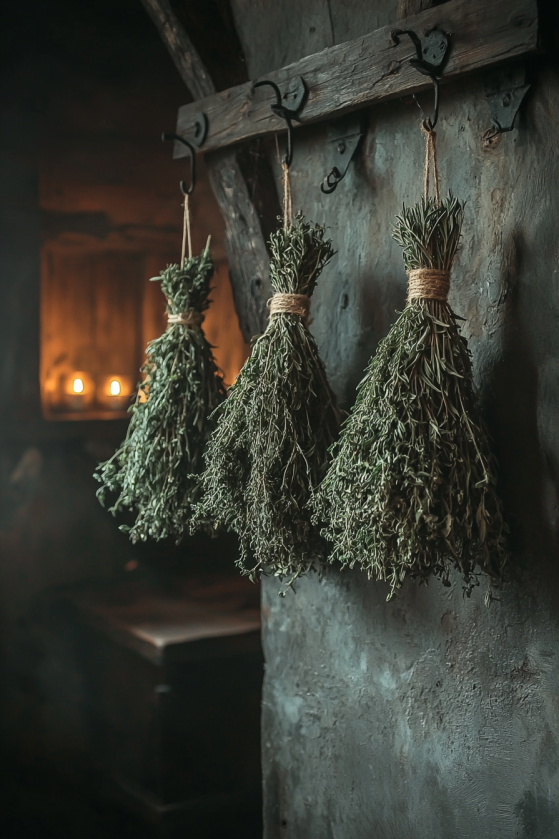
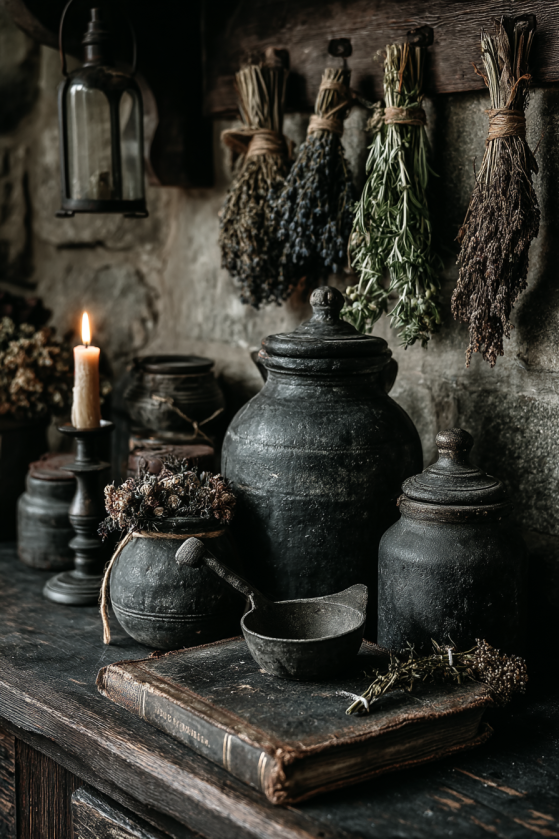
Cut them in late summer when the oils are highest. Tie them with rough twine — not the decorative kind, not the pale raffia from a craft store, but actual garden twine, slightly stiff, smelling faintly of the outdoors. Hang them from a low beam or a wrought iron hook until they are fully dry, then move them to the shelf: rosemary first, then thyme, then lavender if you grow it, then whatever the garden offered that year that felt worth keeping.
This Look: Gathered Dark Stoneware Crocks & Layered Textures
The dried herbs shelf is one of the oldest gestures in the domestic world. Every grandmother in every farmhouse culture has one. What makes it gothic farmhouse is the atmosphere that surrounds it — the dark ceramic beneath the bundles, the iron hook they hang from, the low candlelight that catches the dusty texture of the stems. The smell alone transforms the kitchen from a room into something older and more intentional.
Rough natural garden twine (paid link) for bundling dried herbs — jute, hemp, the kind that feels substantial in your hands and smells like the garden even after it’s dry.
Natural dried herb bundle sets— rosemary, thyme, lavender — for those who don’t grow their own, or who want to layer the scent and presence through the year.
Iron, Worn, and the Beauty of Objects That Remember
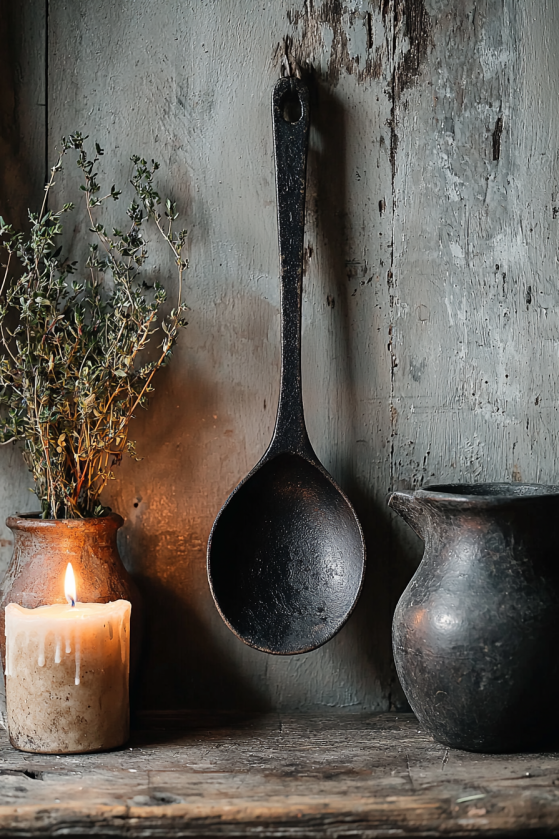
The Worn Iron Ladle on this shelf is not decorative. It has been used — you can see it in the slight darkening of the bowl, the smoothed handle where a hand has rested thousands of times. (The perfect Worn Iron Ladles) And yet it is also the most visually arresting object on the shelf, the piece the eye returns to again and again. This is the paradox at the heart of the gothic farmhouse kitchen: the things that have been most used are often the most beautiful.
Seek out cast iron and wrought iron pieces that carry age. A heavy ladle with a hook for hanging. A small trivet, pitted with rust at the edges. A deep skillet that has lived through decades of use and emerged darker and more seasoned for it. In the kitchen witch aesthetic, iron is protective as well as practical — the old associations are layered into it whether you believe in them or not. Iron is ancient. It grounds the shelf.
Vintage-style cast iron ladles or iron kitchen utensils — worn smooth, darkened with use, the kind of piece that looks like it has a history and asks to be kept.
This is the shelf as it stands today. Everything on it has earned its place. Everything can be used.
A Note on Candlelight
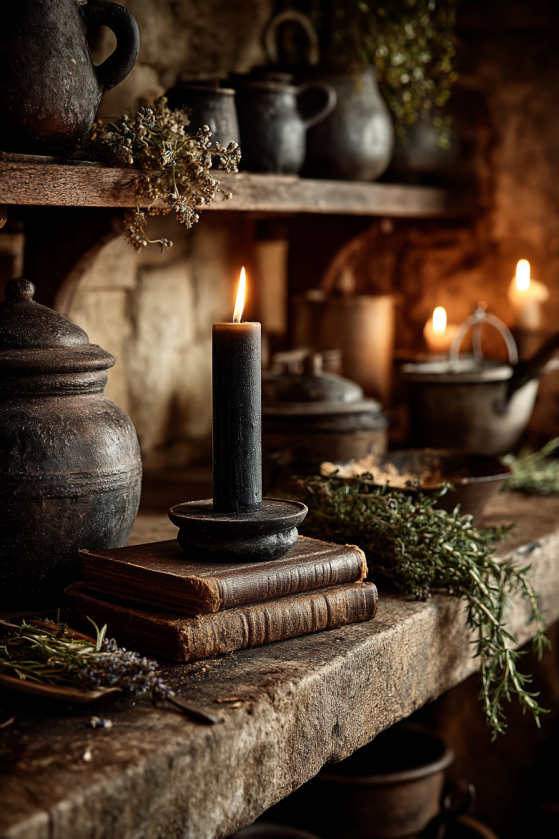
The light matters as much as the objects. In a gothic farmhouse kitchen, fluorescent overhead light kills the atmosphere immediately. Use candles on the shelf — a single pillar candle, or a cluster of taper candles in a wrought iron holder. The warm, unsteady light makes the stoneware look deeper, the dried herbs more dimensional, the iron more weighted. It turns a collection of objects into a room that breathes.
The shelf changes with the seasons. In autumn it fills with new bundles — fresh-cut and deep green before they grey and dry. In winter it grows heavier, darker, more protective-feeling. By spring it has thinned again. This is the rhythm of the gothic farmhouse kitchen: not static, not staged, but alive to the year.
If this shelf speaks to something in you — save it to your dark home or kitchen witch board on Pinterest, or explore the related posts below. The HEARTH is always here.