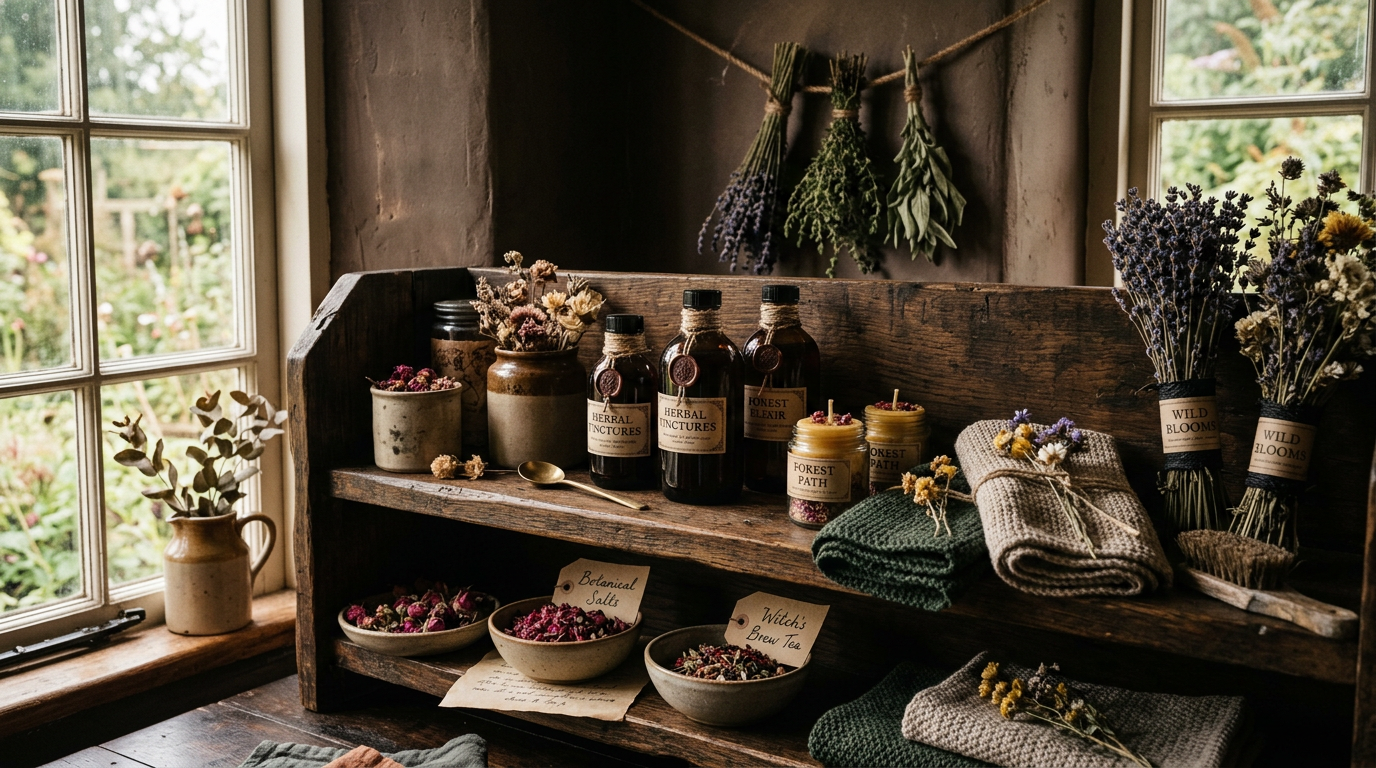
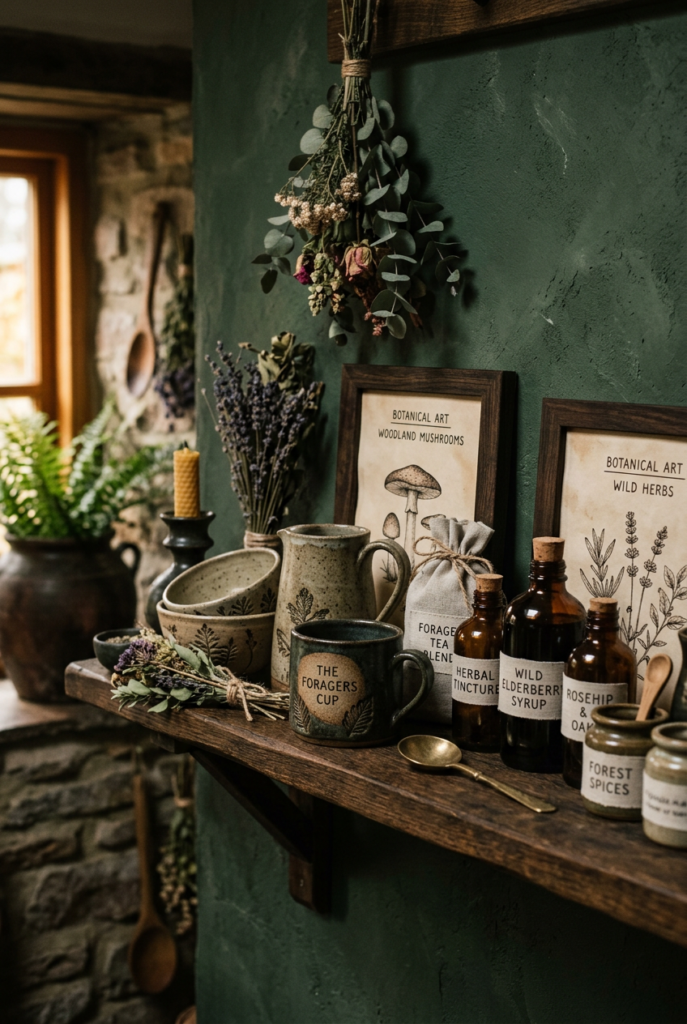
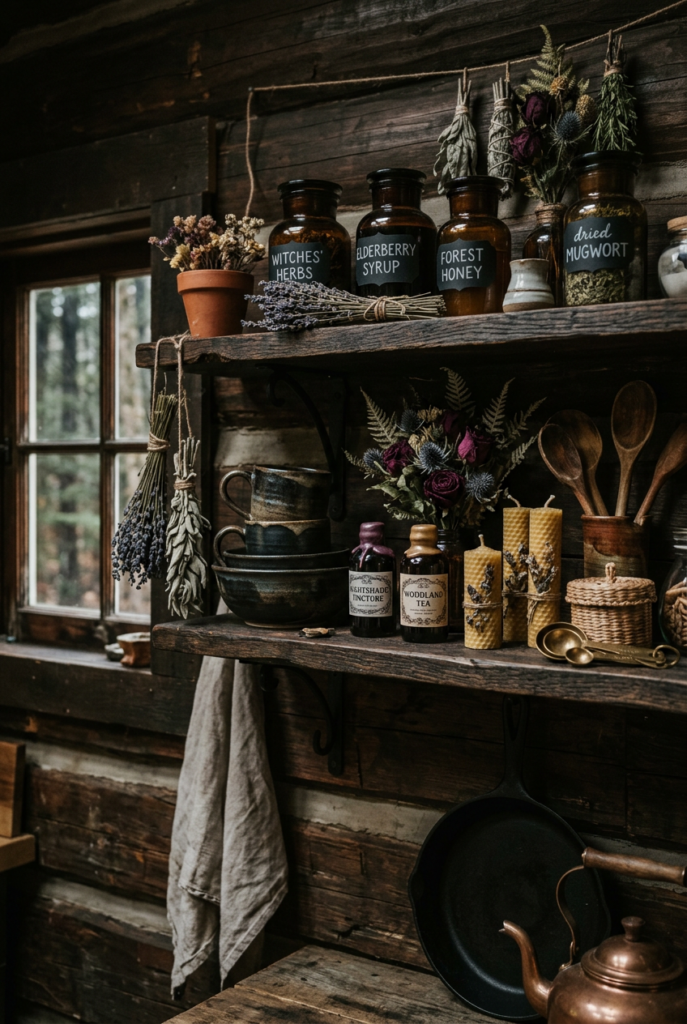
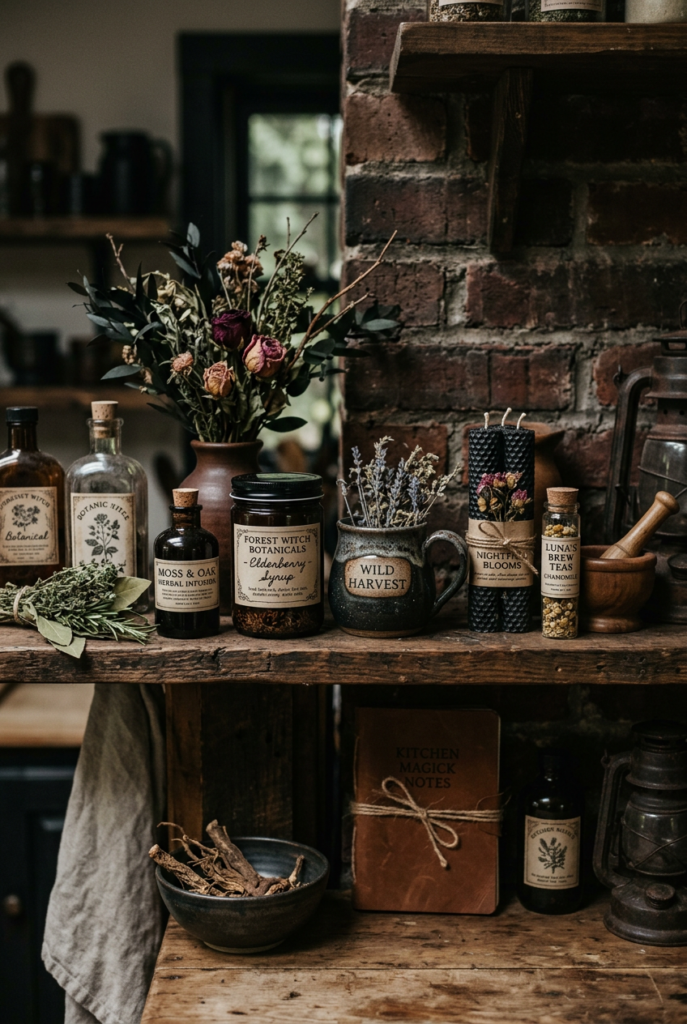
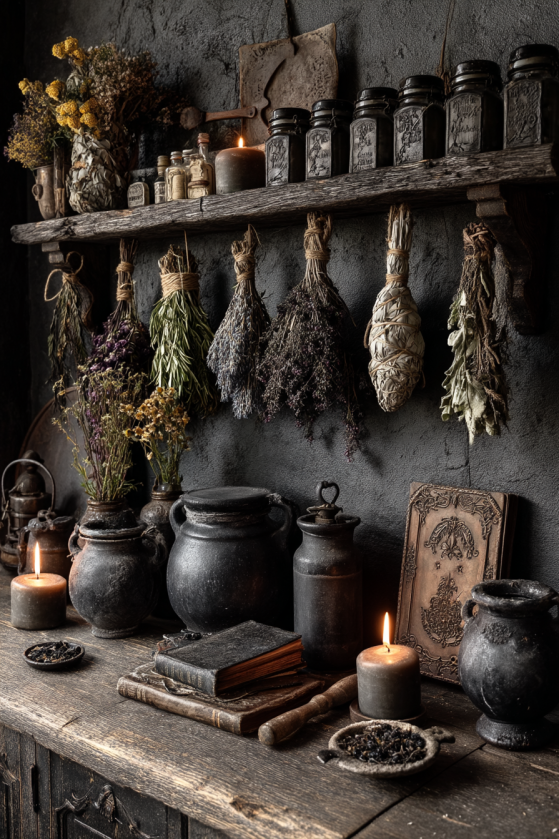
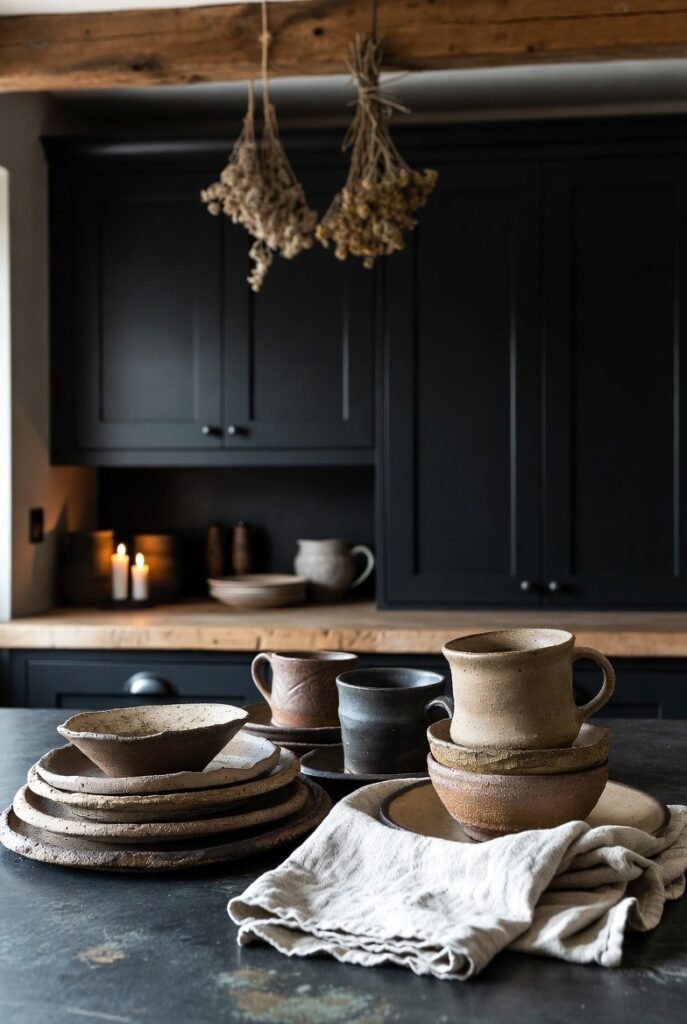
There’s something deeply satisfying about a kitchen shelf that feels like an apothecary. Amber glass bottles, handwritten labels, bundles of dried herbs, and beeswax candles glowing softly — it’s the kind of corner that makes even the simplest tasks feel meaningful.
This is the heart of dark cottagecore: not just pretty storage, but a space that holds intention. Whether you’re reaching for dried chamomile for tea or lighting a beeswax candle while you cook, these shelves turn everyday moments into quiet rituals.
Creating Your Own Apothecary Shelf
You don’t need a huge kitchen or expensive furniture. Start with a sturdy wooden shelf (or even floating shelves) in a darker tone — deep green, charcoal, or natural wood all work beautifully. Fill it with amber glass bottles for your dried herbs and tinctures, small jars for salts and spices, and a few beeswax candles for that soft, flickering light. Add botanical prints, a mortar and pestle, and some dried flowers or eucalyptus for texture. The goal isn’t perfection — it’s creating a space that feels collected and alive.
Why This Style Feels So Good Right Now
Women are craving slower, more intentional spaces. A dark cottagecore apothecary shelf gives you that feeling without needing a full kitchen overhaul. It’s practical (everything has a home), beautiful to look at, and deeply sensory. The scent of dried herbs, the glow of beeswax, and the sight of neatly labeled jars bring a sense of calm and creativity to the heart of the home.
There’s one shelf in the kitchen that quietly works harder than anything else in the house — and somehow still looks like pure magic.
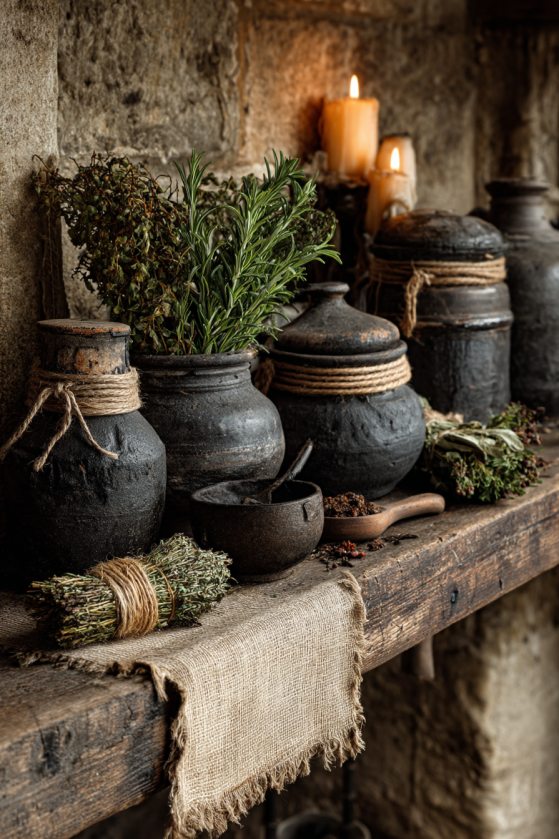
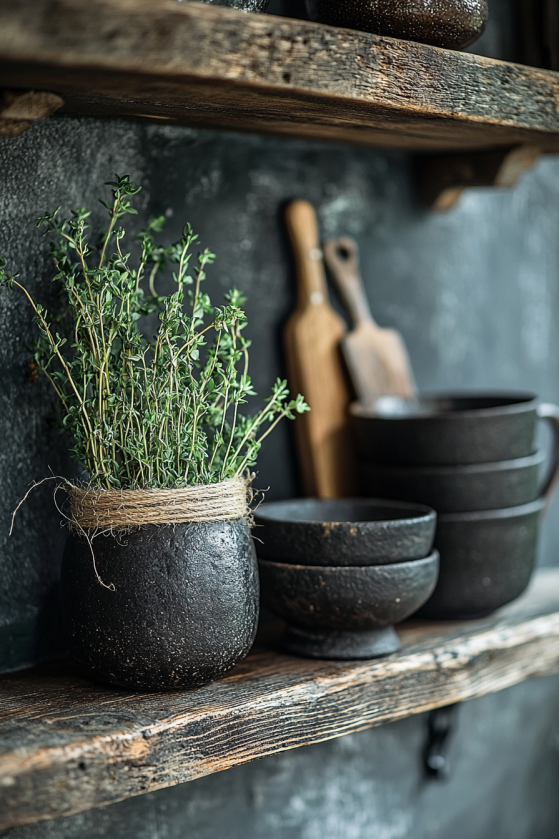
It smells like fresh rosemary and that cool, grounding scent of old iron. It holds bundles of winter thyme twisted tight with rough twine, and the satisfying weight of hand-thrown stoneware crocks in shades so deep and matte they basically swallow the light.
This is gothic farmhouse kitchen energy at its best: not a staged magazine set or a Pinterest board for strangers, but a real, living little altar to nourishment, creativity, and the slow turn of the seasons. It’s where utility meets beauty and they refuse to be separated. Every vessel carries the maker’s hand, and every dried stem holds onto the memory of summer.
This shelf has always been both pantry and altar. And now it can be yours, too.
THIS LOOK: DARK STONEWARE CROCKS, DRIED HERBS & GOTHIC FARMHOUSE MAGIC
The gothic farmhouse kitchen isn’t built in a single afternoon.
It is gathered — slowly, deliberately, across seasons and weekend markets and those quiet little “this is mine” moments when you spot the perfect piece of stoneware hiding at the back of a dusty shelf and you just know it belongs with you.
This is the kitchen witch aesthetic at its most grounded: not theatrical or costume-y, but deeply domestic and real. Every object has earned its place through actual use, through quiet beauty, and through the way it settles into the space and simply refuses to leave.
What makes a kitchen shelf feel truly alive instead of just arranged is the beautiful layering of textures — the rough drag of unglazed clay against a worn wooden surface, the crisp brittleness of dried herb stems brushing against the cold, satisfying weight of iron.
In a gothic cottagecore kitchen, nothing is purely decorative and nothing is purely functional. The crock holds your salt and it holds presence. The herbs scent the room and they are little packets of medicine and memory. This beautiful doubling — this refusal to be just one thing — is exactly what gives the gothic farmhouse kitchen its quiet power.
And the best part? You get to build yours exactly the same way — one meaningful piece at a time.
This Look: Gathered Dark Stoneware Crocks & Layered Textures
Dark Stoneware — Weight, Warmth, and the Maker’s Hand
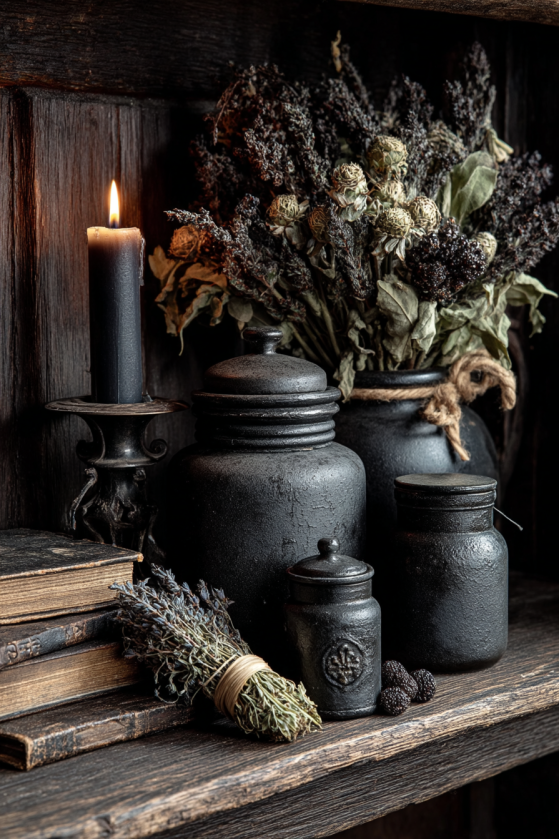
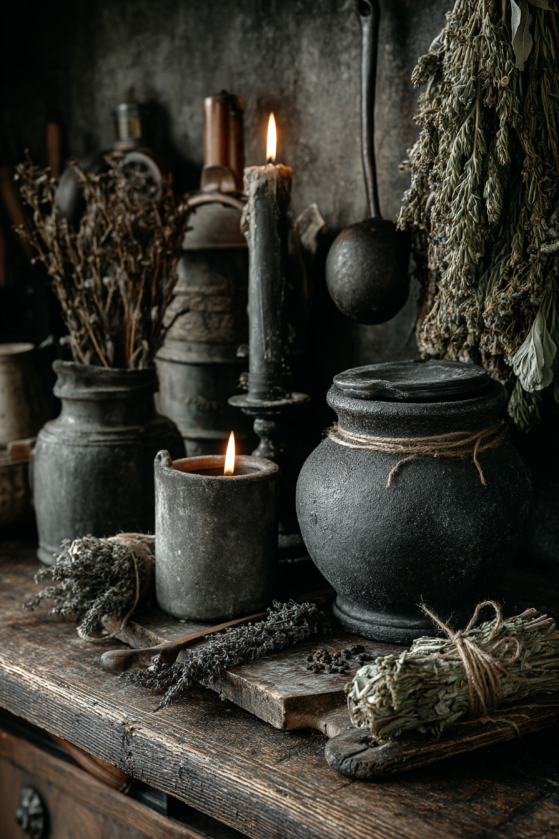
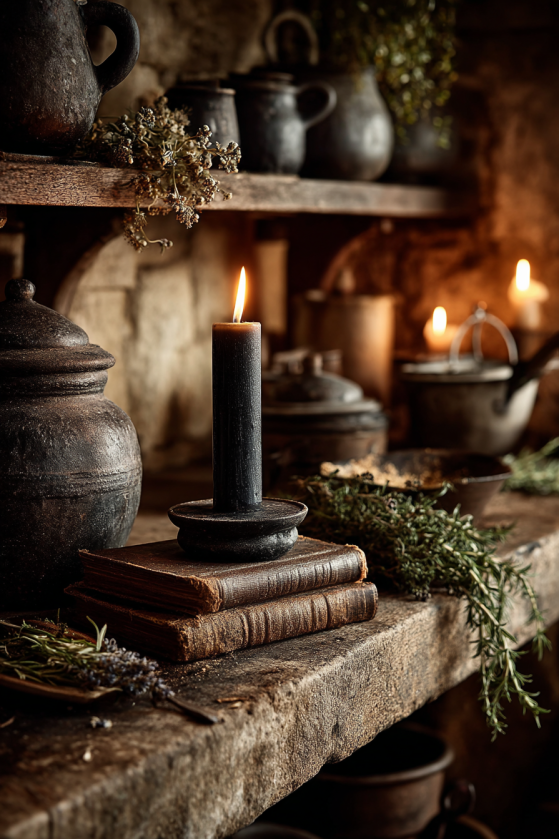
There is something about dark stoneware that resists the ordinary. A mass-produced ceramic sits quietly in a cupboard and asks nothing of you. It takes up space in the room differently, commands a different quality of attention. You notice it the way you notice a well-bound book or a very old tree. Matte Black Stoneware , Dried Herbs , Black Candles and Holders
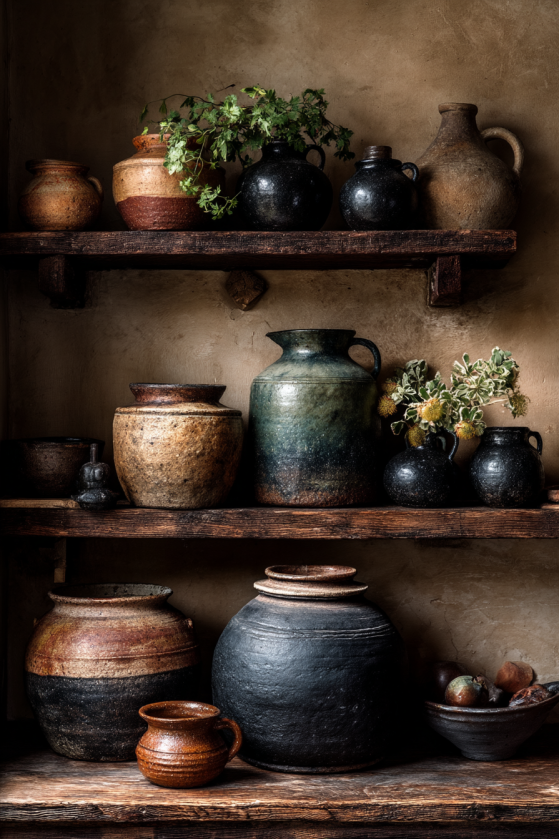
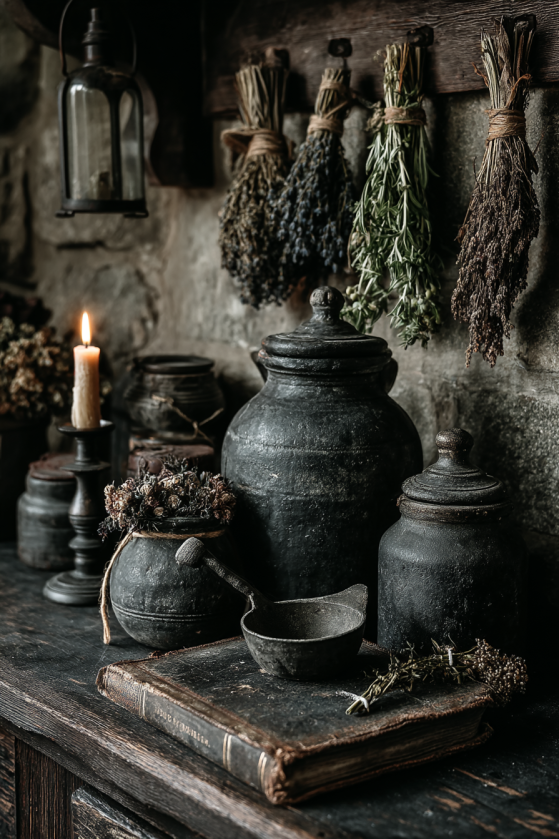
In the gothic farmhouse kitchen is the backbone of every shelf. The crocks that hold dried salt, ground pepper, and whole cloves. The squat lidded pot where the sourdough starter lives. The oil bottle with the dripped, almost geological glaze that has run down its side and hardened mid-motion. Dark Handcrafted Stoneware These pieces are the quiet heart of the kitchen witch aesthetic: objects that carry both memory and utility, that become more beautiful the more they are used.
Look for stoneware that shows the maker’s hand — slight asymmetry, visible throwing lines, finger marks at the rim. Perfection is not the goal here. Depth is the goal.
Dark Pottery of All Sizes . Choose pieces that show the maker’s hand — finger marks at the rim, slight asymmetry, visible throwing lines on the body.
Dark matte ceramic canisters for kitchen storage become part of the aesthetic the moment they land on your counter or shelf — functional and visually strong.
Dried Herbs and the Gothic Kitchen Witch Aesthetic
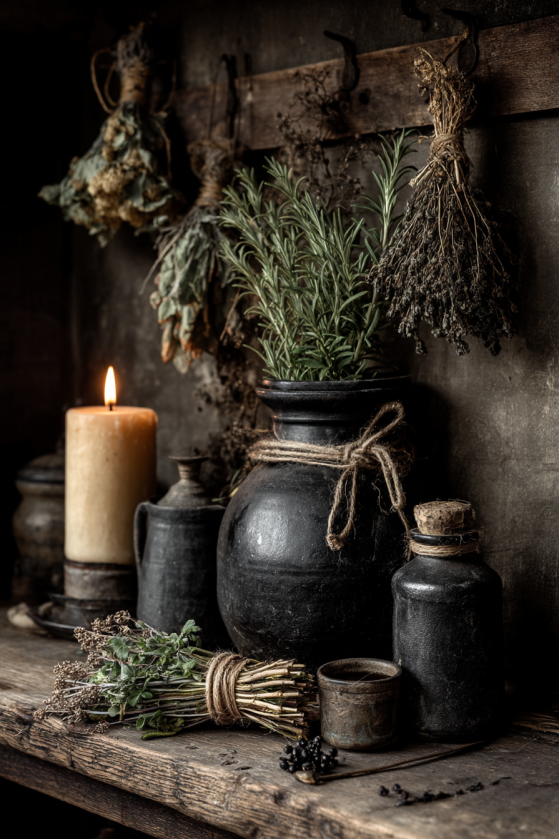
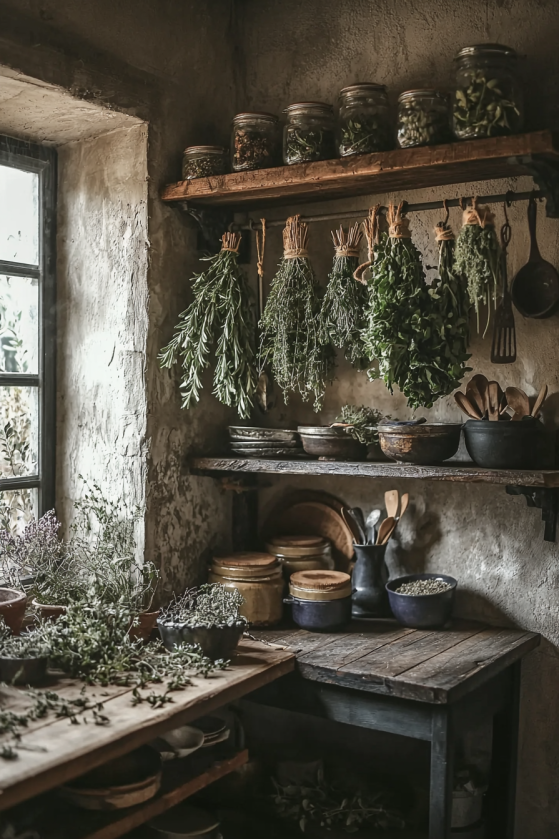
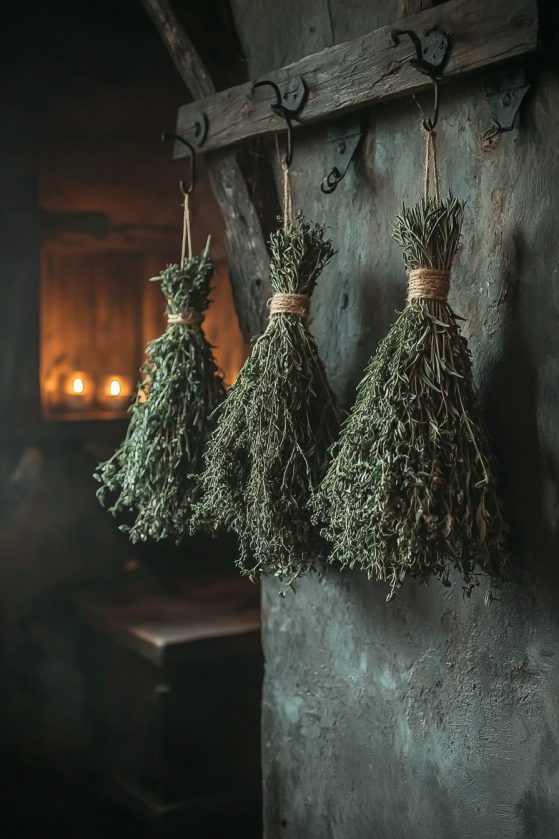
Cut them in late summer when the oils are highest. Tie them with rough twine — not the decorative kind, not the pale raffia from a craft store, but actual garden twine, slightly stiff, smelling faintly of the outdoors. Hang them from a low beam or a wrought iron hook until they are fully dry, then move them to the shelf: rosemary first, then thyme, then lavender if you grow it, then whatever the garden offered that year that felt worth keeping.
This Look: Gathered Dark Stoneware Crocks & Layered Textures
The dried herbs shelf is one of the oldest gestures in the domestic world. Every grandmother in every farmhouse culture has one. What makes it gothic farmhouse is the atmosphere that surrounds it — the dark ceramic beneath the bundles, the iron hook they hang from, the low candlelight that catches the dusty texture of the stems. The smell alone transforms the kitchen from a room into something older and more intentional.
Rough natural garden twine for bundling dried herbs — jute, hemp, the kind that feels substantial in your hands and smells like the garden even after it’s dry.
Natural dried herb bundle sets— rosemary, thyme, lavender — for those who don’t grow their own, or who want to layer the scent and presence through the year.
Iron, Worn, and the Beauty of Objects That Remember
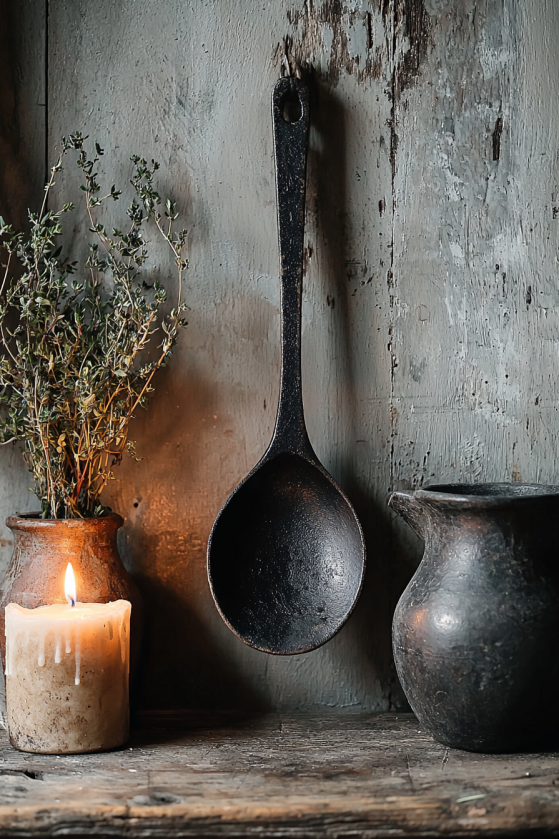
The Worn Iron Ladle on this shelf is not decorative. It has been used — you can see it in the slight darkening of the bowl, the smoothed handle where a hand has rested thousands of times. (The perfect Worn Iron Ladles) And yet it is also the most visually arresting object on the shelf, the piece the eye returns to again and again. This is the paradox at the heart of the gothic farmhouse kitchen: the things that have been most used are often the most beautiful.
Seek out cast iron and wrought iron pieces that carry age. A heavy ladle with a hook for hanging. A small trivet, pitted with rust at the edges. A deep skillet that has lived through decades of use and emerged darker and more seasoned for it. In the kitchen witch aesthetic, iron is protective as well as practical — the old associations are layered into it whether you believe in them or not. Iron is ancient. It grounds the shelf.
Vintage-style cast iron ladles or iron kitchen utensils — worn smooth, darkened with use, the kind of piece that looks like it has a history and asks to be kept.
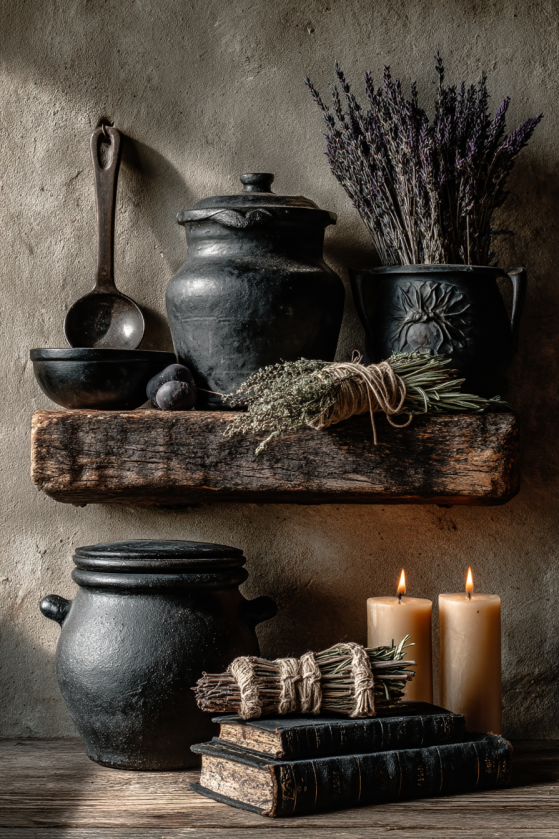
This is the shelf as it stands today. Everything on it has earned its place. Everything can be used.
A Note on Candlelight
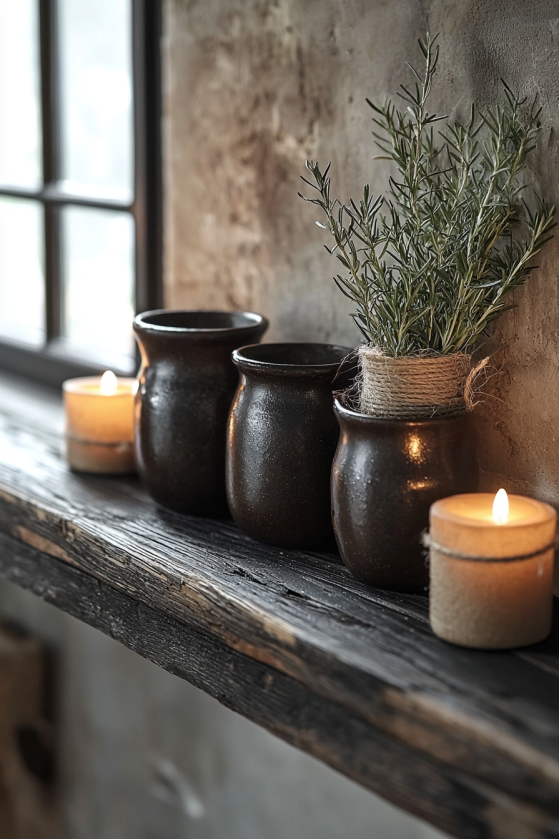
The light matters as much as the objects. In a gothic farmhouse kitchen, fluorescent overhead light kills the atmosphere immediately. Use candles on the shelf — a single pillar candle, or a cluster of taper candles in a wrought iron holder. The warm, unsteady light makes the stoneware look deeper, the dried herbs more dimensional, the iron more weighted. It turns a collection of objects into a room that breathes.
The shelf changes with the seasons. In autumn it fills with new bundles — fresh-cut and deep green before they grey and dry. In winter it grows heavier, darker, more protective-feeling. By spring it has thinned again. This is the rhythm of the gothic farmhouse kitchen: not static, not staged, but alive to the year.
If this shelf speaks to something in you — save it to your dark home or kitchen witch board on Pinterest, or explore the related posts below. The HEARTH is always here.
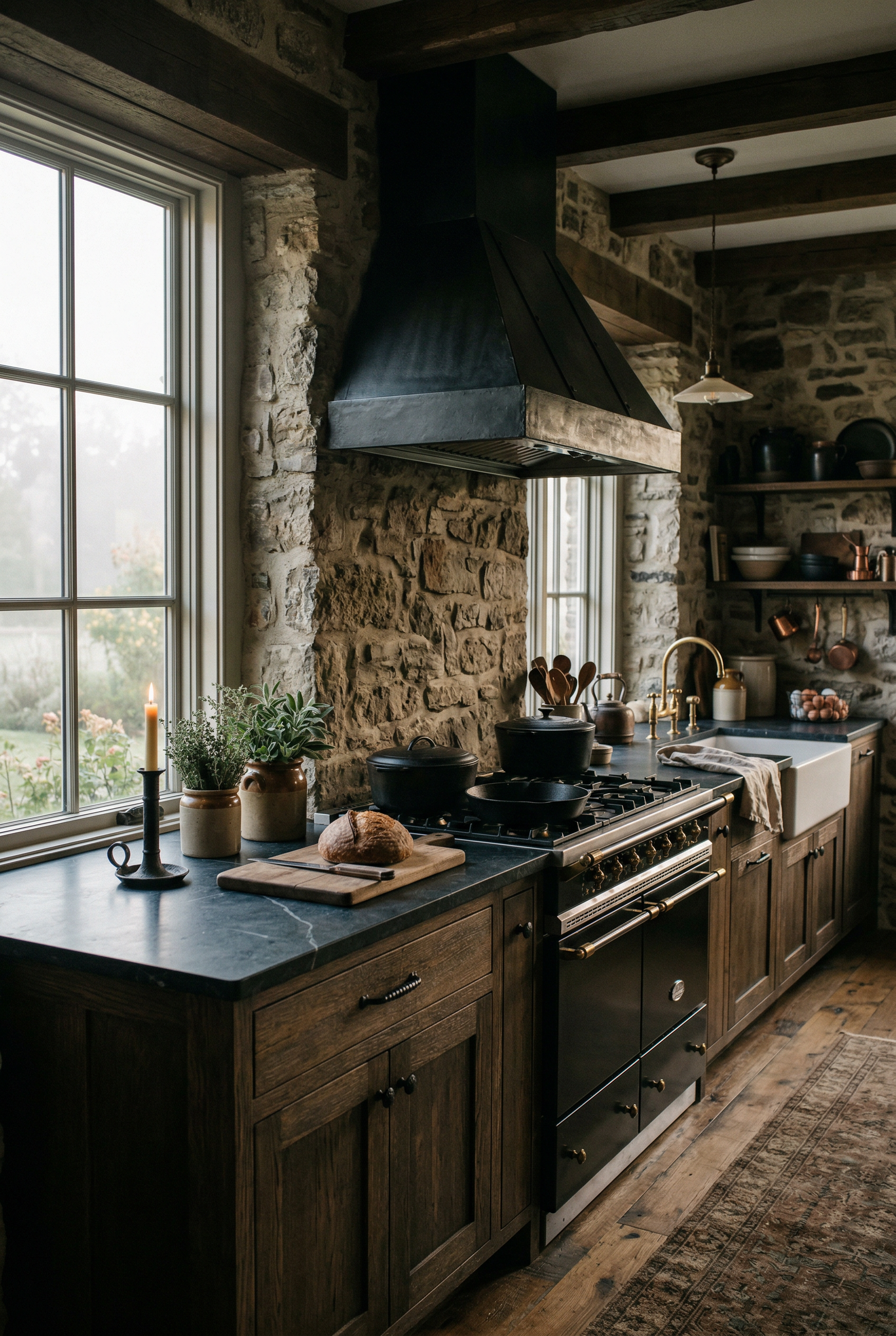
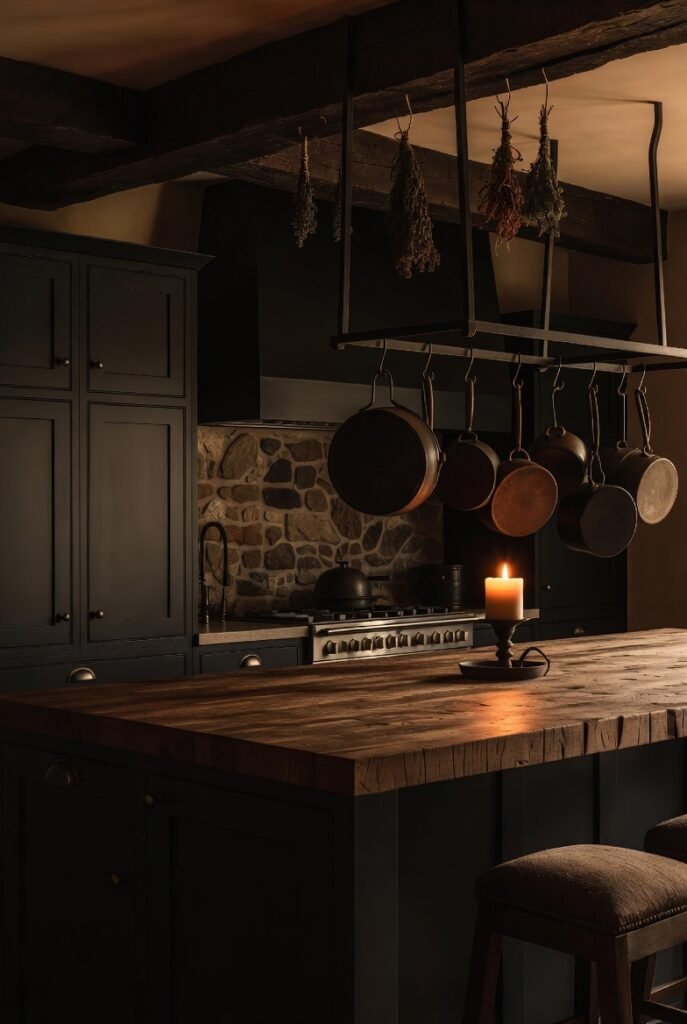
Stone walls, cast iron pots, and a single tallow candle at dawn. The dark gothic farmhouse kitchen built for slow mornings and deep warmth. Every surface tells a story of hearth and home—cast iron seasoned by generations, candlelight flickering against rough-hewn stone, and the smell of woodsmoke lingering in the morning air. This is where time moves differently, where breakfast is a ritual and the kitchen itself becomes a sanctuary.
When you purchase through any of the affiliate links on this page, I may earn a small commission at no extra cost to you. This helps support the site and allows me to keep creating honest, beautiful content like this. Thank you for being here.
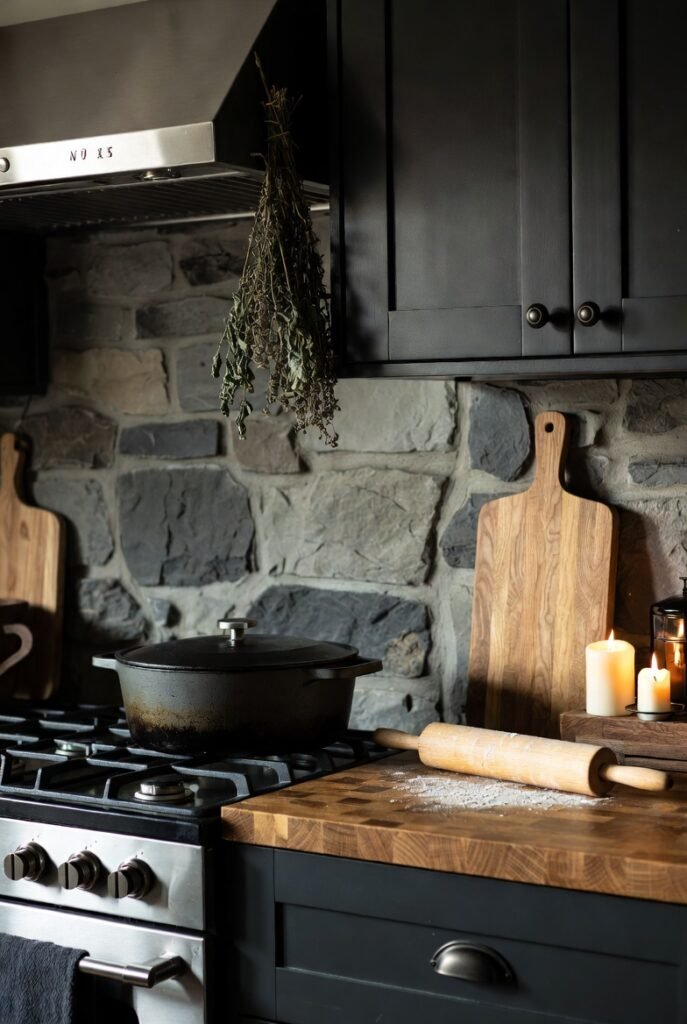
In a gothic farmhouse kitchen, utility and beauty merge seamlessly. Heavy Cast Iron Cookware hangs from ceiling beams, each piece a tool and an artifact. A thick oak butcher block counter catches the early light, its surface scarred and burnished by use. Dried herbs bundle above in tight knots, their fragrance released with each breath of air. A single beeswax candle flickers at the edge of the counter, casting dancing shadows that make the stone walls seem alive.
The gothic farmhouse kitchen is not designed for show. It exists in the ordinary moments — the morning bread, the slow simmer, the kettle set over flame while the house is still cold and quiet. These are kitchens built around function, and function, when it is honest, becomes its own kind of beauty.
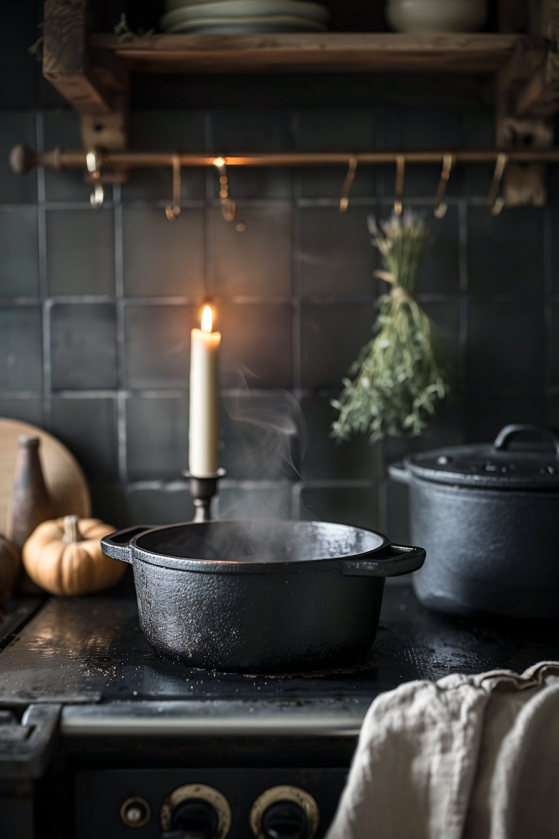
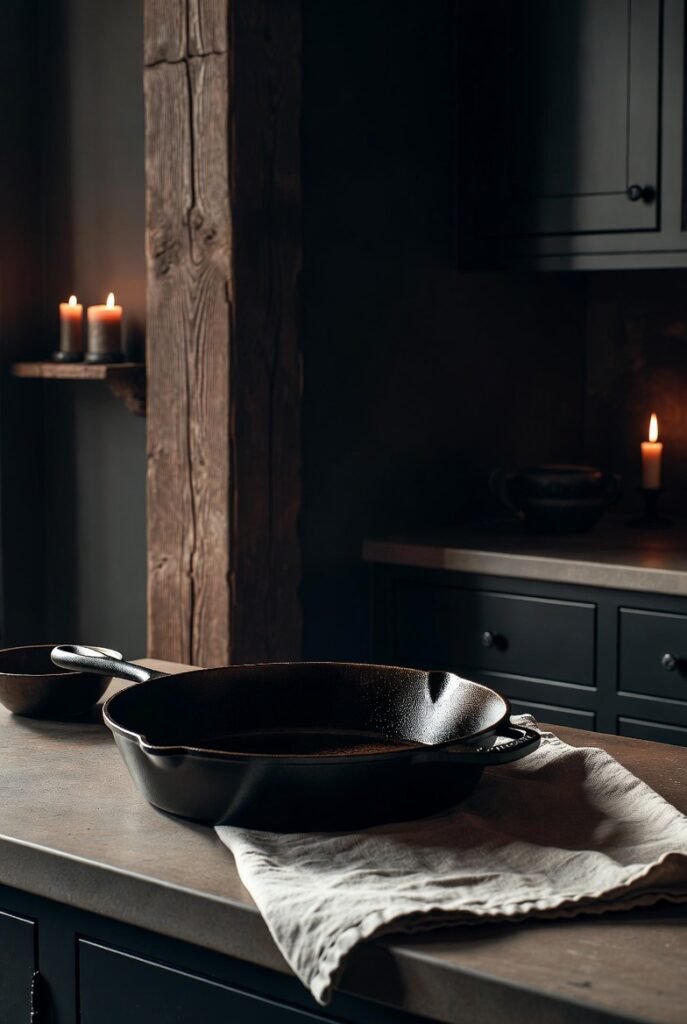
Cast iron is the foundation of this kitchen. Not because it is fashionable — it has never been fashionable, only useful — but because it works. A Well-Seasoned Cast Iron Skillet skillet holds heat the way stone holds cold: deeply, for a long time, with patience. A Dutch oven sits heavy on the stove, lid sealed over whatever is slow-cooking inside. These are tools passed down not because they are sentimental, but because they outlast everything else. How To-Season a Cast Iron Skillet
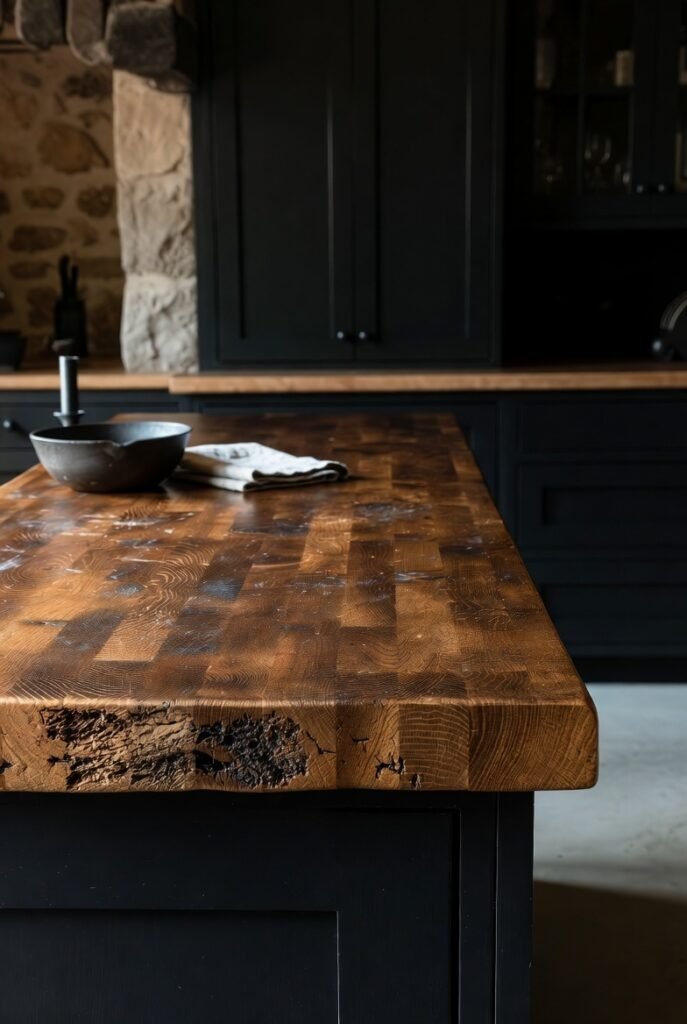
The butcher block is where the kitchen comes alive. Thick Oak Butcher Blocks In All Sizes, worn at the edges from years of use, bears the marks of every meal that came before. You do not sand them out. They are part of it. The grain drinks up oil, darkens with time, tells the story of the kitchen in a way no new surface ever could.
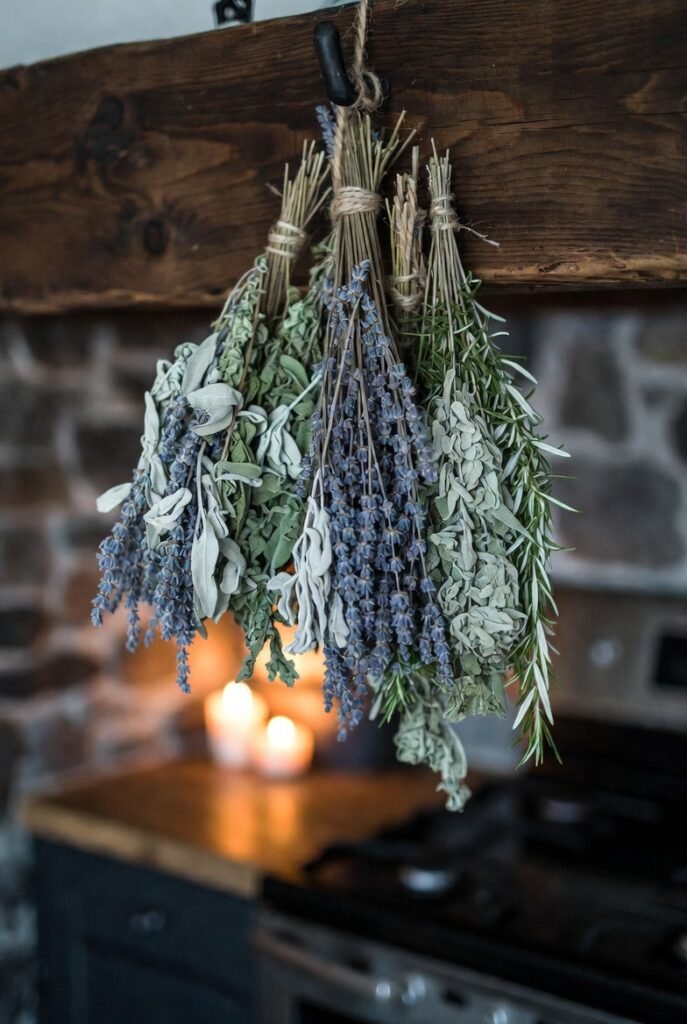
Lavender, sage, and that wonderfully bitter herb whose name you can never quite remember. Suspended gracefully from the dark aged beams with simple twine, their muted tones of silvery lavender, dusty sage green, and papery grey catch the soft candlelight with quiet, almost sculptural beauty. But it is their scent that truly transforms the room. Dried Bundles of Herbs and Flowers The moment you step inside, a deep, earthy, and comforting aroma greets you — soothing lavender mingling with the sharp herbal edge of sage and that grounding, slightly bitter note that feels like home itself. It lingers in the air like a gentle promise of slow mornings, herbal teas, and a kitchen that is truly lived in and loved –
The ceiling beams themselves are dark: old wood, sealed or stained or simply aged, pulling the eye up and grounding the room at the same time. Stone walls absorb sound the way they absorb light, making the kitchen quieter than it should be, more interior, more private. Beeswax taper Candles in hand-forged Wrought Iron Candle Holders . Not for decoration — for light. Dark farmhouse kitchen mood at its most essential.
The Beauty of Linen
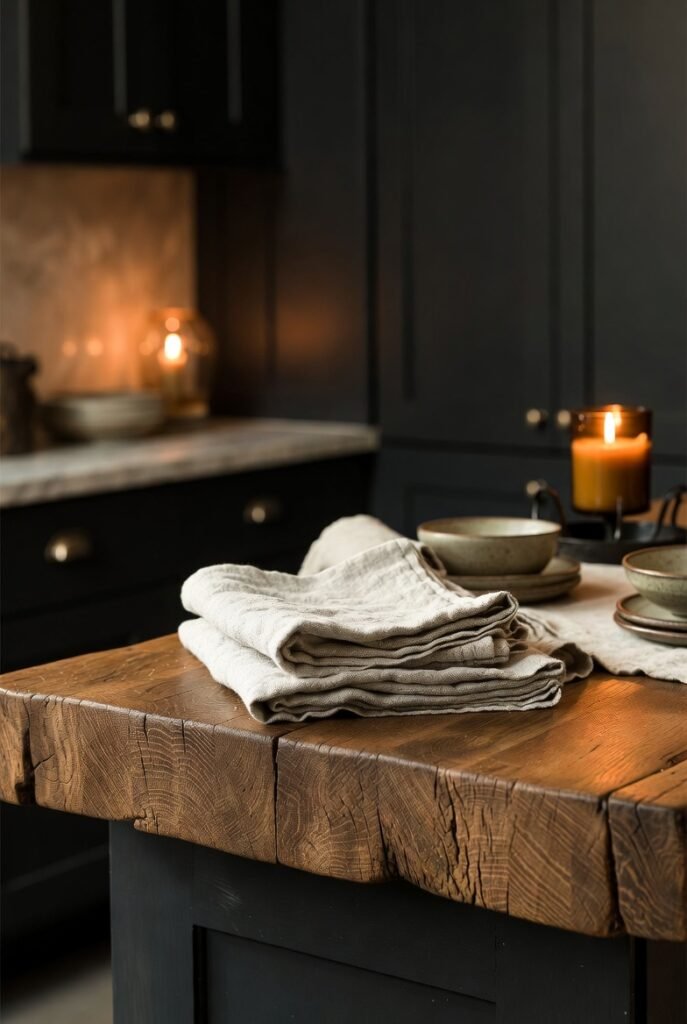
The linens bring their own quiet, enduring beauty to the gothic farmhouse kitchen. Soft, aged cream natural linen — tea towels, napkins, and a simple table runner — drape gently over the edge of the dark oak butcher block or rest folded beside the cast iron. Their rough, honest weave catches the warm flicker of candlelight in every thread, softening the hard edges of stone and black iron while growing only more beautiful with time and use. These are not delicate or decorative linens; they are lived-in, practical, and deeply comforting, carrying the faint scent of herbs and woodsmoke long after the meal is done. Natural Linens For The Kitchen
Earthy Stoneware Gothic Farmhouse
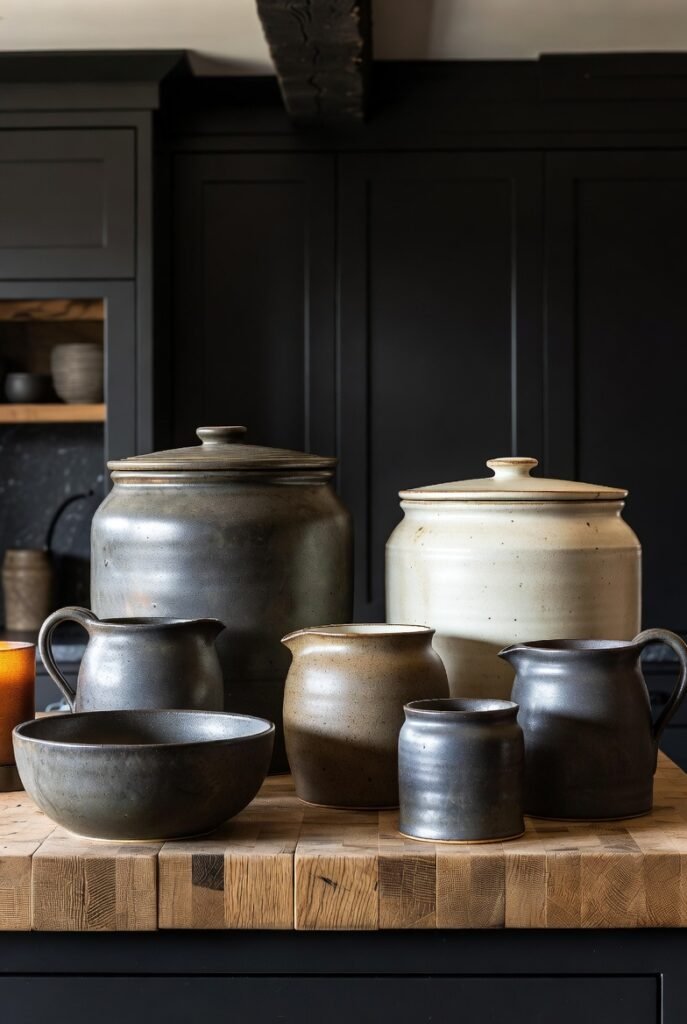
The stoneware brings a quiet, grounding beauty to the gothic farmhouse kitchen. Hand-thrown crocks, bowls, pitchers, and simple lidded jars in deep charcoal, warm taupe, and soft creamy tones sit naturally on the oak counter and open shelves. Their matte, slightly textured surfaces catch the flicker of candlelight with a velvety glow, adding warmth and weight without ever feeling precious. These are not delicate pieces — they are sturdy, honest, and made to be used daily. Gothic Farmhouse Stoneware On Etsy. Over time they only grow more beautiful, just like the cast iron and the scarred butcher block, becoming part of the living story of the kitchen.
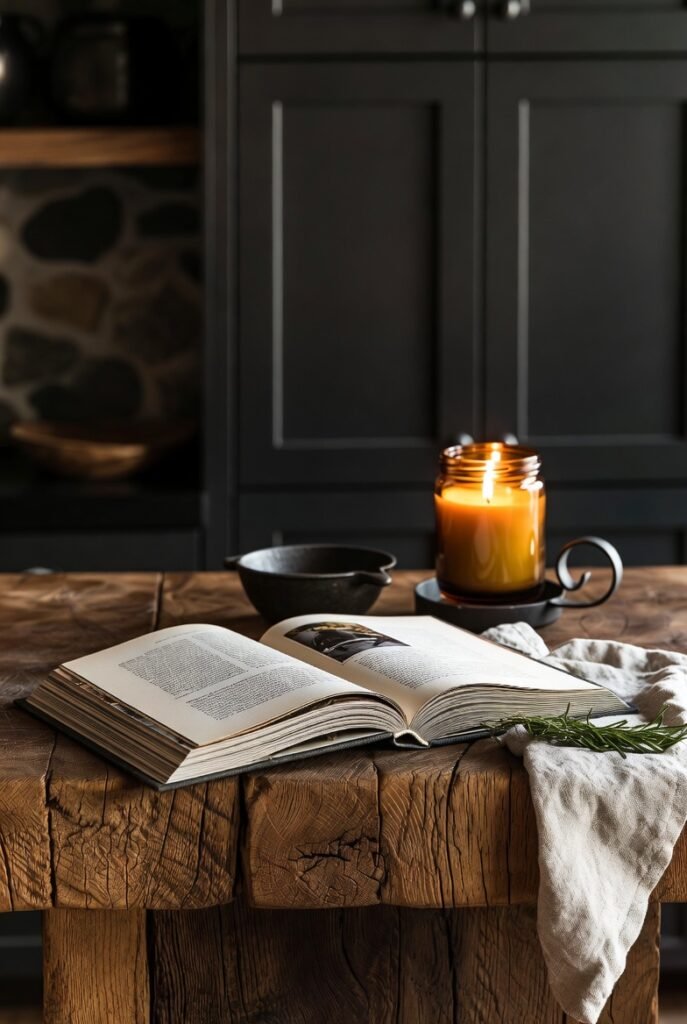
On the shelf beside the cast iron and stoneware sit the cookbooks that truly belong in this kitchen. Cook It In Your Dutch Oven from America’s Test Kitchen delivers 150 foolproof recipes that make the most of that heavy black pot you already love. The Hearth Witch’s Kitchen Herbal turns the dried lavender, sage, and bitter herbs hanging overhead into everyday magic — teas, syrups, and simple meals that smell like home. And The Staub Cookbook offers modern inspiration for classic cast iron, proving these tools are as timeless as they are practical. These are not trendy cookbooks — they are the ones you’ll reach for again and again, their pages slowly stained with butter and time, just like everything else in the room. Cook It In Your Dutch Oven, Something more goth The Hearth Witch’s Kitchen Herbal, Very farmhouse The Staub Cookbook: Modern Recipes for Classic Cast Iron
This is the kitchen that does not apologize for what it is. It smells of iron and herbs and woodsmoke. It earns its dark.
More from the dark farmhouse — the living room, the larder, the rooms built for slow living and long winters.