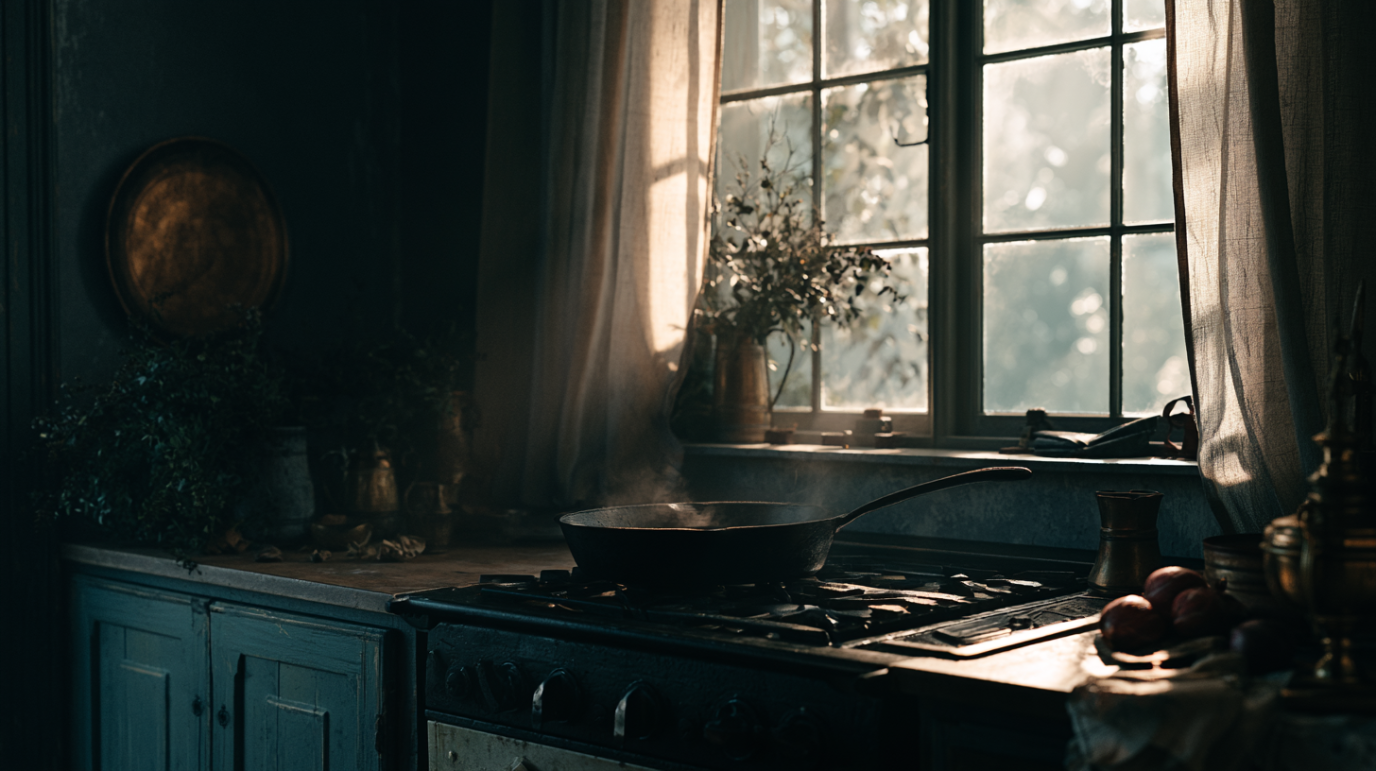
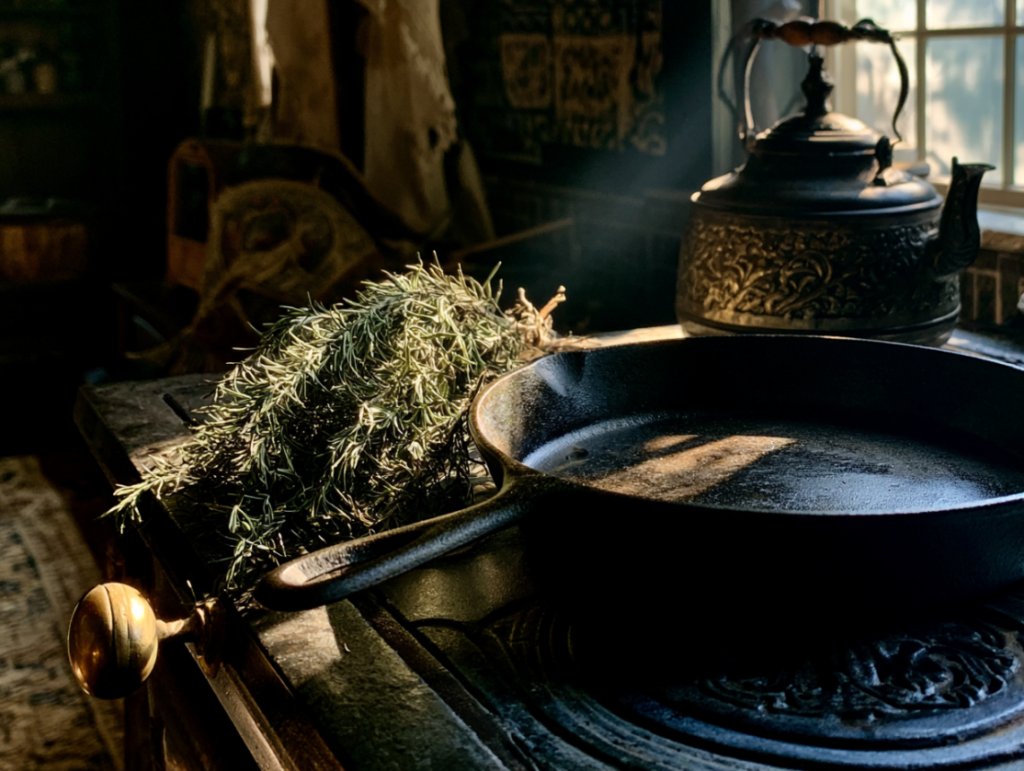
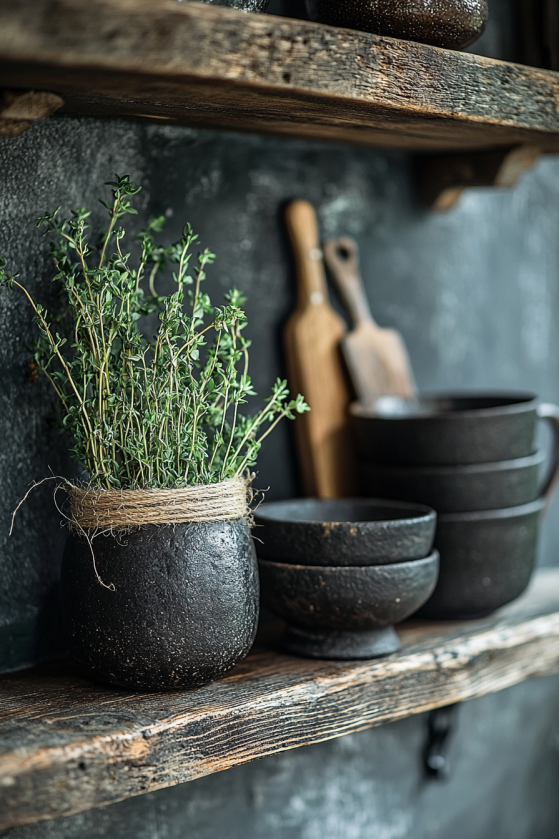
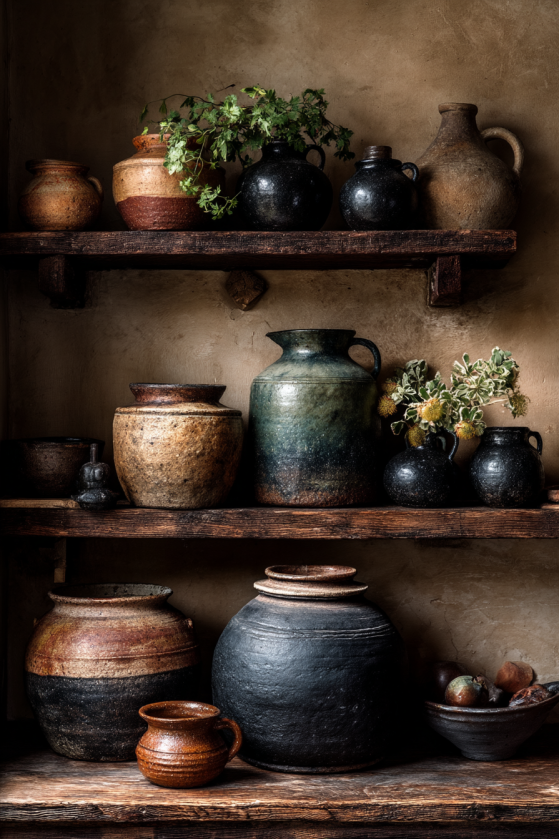
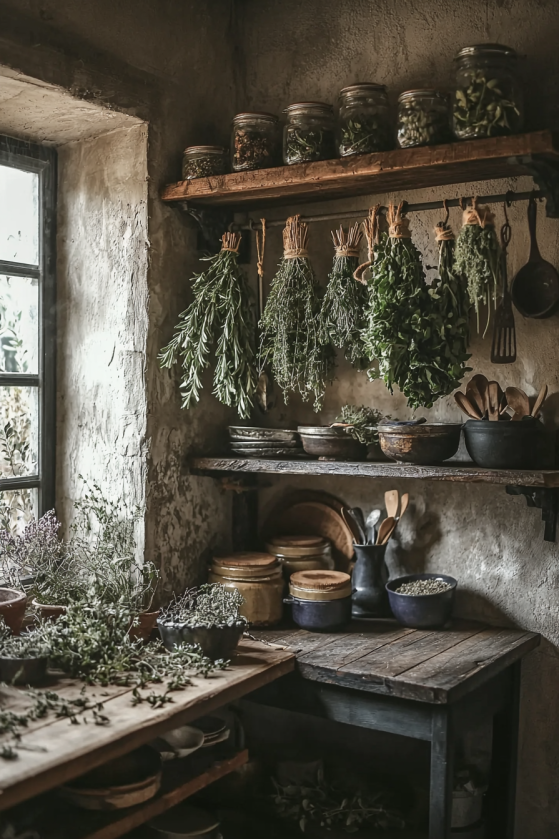
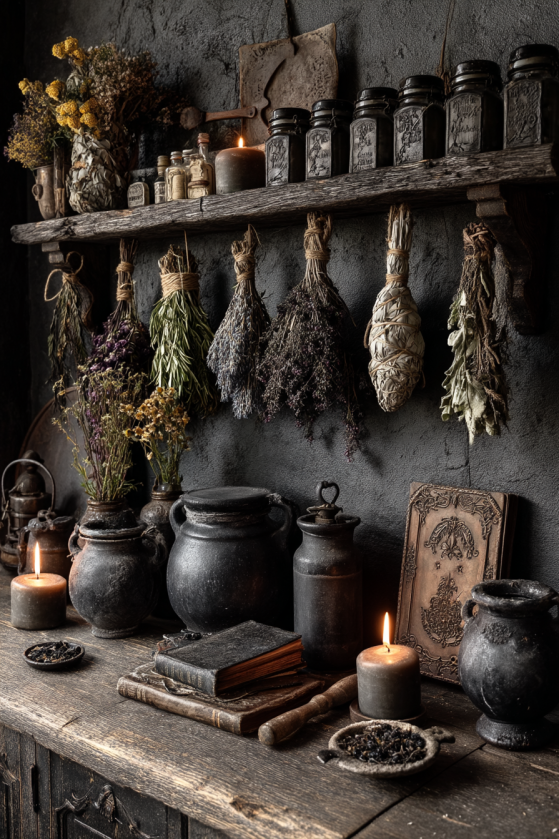
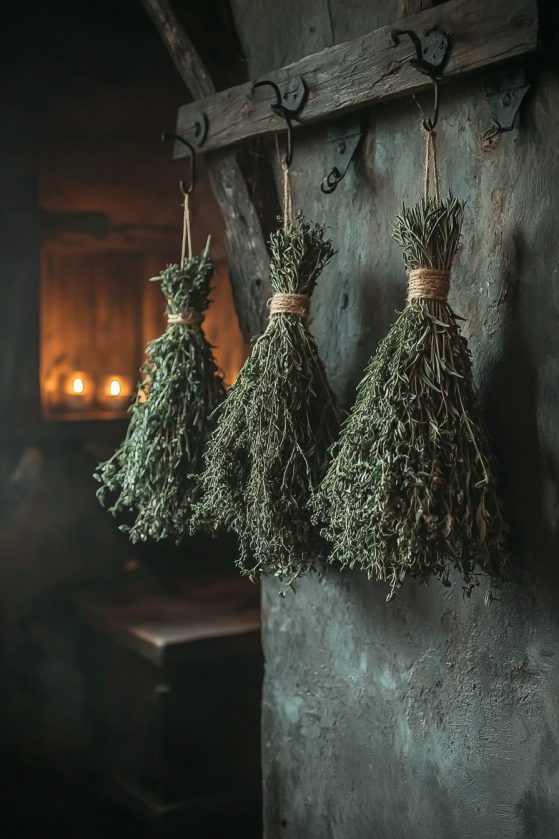
Step inside. The kettle hums low on a black iron stove. Bundles of dried lavender and rosemary hang like sleeping bats from a ceiling beam worn smooth by decades of hands. A single tallow candle stutters on the windowsill, casting amber pools across dark slate tiles and a worn oak table dusted in flour.
This is not your grandmother’s farmhouse kitchen.
This is something older. Something more honest.
This is the dark cottagecore kitchen aesthetic — and if your soul has ever ached for a place that feels both wildly beautiful and beautifully strange, you already know exactly what this feels like.
What Is the Dark Cottagecore Kitchen Aesthetic?
Cottagecore, at its heart, is a love letter to slow living, handmade things, and the natural world. But dark cottagecore dips that letter in ink instead of watercolor.
Where classic cottagecore kitchens lean toward white linen and sunlit jars of honey, the dark cottagecore kitchen leans into:
Deep, moody color palettes — forest green, charcoal, blackened walnut, plum, and stone grey
Witchy, foraged, and folk-magic vibes — dried herb bundles, mortar and pestles, amber glass bottles, beeswax candles
A sense of living with the land, not just decorating with it
Gothic undertones softened by the warmth of a wood fire and the smell of bread baking
Think: a healer’s cottage at the edge of a dark wood. A Victorian herbalist’s workspace. A fairy tale kitchen where something is always simmering and the walls know your name.
The objects that carry this feeling are not loud. They are the ones that have already been used — the iron that has seasoned with other fires, the clay that holds its own silence, the herbs that dried in their own season. You can bring that same weight and quiet into your own kitchen.
LAYER YOUR OWN DARK COTTAGECORE KITCHEN
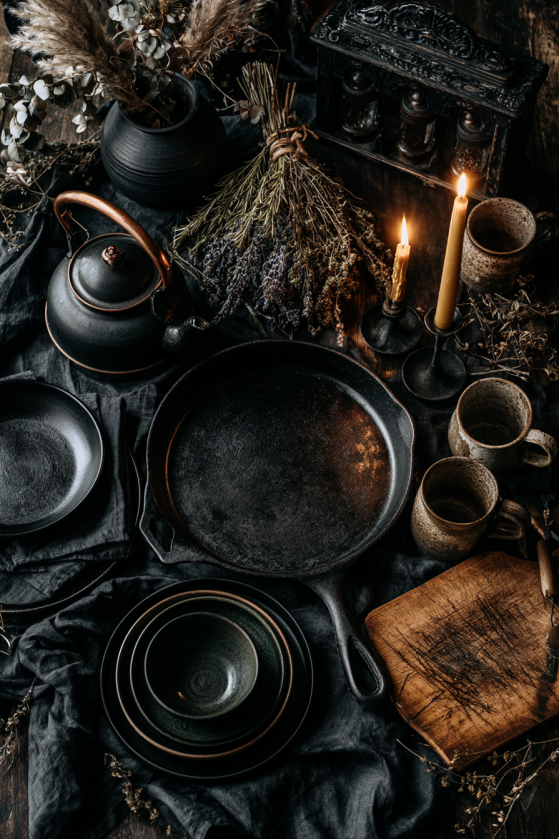
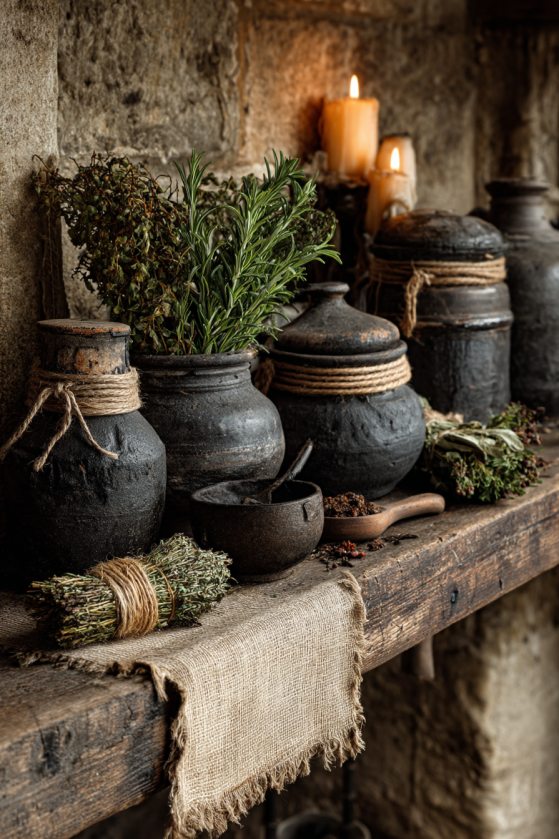
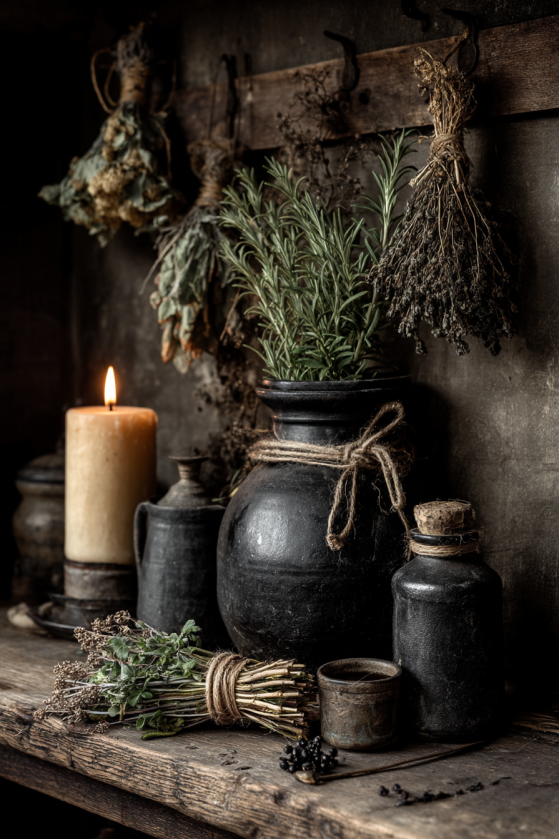
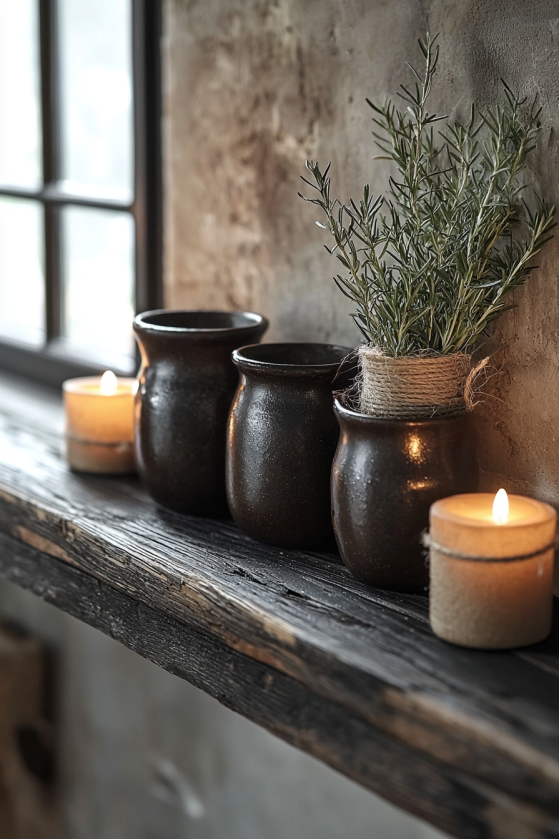
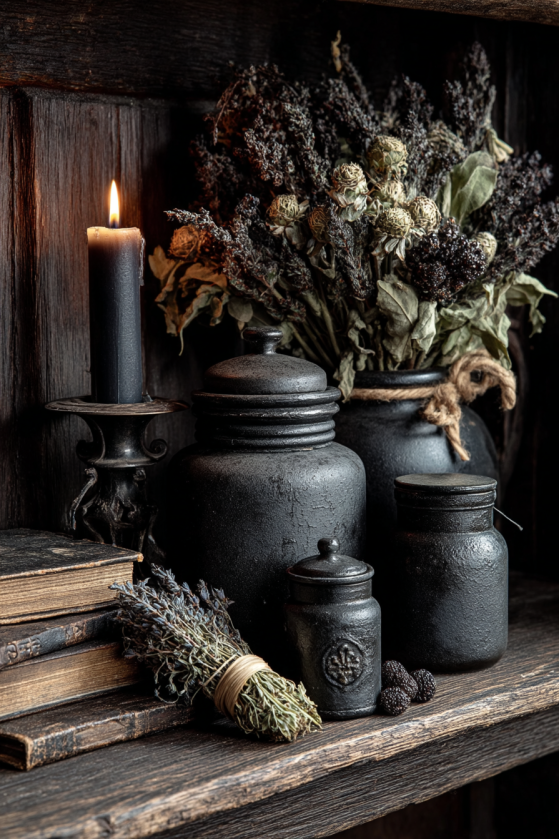
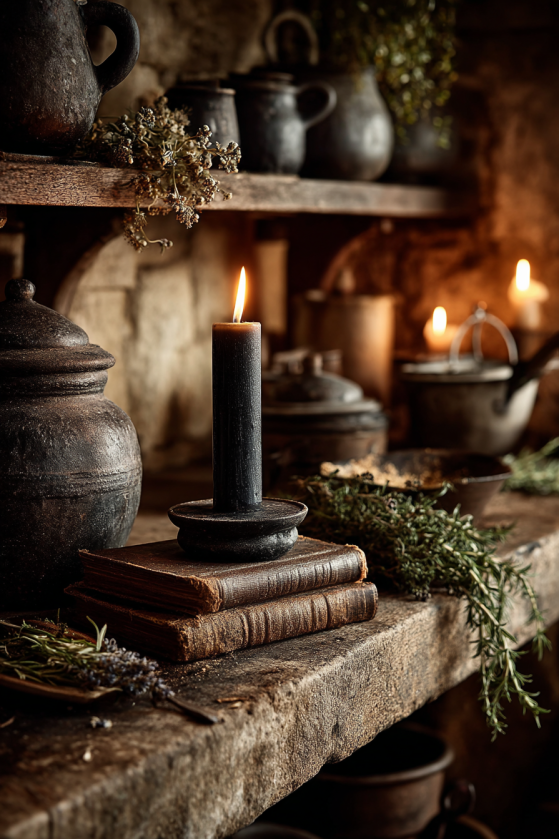
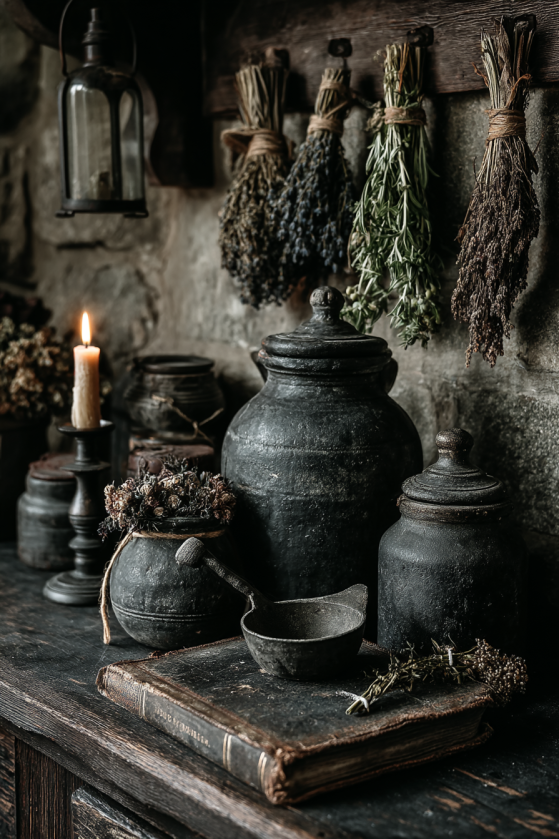
The pieces that make the room feel like it has always been yours are the ones that have already lived. Here are the exact elements you see in the images above, ready for your own kitchen.
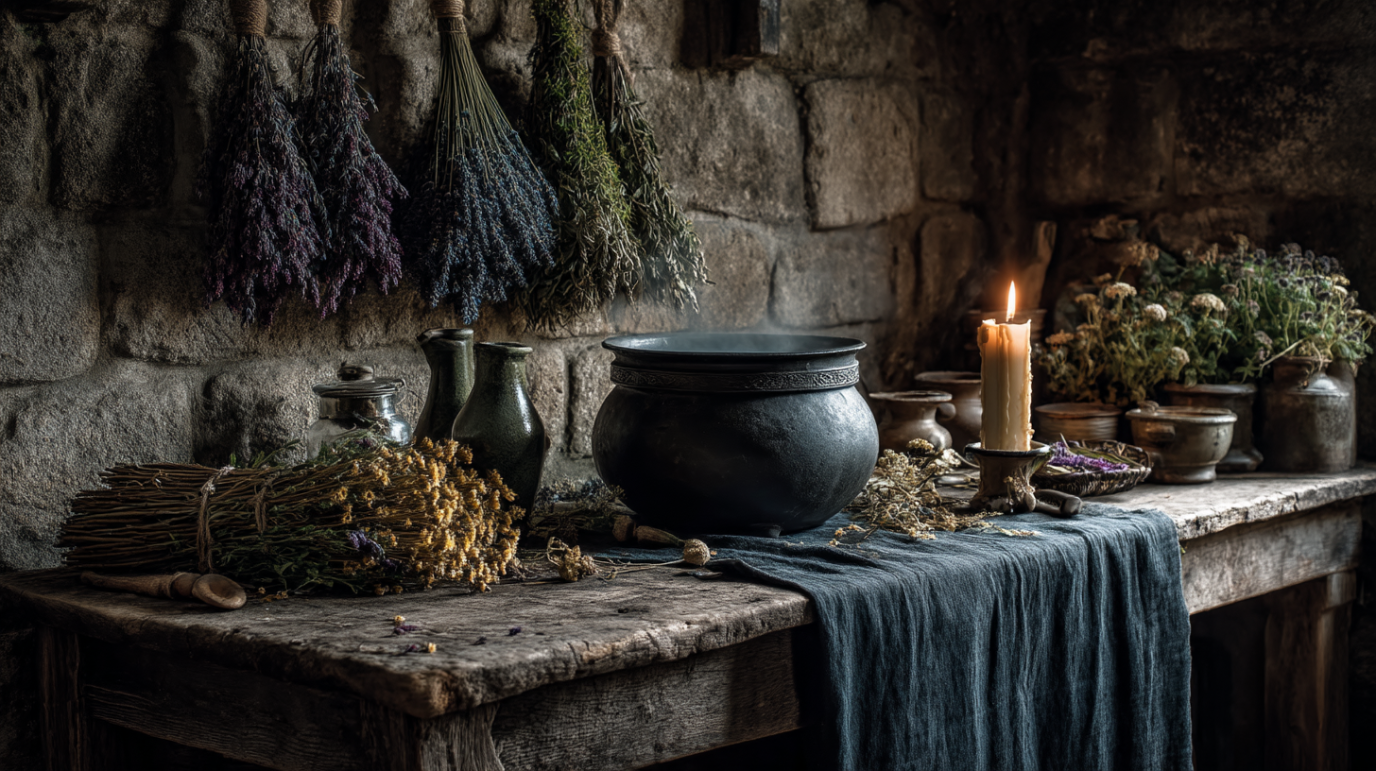
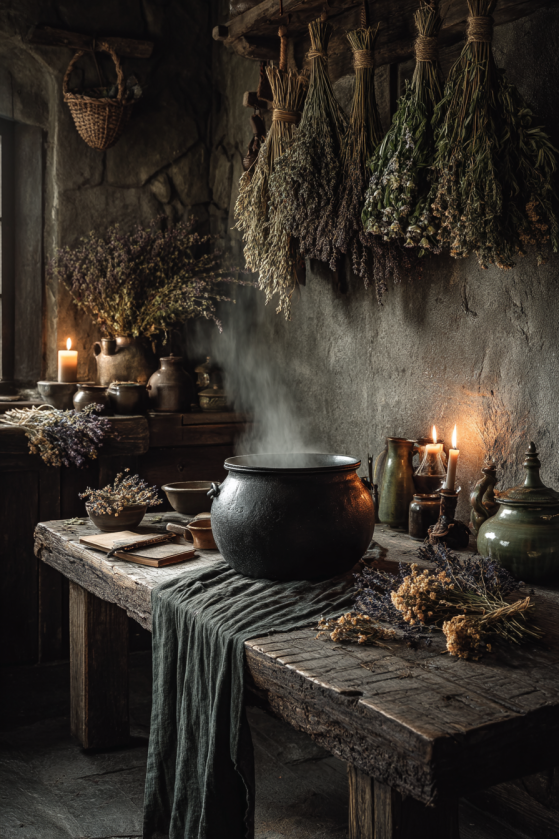
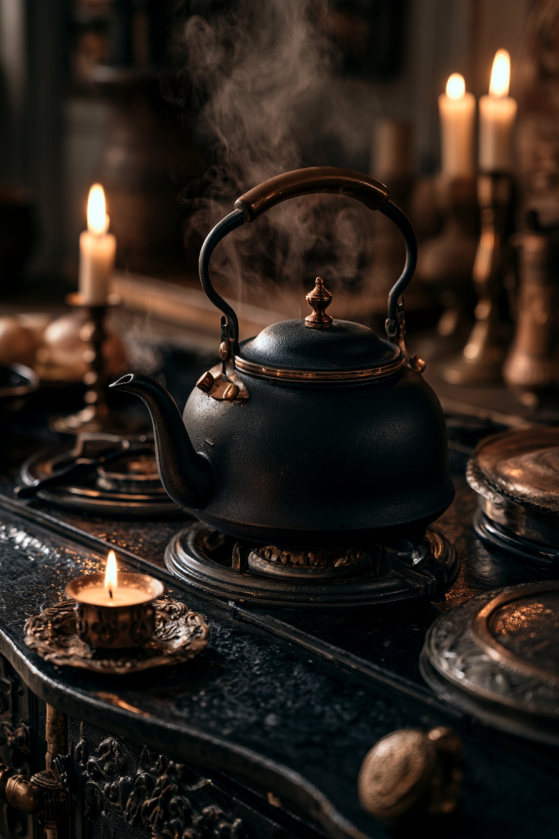
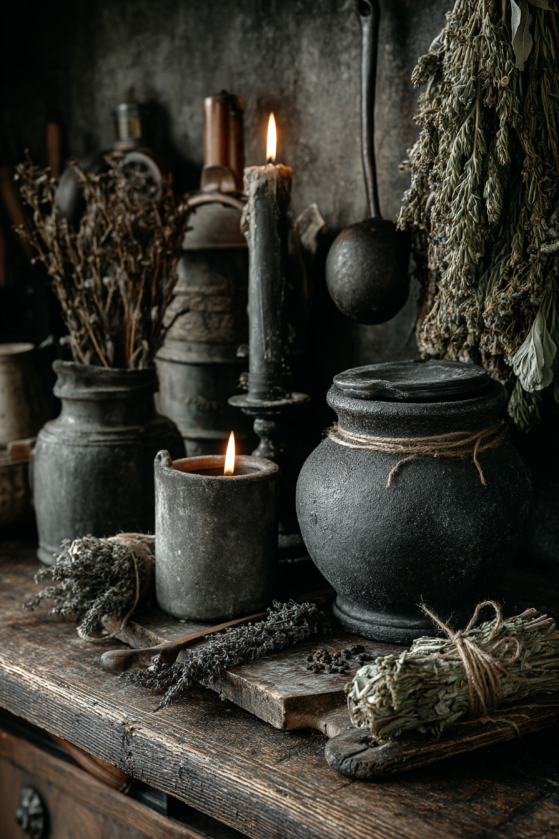
Black Cast Iron Pot – The black cast iron pot that sits heavy on the table, steam rising as if it remembers every meal it has held — a well-seasoned cast iron Dutch oven brings the same grounded presence (Amazon).
Cast Iron Ritual Cauldron – Embrace the magic with this rustic cast iron ritual cauldron, perfect for your altar, burning incense, and blending sacred herbs.
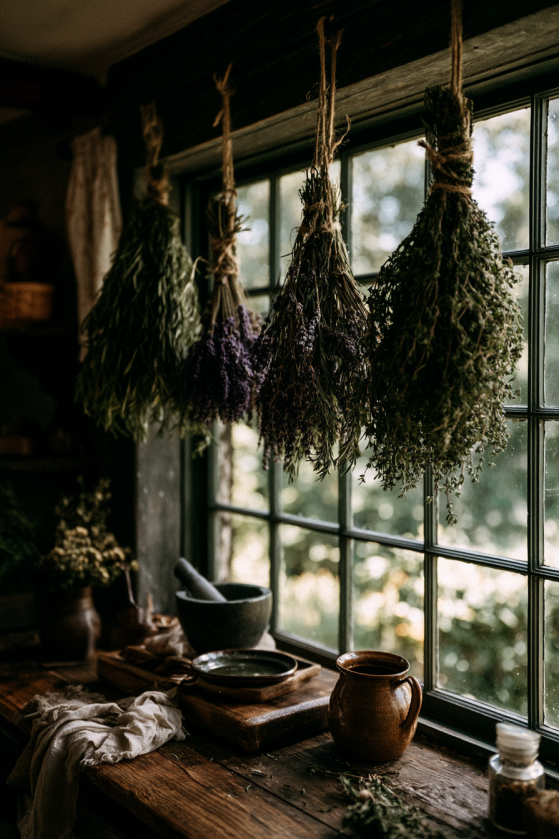
Bundles of Dried Hurds – Bundles of dried lavender and rosemary hanging from the beam, their scent still in the air long after the kettle has quieted — these dried herb bundles add the same quiet life to any space (Etsy).
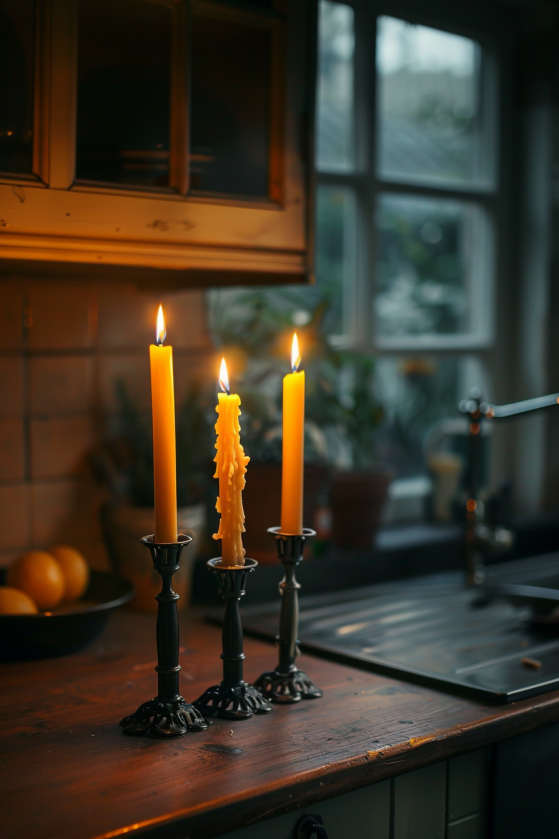
Beeswax Candles – The beeswax candle burning low in its holder, light that doesn’t rush the room — pure beeswax tapers in simple iron holders create that same soft, living glow (Amazon).
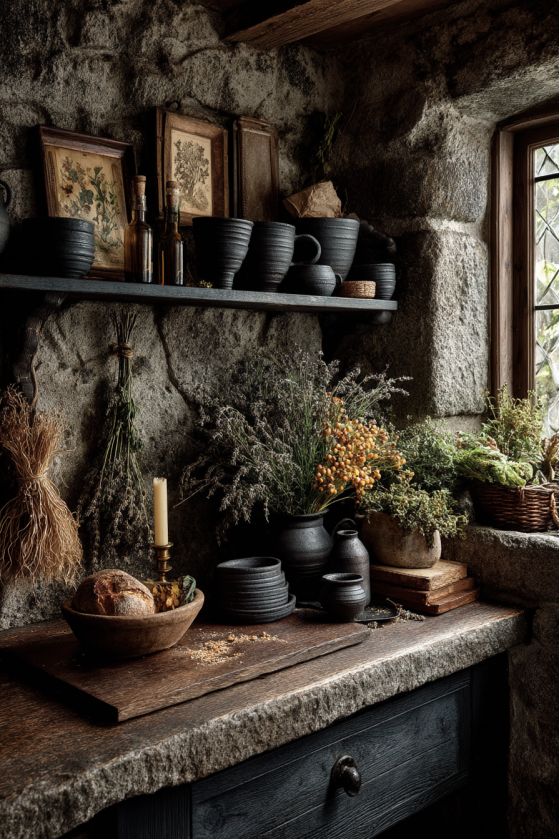
Mix and Match Black Clay Artisanal Pottery – Dark stoneware crocks, bowls, and mugs lined on the open shelf — stoneware pieces that feel good in the hand and look like they have always belonged (Etsy).
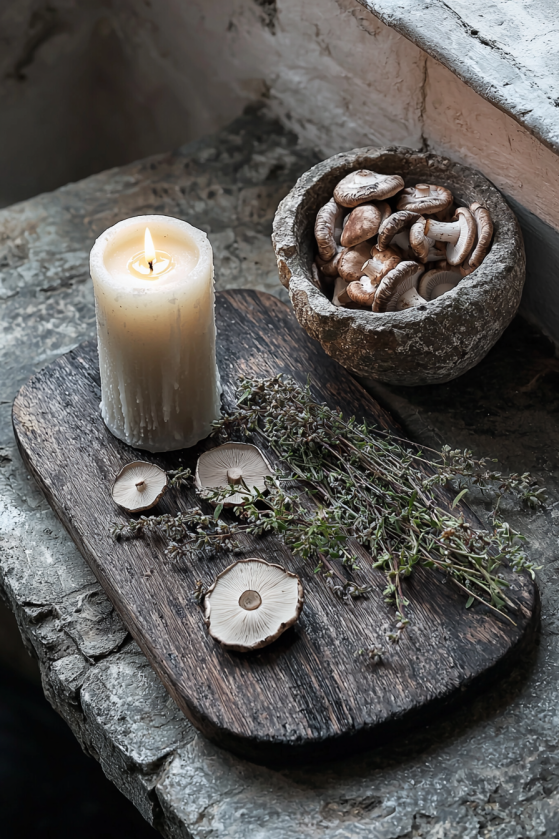
Stone Mortar and Pestle – The stone mortar and pestle on the wooden board with thyme and mushrooms — a simple stone mortar and pestle for the daily work of the kitchen (Amazon).
Framed Botanical Prints – Framed botanical prints above the shelf, small stories from the land — botanical art prints in dark wood frames bring that same grounded detail to the wall (Etsy).
There’s a particular kind of morning that belongs to the dark cottagecore kitchen.
The kind where cold grey light filters through linen curtains. Where a cast iron skillet sits heavy on a gas flame. Where the whole room smells of woodsmoke and black coffee and something faintly herbal — dried rosemary, maybe, or the last of the lavender bundles hung upside down above the window.
If you’ve ever wanted your kitchen to feel less like a showroom and more like a place where something slow and magical is always simmering — you’re in the right place.
Dark cottagecore kitchens aren’t afraid of shadows. They welcome them. They lean into worn textures, deep colors, candlelight, and the kind of utilitarian beauty that comes from using real tools in a real kitchen.
Here are ten essentials that will make your kitchen feel like it belongs in a fairytale farmhouse at the edge of a dark wood.
Disclosure: This post contains affiliate links. If you purchase through these links, we may earn a small commission at no extra cost to you. We only recommend products we genuinely love.
1. A Well-Seasoned Cast Iron Skillet
Nothing grounds a dark cottagecore kitchen like cast iron. Heavy, dependable, quietly beautiful in the way only things with history can be. A good cast iron skillet develops character with every use — it’s seasoned by your cooking, not by a factory. Lodge makes legendary skillets that last generations. Place it on the stove even when it’s not in use. It belongs there.
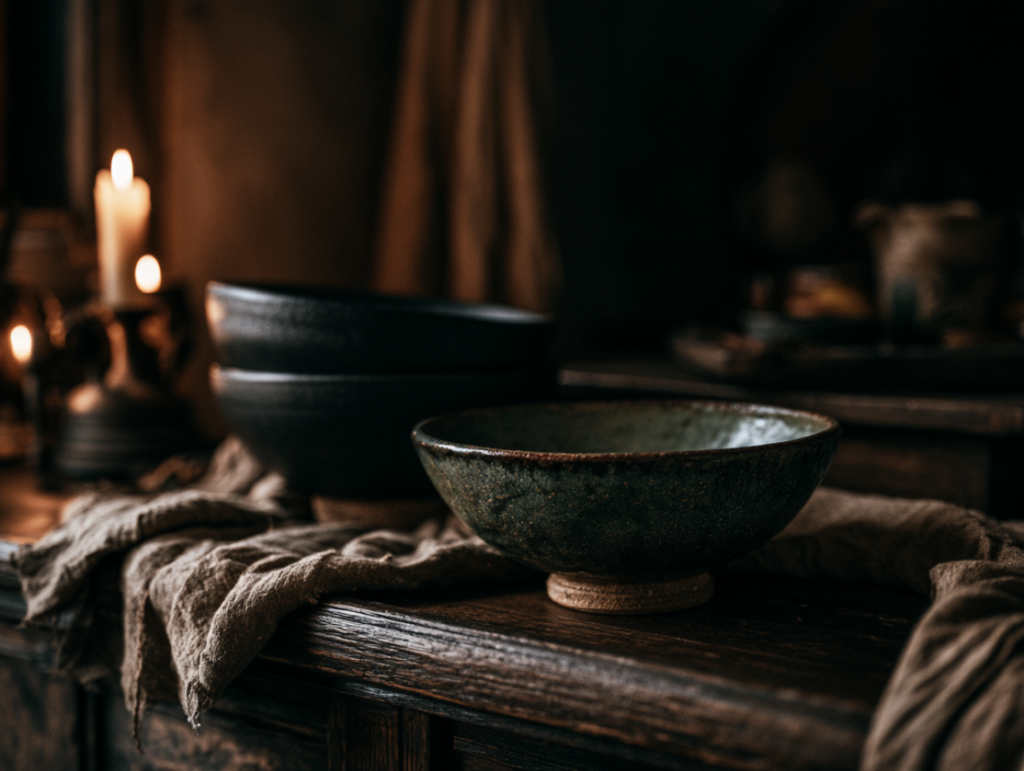
Step away from stainless steel. Dark ceramics — in deep slate, matte black, or moody forest green — carry the handmade, earthy energy of cottagecore without sacrificing function. Look for a nesting set you can leave on the counter. They’re art when empty and joy when full of bread dough.
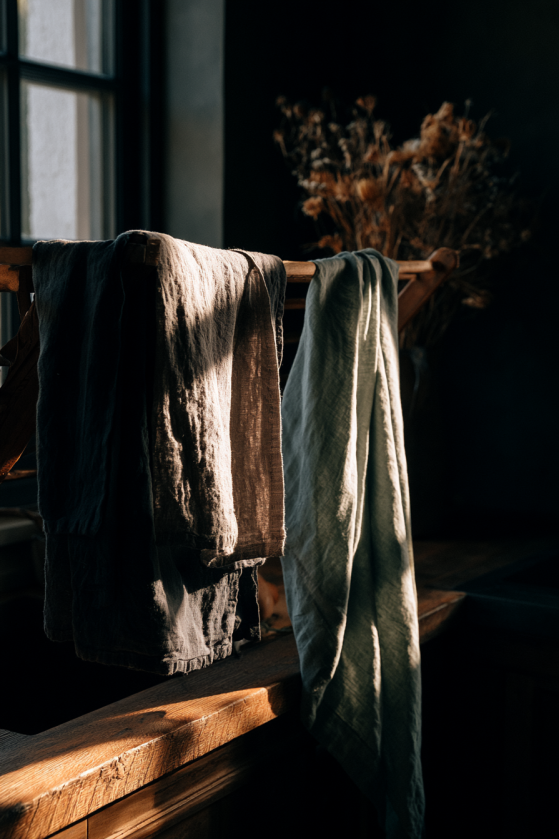
Charcoal. Oatmeal. Dusty sage. Washed-linen tea towels drape over oven handles and fold over wooden drying racks in a way that makes the whole kitchen feel like a still life. They should look like they’ve been washed a hundred times and are better for it.
There is something almost ceremonial about a beautiful kettle on the stove. A matte black enamel kettle or a hammered copper one catches the morning light differently than plastic will ever manage. Boil your water slowly. Let it be a ritual.
This is both decor and pantry. Hang dried rosemary, lavender, thyme, and sage bundles from a ceiling hook or a wooden dowel above the kitchen window. They perfume the air with something ancient and practical. You can forage your own or buy beautiful pre-dried bundles from herbal suppliers on Etsy.
Dark cottagecore kitchens are not fluorescent. In the evening — even just for dinner prep — light a taper candle. Beeswax burns cleaner and smells faintly of honey and wildflowers. Simple wrought-iron holders or turned wooden ones are all you need.
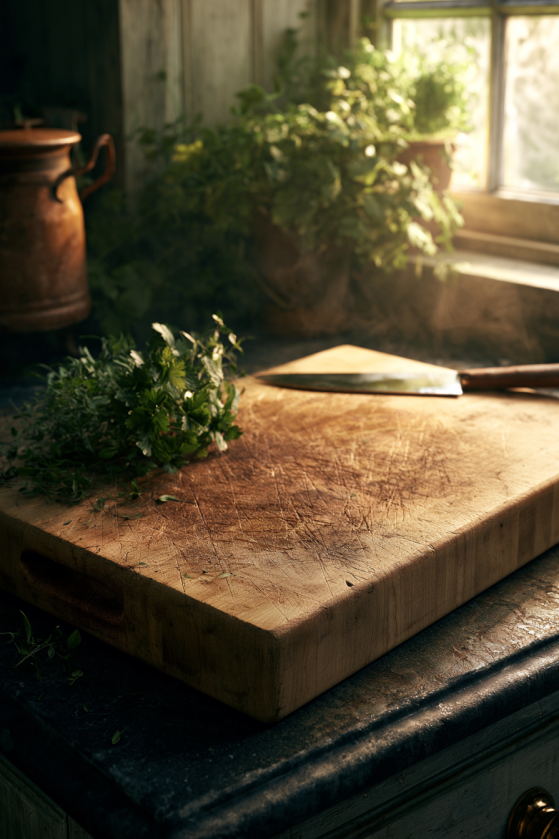
Not a pristine end-grain showpiece. A wooden board with knife scars and oil stains and a story. Edge-grain maple or walnut boards develop a patina over years of honest use. Let them. Boos Blocks are the gold standard for kitchen boards that last decades.
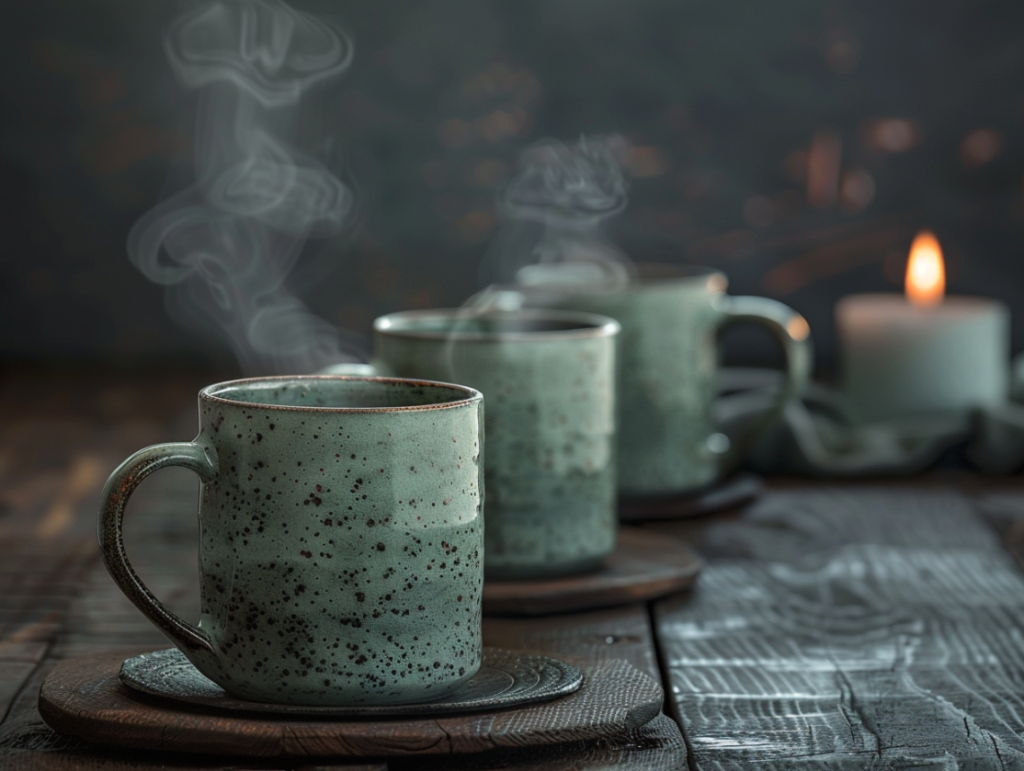
The mug matters. Thick-walled stoneware in forest green, ash grey, or speckled cream holds heat longer and feels grounding in your hands in a way that thin porcelain never will. Small pottery studios and Etsy ceramicists make the most beautiful ones — each slightly imperfect, each unmistakably handmade.
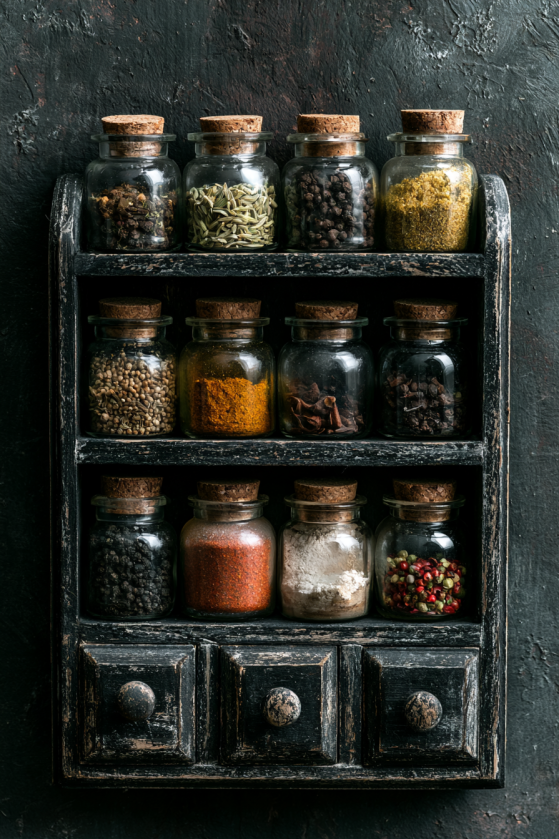
Bring your spice collection out of the cabinet and onto the wall. A small black-painted wooden spice rack hung beside the stove, filled with glass jars and small tins, becomes one of the most atmospheric features in a dark cottagecore kitchen. Label with chalkboard tags or hand-stamped kraft labels.
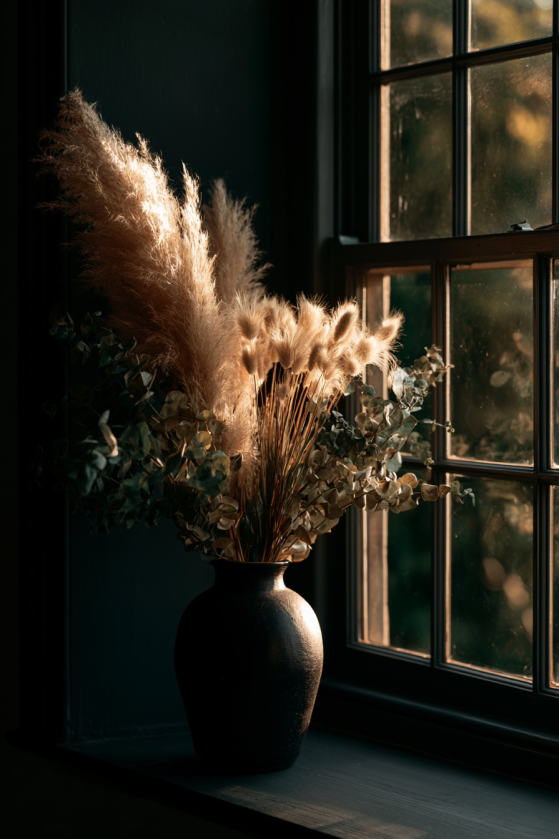
A small bunch of wildflowers in a dark stoneware vase. A cluster of dried pampas grass in a black enamel pitcher. Single stems of eucalyptus in a narrow terracotta pot with a black glaze. Wherever you put them, flowers bring the garden inside and soften the whole aesthetic into something breathing and alive.
The dark cottagecore kitchen isn’t built in a day — it’s assembled slowly, deliberately, the way a good stock is made. One beautiful object at a time. One ritual at a time.
Start with the cast iron and the candles. Let the rest come.
There’s one shelf in the kitchen that quietly works harder than anything else in the house — and somehow still looks like pure magic.
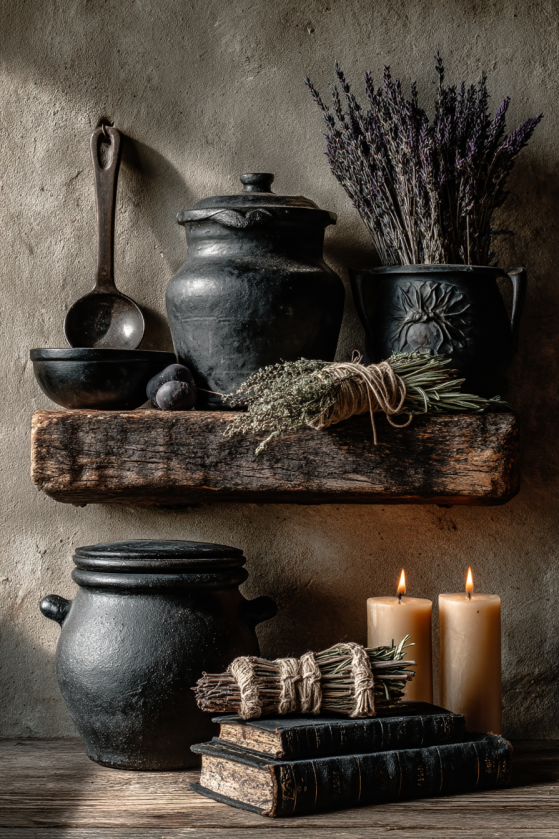
It smells like fresh rosemary and that cool, grounding scent of old iron. It holds bundles of winter thyme twisted tight with rough twine, and the satisfying weight of hand-thrown stoneware crocks in shades so deep and matte they basically swallow the light.
This is gothic farmhouse kitchen energy at its best: not a staged magazine set or a Pinterest board for strangers, but a real, living little altar to nourishment, creativity, and the slow turn of the seasons. It’s where utility meets beauty and they refuse to be separated. Every vessel carries the maker’s hand, and every dried stem holds onto the memory of summer.
This shelf has always been both pantry and altar. And now it can be yours, too.
THIS LOOK: DARK STONEWARE CROCKS, DRIED HERBS & GOTHIC FARMHOUSE MAGIC
The gothic farmhouse kitchen isn’t built in a single afternoon.
It is gathered — slowly, deliberately, across seasons and weekend markets and those quiet little “this is mine” moments when you spot the perfect piece of stoneware hiding at the back of a dusty shelf and you just know it belongs with you.
This is the kitchen witch aesthetic at its most grounded: not theatrical or costume-y, but deeply domestic and real. Every object has earned its place through actual use, through quiet beauty, and through the way it settles into the space and simply refuses to leave.
What makes a kitchen shelf feel truly alive instead of just arranged is the beautiful layering of textures — the rough drag of unglazed clay against a worn wooden surface, the crisp brittleness of dried herb stems brushing against the cold, satisfying weight of iron.
In a gothic cottagecore kitchen, nothing is purely decorative and nothing is purely functional. The crock holds your salt and it holds presence. The herbs scent the room and they are little packets of medicine and memory. This beautiful doubling — this refusal to be just one thing — is exactly what gives the gothic farmhouse kitchen its quiet power.
And the best part? You get to build yours exactly the same way — one meaningful piece at a time.
This Look: Gathered Dark Stoneware Crocks & Layered Textures
Dark Stoneware — Weight, Warmth, and the Maker’s Hand
There is something about dark stoneware that resists the ordinary. A mass-produced ceramic sits quietly in a cupboard and asks nothing of you. It takes up space in the room differently, commands a different quality of attention. You notice it the way you notice a well-bound book or a very old tree. Matte Black Stoneware , Dried Herbs , Black Candles and Holders
In the gothic farmhouse kitchen is the backbone of every shelf. The crocks that hold dried salt, ground pepper, and whole cloves. The squat lidded pot where the sourdough starter lives. The oil bottle with the dripped, almost geological glaze that has run down its side and hardened mid-motion. Dark Handcrafted Stoneware These pieces are the quiet heart of the kitchen witch aesthetic: objects that carry both memory and utility, that become more beautiful the more they are used.
Look for stoneware that shows the maker’s hand — slight asymmetry, visible throwing lines, finger marks at the rim. Perfection is not the goal here. Depth is the goal.
Dark Pottery of All Sizes . Choose pieces that show the maker’s hand — finger marks at the rim, slight asymmetry, visible throwing lines on the body.
Dark matte ceramic canisters for kitchen storage become part of the aesthetic the moment they land on your counter or shelf — functional and visually strong.
Dried Herbs and the Gothic Kitchen Witch Aesthetic
Cut them in late summer when the oils are highest. Tie them with rough twine — not the decorative kind, not the pale raffia from a craft store, but actual garden twine, slightly stiff, smelling faintly of the outdoors. Hang them from a low beam or a wrought iron hook until they are fully dry, then move them to the shelf: rosemary first, then thyme, then lavender if you grow it, then whatever the garden offered that year that felt worth keeping.
This Look: Gathered Dark Stoneware Crocks & Layered Textures
The dried herbs shelf is one of the oldest gestures in the domestic world. Every grandmother in every farmhouse culture has one. What makes it gothic farmhouse is the atmosphere that surrounds it — the dark ceramic beneath the bundles, the iron hook they hang from, the low candlelight that catches the dusty texture of the stems. The smell alone transforms the kitchen from a room into something older and more intentional.
Rough natural garden twine for bundling dried herbs — jute, hemp, the kind that feels substantial in your hands and smells like the garden even after it’s dry.
Natural dried herb bundle sets— rosemary, thyme, lavender — for those who don’t grow their own, or who want to layer the scent and presence through the year.
Iron, Worn, and the Beauty of Objects That Remember
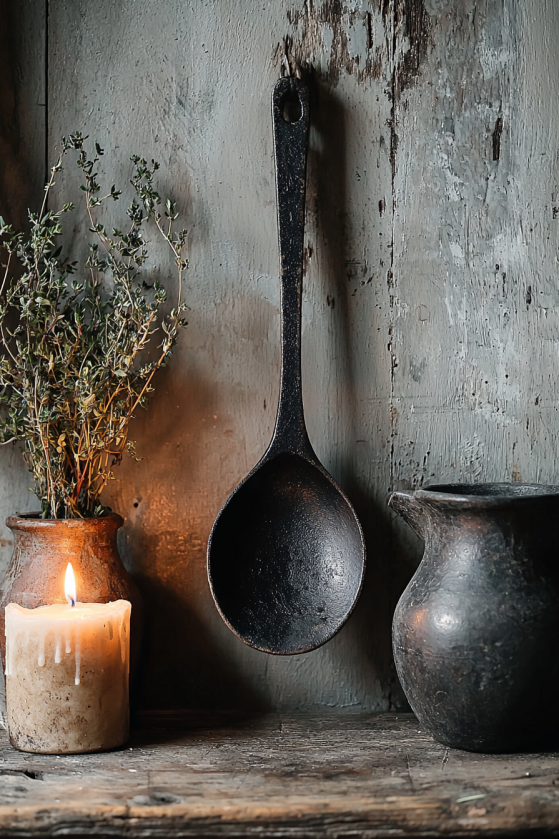
The Worn Iron Ladle on this shelf is not decorative. It has been used — you can see it in the slight darkening of the bowl, the smoothed handle where a hand has rested thousands of times. (The perfect Worn Iron Ladles) And yet it is also the most visually arresting object on the shelf, the piece the eye returns to again and again. This is the paradox at the heart of the gothic farmhouse kitchen: the things that have been most used are often the most beautiful.
Seek out cast iron and wrought iron pieces that carry age. A heavy ladle with a hook for hanging. A small trivet, pitted with rust at the edges. A deep skillet that has lived through decades of use and emerged darker and more seasoned for it. In the kitchen witch aesthetic, iron is protective as well as practical — the old associations are layered into it whether you believe in them or not. Iron is ancient. It grounds the shelf.
Vintage-style cast iron ladles or iron kitchen utensils — worn smooth, darkened with use, the kind of piece that looks like it has a history and asks to be kept.
This is the shelf as it stands today. Everything on it has earned its place. Everything can be used.
A Note on Candlelight
The light matters as much as the objects. In a gothic farmhouse kitchen, fluorescent overhead light kills the atmosphere immediately. Use candles on the shelf — a single pillar candle, or a cluster of taper candles in a wrought iron holder. The warm, unsteady light makes the stoneware look deeper, the dried herbs more dimensional, the iron more weighted. It turns a collection of objects into a room that breathes.
The shelf changes with the seasons. In autumn it fills with new bundles — fresh-cut and deep green before they grey and dry. In winter it grows heavier, darker, more protective-feeling. By spring it has thinned again. This is the rhythm of the gothic farmhouse kitchen: not static, not staged, but alive to the year.
If this shelf speaks to something in you — save it to your dark home or kitchen witch board on Pinterest, or explore the related posts below. The HEARTH is always here.