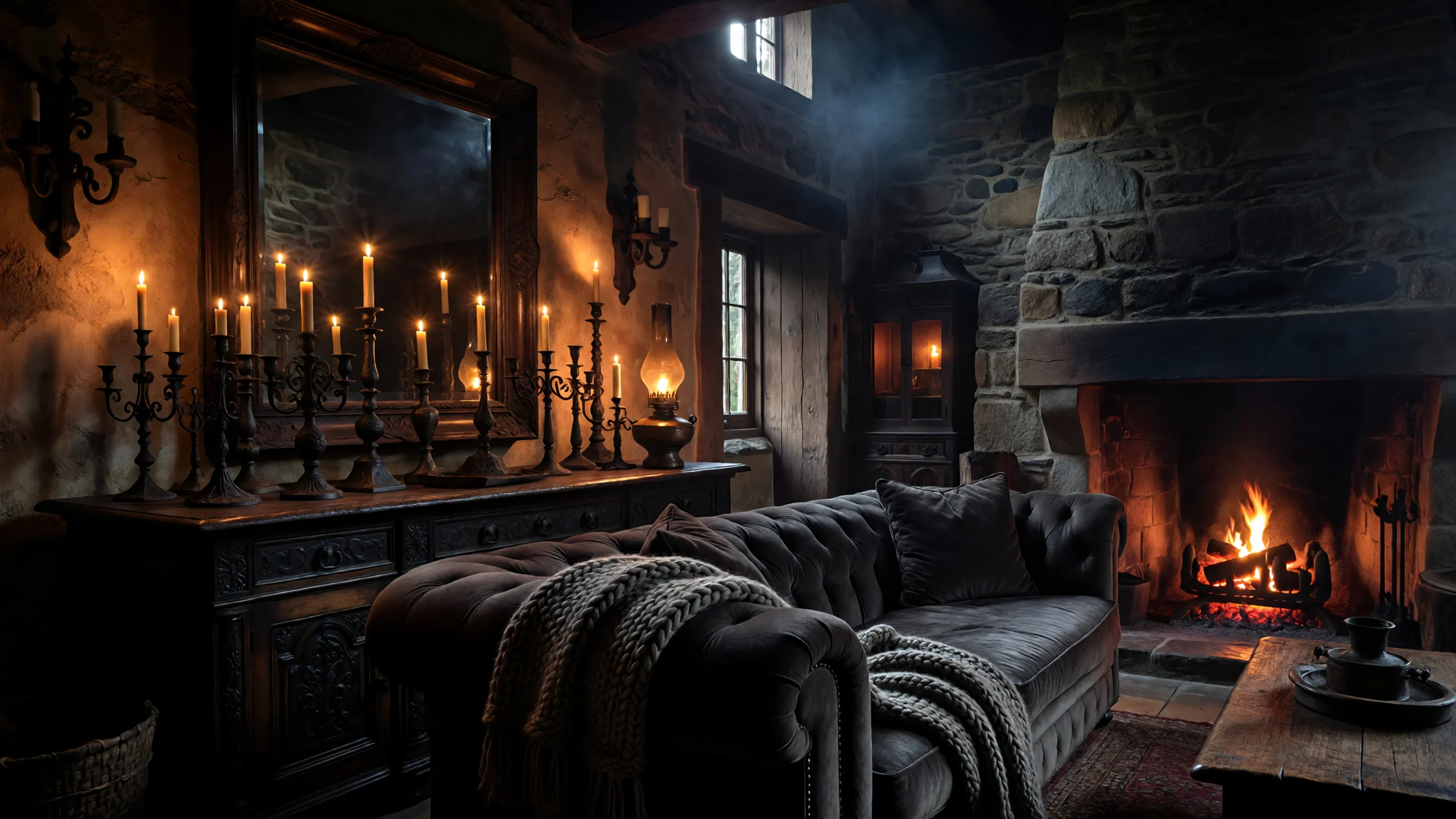
How to Create a Moody Farmhouse Living Room on a Budget
You know that particular light — the amber glow of a table lamp falling across worn wooden floorboards at dusk, the faint smell of woodsmoke still threading through the air from last Sunday’s fire. The living room in your head has velvet the color of a storm cloud, dark oak that gleams like it holds decades of quiet evenings, and a rug so thick your feet disappear into it. You’ve been saving that room on Pinterest for three years. And every time you look at your actual living room — the beige walls, the safe sofa, the neutral everything — you think: *it would look too dark. Too much. Too goth.*
It won’t. And this guide is your permission slip.
*This post contains affiliate links. If you shop through my links, I may earn a small commission at no extra cost to you. I only recommend pieces I genuinely believe in.*
—
What Is Moody Farmhouse Style?
Moody farmhouse is what happens when the clean, white-shiplap farmhouse aesthetic finally grows up.
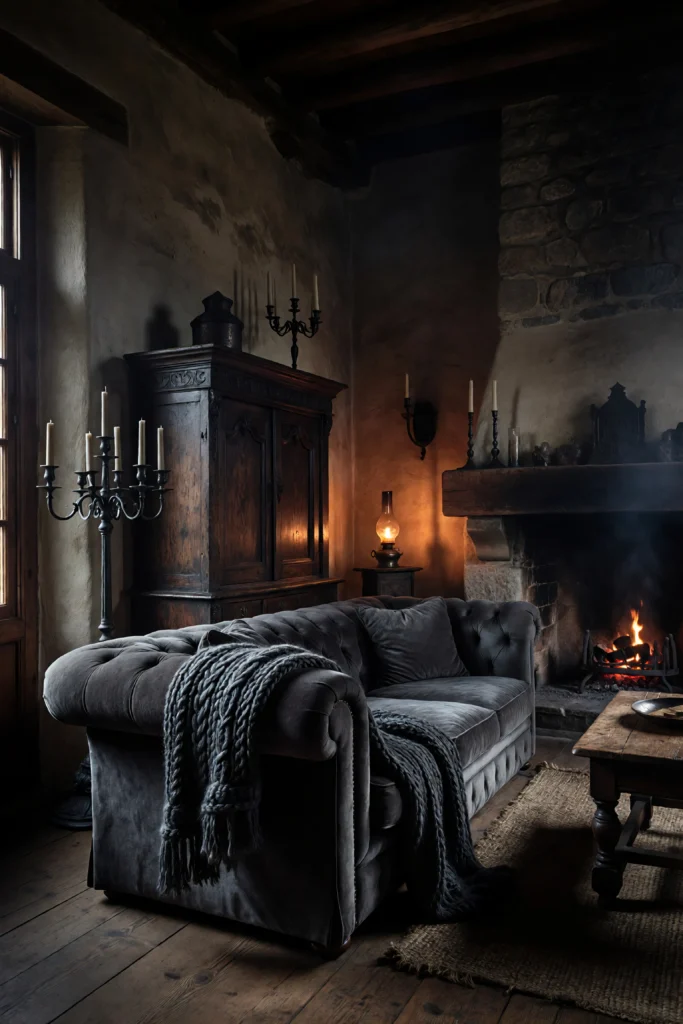
It keeps everything that made farmhouse beloved — the warmth, the layered texture, the sense that a real life is lived here — and trades the bleached, airy bones for something richer and more honest: charcoal velvet, dark oak, amber glass, shadows that feel intentional rather than accidental. The fireplace is always lit. The sofa is the color of woodsmoke. The sideboards and bookshelves hold real things, worn things, beautiful things.
Homes & Gardens declared it plainly in 2026: *”Moody Farmhouse Is the New Rustic — 18 Chic Pieces for a Darker, Texture-Driven Home.”* They weren’t the only ones paying attention. Interior designers from rural England to the American South are calling it the dominant residential mood of the moment, and Pinterest’s own Predicts data shows dark romantic aesthetics surging across every lifestyle category.
The reason it resonates so deeply? It feels *earned*. White shiplap was aspirational — a fantasy of airy country life. Moody farmhouse living room style is more truthful: rooms with weight, rooms that feel loved for decades rather than staged for a photo shoot. Think old English country estate — slightly worn, lovingly reclaimed, still standing through the centuries.
This is dark rustic farmhouse aesthetic done with warmth and intention. Not gothic theater. Not dungeon minimalism. A sitting room with a fire in it and a good book on the arm of the sofa. That’s the target.
—
The Foundation: Color, Texture, and Light
[IMAGE PLACEHOLDER: Close-up of a dark charcoal-painted accent wall with the warm glow of an amber table lamp against it, a sliver of velvet upholstery and aged wood detail visible in the frame. Intimate, atmospheric, tactile.]
Every moody farmhouse living room is built on three pillars. Get these right, and every other decision falls into place.
### Color: Go Dark, Go Warm
The moody farmhouse living room palette lives in charcoals, deep forest greens, warm blacks, aged burgundies, and the particular brown-gray of old stone. If you’re renting or not ready for a full repaint, start with a single feature wall — a shade like Farrow & Ball’s *Railings*, Benjamin Moore’s *Black Forest Green*, or a deep matte charcoal from your local hardware store. One wall is enough to anchor the room.
The essential rule: **warmth over cool.** A true cool gray reads clinical and flat. You want a shade with brown or green undertones that makes the room feel like it’s exhaling — like it’s been this color since before anyone can remember.
### Texture: Layer It Like You Mean It
Moody farmhouse living room decor is a deeply tactile aesthetic. Smooth, glossy surfaces belong somewhere else. Here, you want:
– **Velvet** on the sofa — rich, storm-cloud dark, slightly nubbled
– **Rough-hewn wood** on tables and sideboards — grain and knots visible, not painted over
– **Stone or slate elements** where possible — fireplace surrounds, bookends, doorstops
– **Woven wool** on the floors and in throws
– **Linen or cotton canvas** in curtains and cushions for textural contrast
Layering at multiple scales is what prevents a dark room from feeling heavy or airless. One dark texture reads bare. Three or four textures at different weights create depth that genuinely breathes.
### Light: Amber Everywhere, Overhead Nowhere
This is the single most important rule — and the most overlooked.
Eliminate cool white light from the living room entirely. Replace every overhead bulb you leave in place with a warm amber equivalent (2700K or lower, and closer to 2200K if you can find it). Then add:
– **Table lamps** on low surfaces — side tables, sideboards, the floor
– **Floor lamps** positioned to cast light upward into corners
– **Wall sconces** at eye level rather than overhead
– **Candlelight** on the mantle, coffee table, and windowsills
The goal is *pooling* light — warm islands of amber glow with natural shadow between them, rather than a uniformly lit room. This is what makes your Pinterest reference images look so atmospheric and alive. It is almost never the furniture. It’s the light.
—
## The Furniture Picks That Do the Heavy Lifting
[IMAGE PLACEHOLDER: Charcoal velvet sofa in the center of a moody farmhouse sitting room, a dark oak sideboard behind it with a lamp glowing on top, botanical prints in dark frames on the wall above. Warm, editorial, grounded.]
Great moody farmhouse furniture looks old enough to have a story but substantial enough to anchor the room for the next decade. Here is what to invest in — and what to look for in each category.
### The Velvet Sofa
The moody farmhouse living room lives and dies by its sofa. This is where charcoal velvet does its best work — the nap of the fabric catches light differently at every angle, creating a shifting, alive quality that photographs beautifully and feels even better at the end of a long day.
Look for: channel tufting or clean, wide arms in a rolled or track style. Avoid ultra-modern, low-to-the-floor profiles. You want something with *presence* — a sofa that looks like it has been in this room for thirty years and has no intention of leaving.
[AFFILIATE: charcoal-velvet-sofa]
If you already have a sofa frame you love, a deep velvet slipcover is an excellent, lower-investment entry point into this aesthetic.
[AFFILIATE: dark-velvet-sofa-cover]
### The Dark Oak Sideboard
Every dark rustic living room farmhouse aesthetic needs a sideboard — the workhorse piece that carries lamps, decorative objects, books, and trays while giving the room a sense of grounded, horizontal weight. Dark oak or reclaimed wood is the material. Aged hardware is essential: iron pulls, antique brass, worn bronze. Avoid chrome and nickel in this space entirely.
[AFFILIATE: dark-oak-sideboard]
[AFFILIATE: reclaimed-wood-media-console]
### A Companion Chair in a Contrasting Texture
A pair of armchairs — or even one statement chair positioned near the window — in a contrasting material keeps the room from reading one-note. Worn leather, aged linen, or a muted heather plaid all work beautifully against charcoal velvet. Look for tones that complement rather than compete: oatmeal, aged tobacco brown, faded forest green.
—
## Lighting: The Secret Weapon of Moody Farmhouse Living Rooms
[IMAGE PLACEHOLDER: An amber glass table lamp glowing warmly on a dark wood sideboard, the light catching the grain of the wood and the texture of nearby objects. A wrought iron wall sconce visible above it. Deeply atmospheric, intimate scale.]
No single change transforms a moody farmhouse living room faster than rethinking the light. This is the one you can do this weekend, for under fifty dollars, and feel the difference the same night.
### Amber Glass Table and Floor Lamps
Warm amber glass — hand-blown, slightly irregular, the color of old honey — casts an orange-gold light that mimics firelight and makes skin tones look warmer and more alive. It also makes the lamp itself a beautiful decorative object in its own right. Look for imperfect, organically shaped pieces rather than uniform globes.
[AFFILIATE: amber-glass-table-lamp]
[AFFILIATE: amber-glass-floor-lamp]
### Iron or Aged Brass Wall Sconces
Wall sconces positioned at eye level or slightly above replace the work that overhead lights usually do — but with a fraction of the harsh flatness. Wrought iron or aged brass paired with Edison-style warm bulbs is the classic moody farmhouse pairing: rustic material, warm light, shadow-friendly.
[AFFILIATE: wrought-iron-wall-sconce]
[AFFILIATE: aged-brass-wall-sconce]
### Matte Black Iron Candleholders
Candlelight cannot be replicated electrically — it has a particular flicker and quality of shadow that no bulb achieves. A cluster of matte black iron candleholders on the mantle, at varying heights, with pillar candles in ivory or natural beeswax, anchors the room’s atmosphere at the deepest level.
[AFFILIATE: matte-black-iron-candleholder-set]
—
## The Finishing Layers: Throws, Rugs, Curtains, and the Details That Make It Yours
This is where the room becomes personal rather than aspirational. Once the structural pieces are in place, the finishing layers are what make a moody farmhouse living room feel inhabited and *yours* rather than a magazine spread.
### The Area Rug
The rug grounds the entire room. Go dark: charcoal, forest green, deep burgundy, or a layered Persian-style pattern that draws all those tones together. Wool or a wool-blend construction — flat-weave or low pile — is ideal. It adds warmth underfoot, anchors the furniture grouping, and softens the hard edges of wood floors without competing with the sofa’s texture.
[AFFILIATE: dark-charcoal-woven-area-rug]
[AFFILIATE: forest-green-farmhouse-area-rug]
### The Wool Throw
A thick wool or chunky knit throw draped over the sofa arm is both a textural anchor and an invitation. This is the piece that makes the whole room exhale. Natural, undyed wools in oatmeal, charcoal, heathered brown, or a dark plaid work best — nothing too bright or synthetic.
[AFFILIATE: thick-wool-throw-natural]
### Floor-to-Ceiling Curtains
The curtain rule in a moody farmhouse sitting room is non-negotiable: **floor to ceiling, always.** Dark linen or velvet blackout curtains hung from ceiling height — even in a standard-height room — add drama, control light, and soften the room’s edges in a way that nothing else does. Forest green, charcoal, deep navy, or a charcoal-and-natural stripe are all excellent choices.
[AFFILIATE: dark-linen-curtains-floor-length]
[AFFILIATE: velvet-blackout-curtains-charcoal]
### The Small Objects That Finish the Room
These are the details that separate a styled room from a shopped one:
– A stack of cloth-bound books in dark spines, horizontally arranged on the sideboard
– A ceramic vase in matte black or deep forest green with dried branches or pampas
– An antique or vintage clock — wood case, roman numerals, imperfect tick
– Pressed botanical prints in simple dark frames
– A worn leather tray on the coffee table to corral candles, a matchbox, a small stone
Each object should feel like it has been somewhere before it arrived in your room.
—
## FAQ: Your Honest Questions, Answered
**”Won’t a dark living room feel oppressive and small?”**
Not if you follow the layering and lighting rules. Dark rooms feel heavy when the light is cold and the textures are flat. Dark rooms with amber lamplight, velvet, wood grain, and layered wool feel like wrapping yourself in a well-worn coat on a cold morning. The darkness becomes comfort rather than weight.
**”I’m renting. Can I really do this without painting the walls?”**
Absolutely. A charcoal velvet sofa, amber table lamps, a dark area rug, and floor-to-ceiling curtains (hung on removable tension rods) can transform a rented white box without touching a single wall. The furniture and textiles do most of the heavy lifting in this aesthetic anyway.
**”Will it go out of style quickly?”**
No. The core elements of moody farmhouse living room decor — velvet, dark oak, warm light, wool — are rooted in centuries of design tradition. This is not a micro-trend born from a single TikTok moment. It’s a grown-up version of comfort that was always going to arrive once farmhouse white ran its course. Invest in quality pieces now and they will still feel current in a decade.
**”What if my partner thinks it looks too goth?”**
Start with the lamps. Swap out one cool white overhead for two amber table lamps and ask again in a week. This aesthetic earns converts through *feeling*, not through argument. Get the light right and the rest of the conversation tends to follow.
—
## Your Next Step
The moody farmhouse living room is not an all-or-nothing renovation. Start with the lamp. Then add the throw. Then the rug. Build layer by layer, and the room will tell you what it needs next. That is how this aesthetic is supposed to grow — slowly, honestly, like a house that has been lived in and loved.
If this post helped you, save it to your dark farmhouse Pinterest boards so you can find it when you’re ready for each next step. And explore the related posts below for the full @DarkHomestead world: dark farmhouse kitchens, moody farmhouse bedroom ideas, and the gothic farmhouse decor guide for the rest of the house.