Tag: affiliate picks

  • 10 Dark Cottagecore Kitchen Essentials That Feel Like a Fairytale Farmhouse

    Disclosure: This post contains affiliate links. If you purchase through these links, we may earn a small commission at no extra cost to you. We only recommend products we genuinely love.

    There’s a particular kind of morning that belongs to the dark cottagecore kitchen.

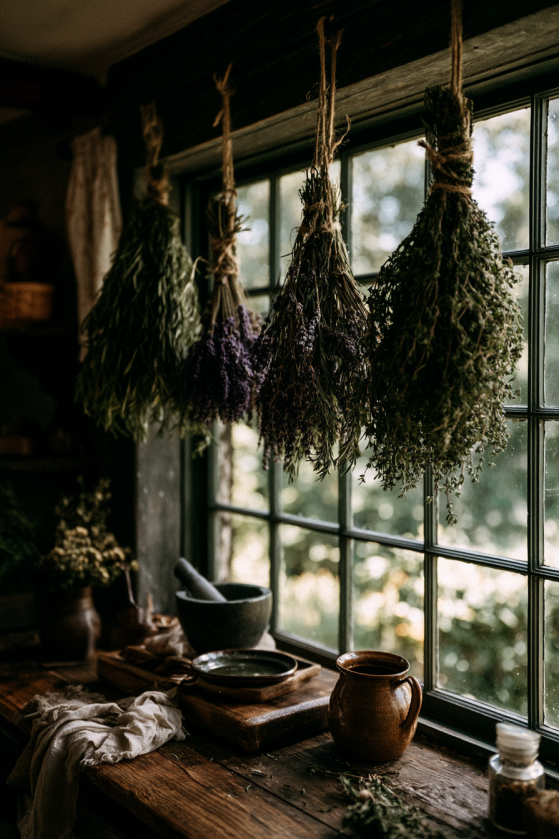
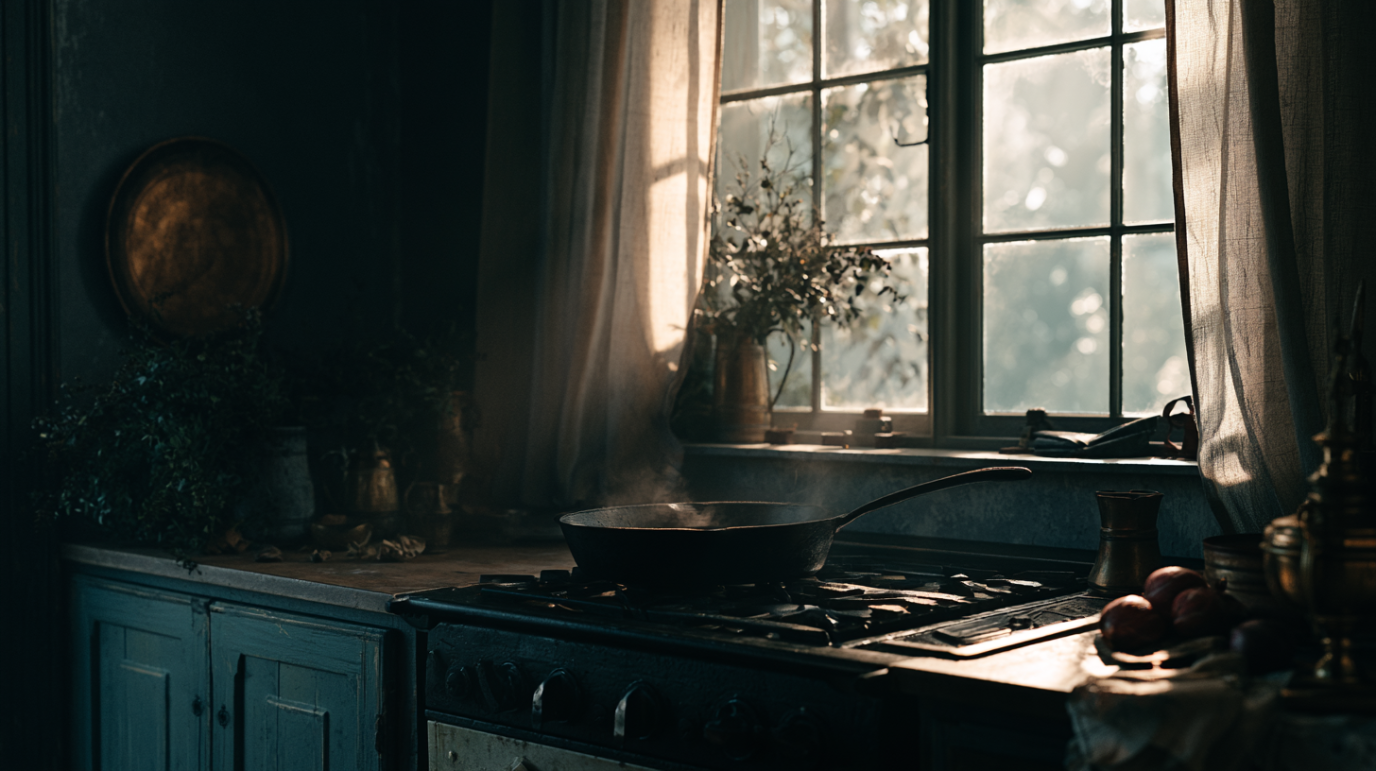
    The kind where cold grey light filters through linen curtains. Where a cast iron skillet sits heavy on a gas flame. Where the whole room smells of woodsmoke and black coffee and something faintly herbal — dried rosemary, maybe, or the last of the lavender bundles hung upside down above the window.

    If you’ve ever wanted your kitchen to feel less like a showroom and more like a place where something slow and magical is always simmering — you’re in the right place.

    Dark cottagecore kitchens aren’t afraid of shadows. They welcome them. They lean into worn textures, deep colors, candlelight, and the kind of utilitarian beauty that comes from using real tools in a real kitchen.

    Here are ten essentials that will make your kitchen feel like it belongs in a fairytale farmhouse at the edge of a dark wood.

    1. A Well-Seasoned Cast Iron Skillet

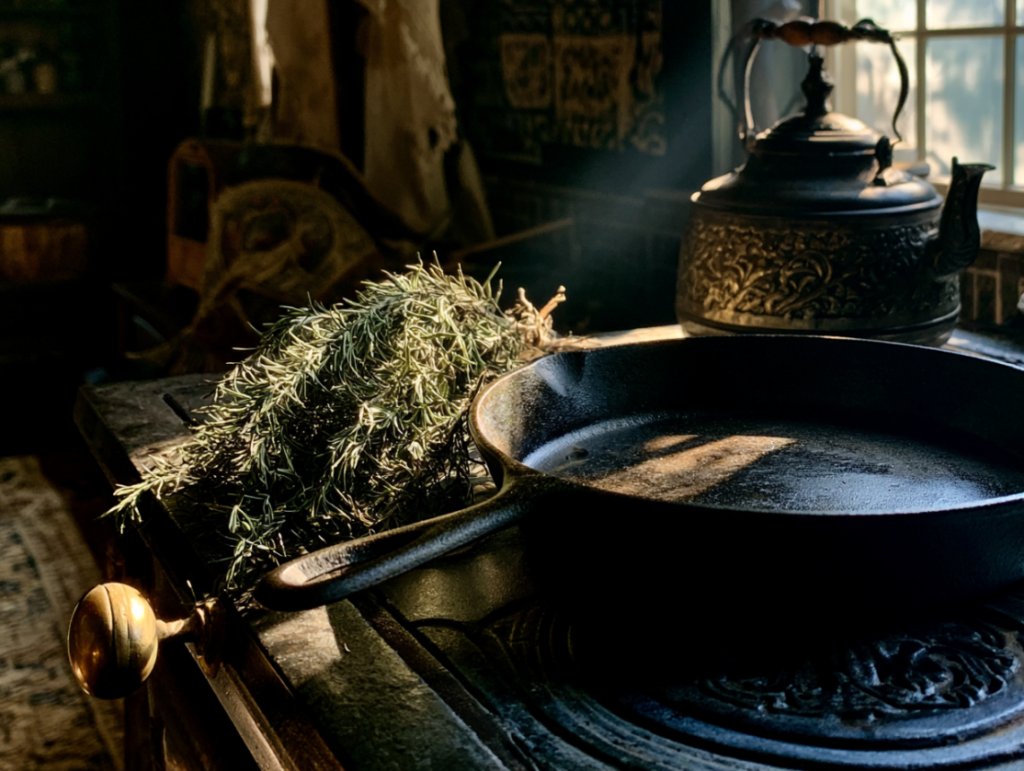
    Nothing grounds a dark cottagecore kitchen like cast iron. Heavy, dependable, quietly beautiful in the way only things with history can be. A good cast iron skillet develops character with every use — it’s seasoned by your cooking, not by a factory. Lodge makes legendary skillets that last generations. Place it on the stove even when it’s not in use. It belongs there.

    [AFFILIATE LINK: Lodge 12-Inch Cast Iron Skillet]

    2. Dark Ceramic Mixing Bowls

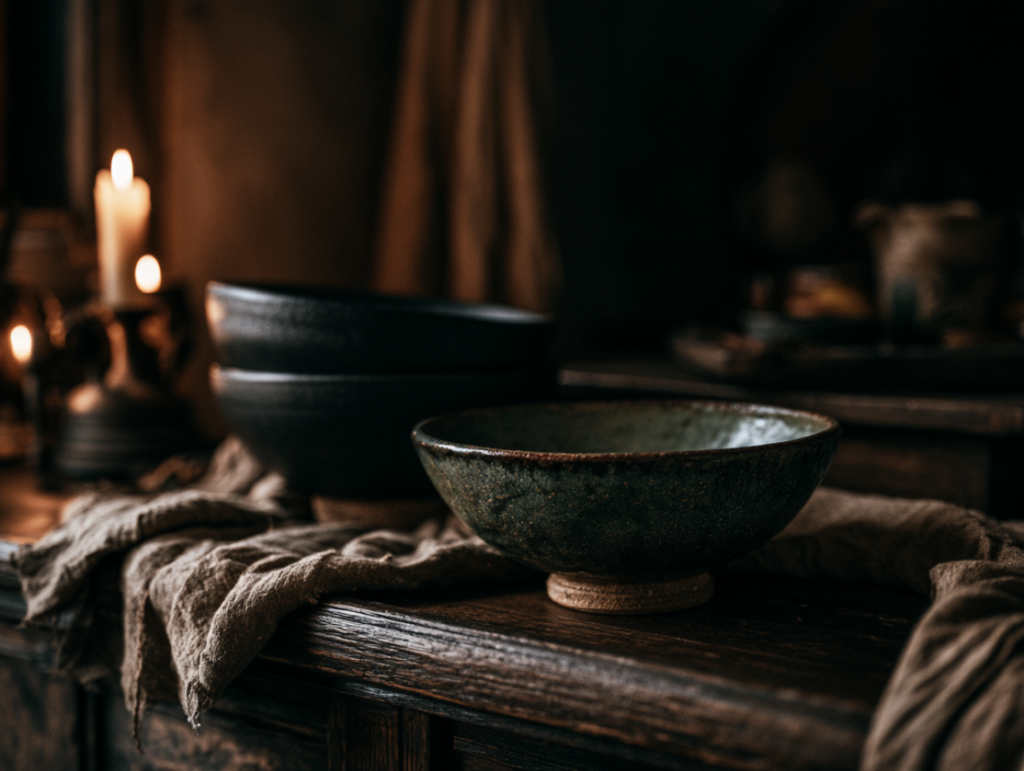
    Step away from stainless steel. Dark ceramics — in deep slate, matte black, or moody forest green — carry the handmade, earthy energy of cottagecore without sacrificing function. Look for a nesting set you can leave on the counter. They’re art when empty and joy when full of bread dough.

    3. Linen Tea Towels in Neutral Darks

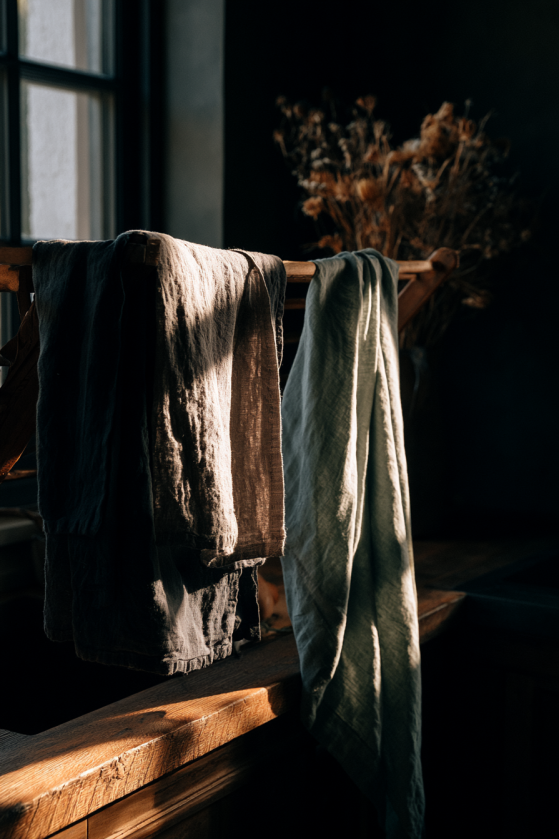
    Charcoal. Oatmeal. Dusty sage. Washed-linen tea towels drape over oven handles and fold over wooden drying racks in a way that makes the whole kitchen feel like a still life. They should look like they’ve been washed a hundred times and are better for it.

    [AFFILIATE LINK: Linen Tea Towel Set — Stonewashed]

    4. A Copper or Black Enamel Kettle

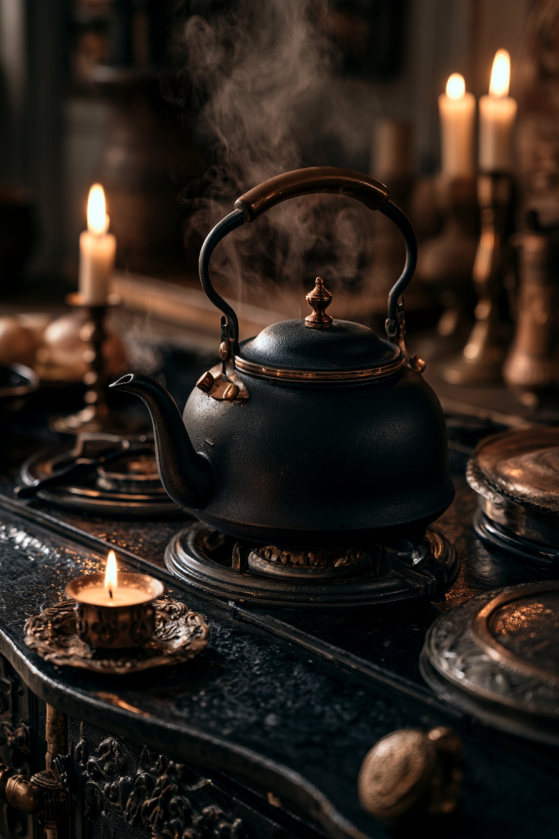
    There is something almost ceremonial about a beautiful kettle on the stove. A matte black enamel kettle or a hammered copper one catches the morning light differently than plastic will ever manage. Boil your water slowly. Let it be a ritual.

    [AFFILIATE LINK: Matte Black Enamel Stovetop Kettle]

    5. Dried Herb Bundles

    This is both decor and pantry. Hang dried rosemary, lavender, thyme, and sage bundles from a ceiling hook or a wooden dowel above the kitchen window. They perfume the air with something ancient and practical. You can forage your own or buy beautiful pre-dried bundles from herbal suppliers on Etsy.

    6. Beeswax Taper Candles and Simple Holders
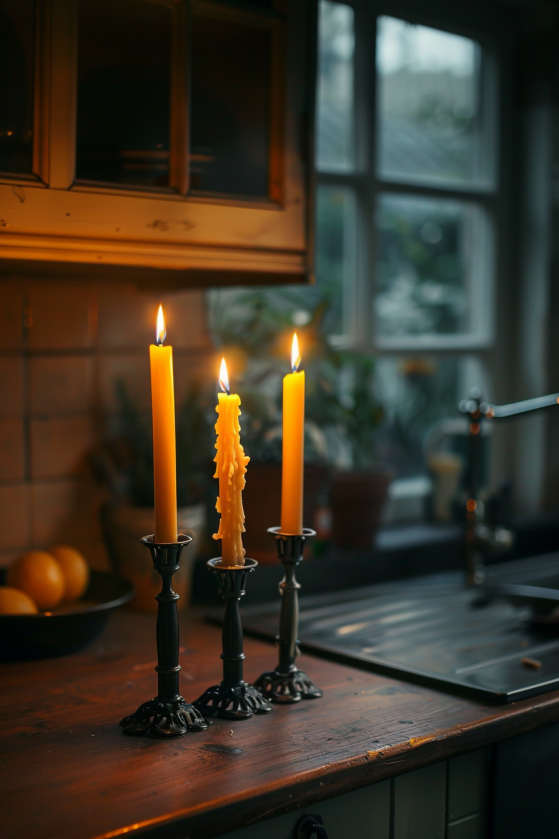
    Dark cottagecore kitchens are not fluorescent. In the evening — even just for dinner prep — light a taper candle. Beeswax burns cleaner and smells faintly of honey and wildflowers. Simple wrought-iron holders or turned wooden ones are all you need.

    [AFFILIATE LINK: Beeswax Taper Candles (set of 12)]

    7. A Wooden Cutting Board with Character
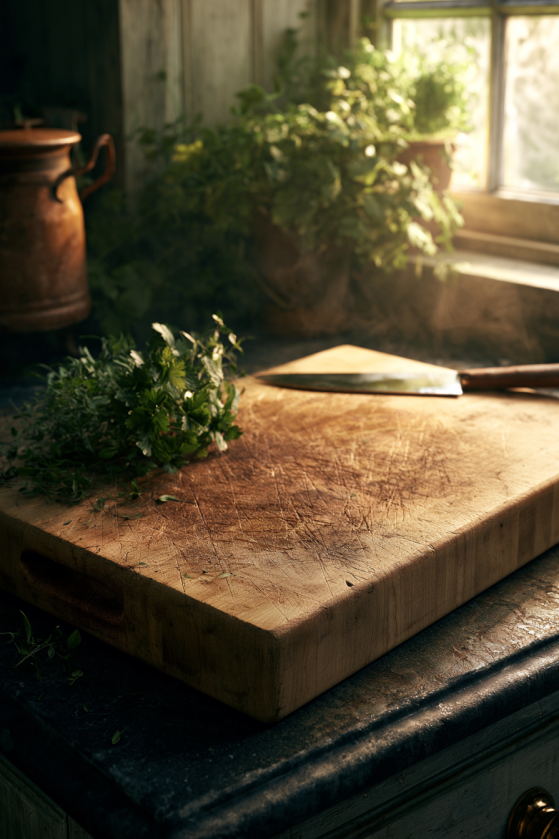
    Not a pristine end-grain showpiece. A wooden board with knife scars and oil stains and a story. Edge-grain maple or walnut boards develop a patina over years of honest use. Let them. Boos Blocks are the gold standard for kitchen boards that last decades.

    [AFFILIATE LINK: John Boos Maple Cutting Board]

    8. Stoneware Mugs in Earth Tones

    The mug matters. Thick-walled stoneware in forest green, ash grey, or speckled cream holds heat longer and feels grounding in your hands in a way that thin porcelain never will. Small pottery studios and Etsy ceramicists make the most beautiful ones — each slightly imperfect, each unmistakably handmade.

    [AFFILIATE LINK: Stoneware Mug Set — Earthy Tones]

    9. A Dark-Painted or Distressed Spice Rack

    Bring your spice collection out of the cabinet and onto the wall. A small black-painted wooden spice rack hung beside the stove, filled with glass jars and small tins, becomes one of the most atmospheric features in a dark cottagecore kitchen. Label with chalkboard tags or hand-stamped kraft labels.

    10. Fresh or Dried Flowers in a Dark Vessel
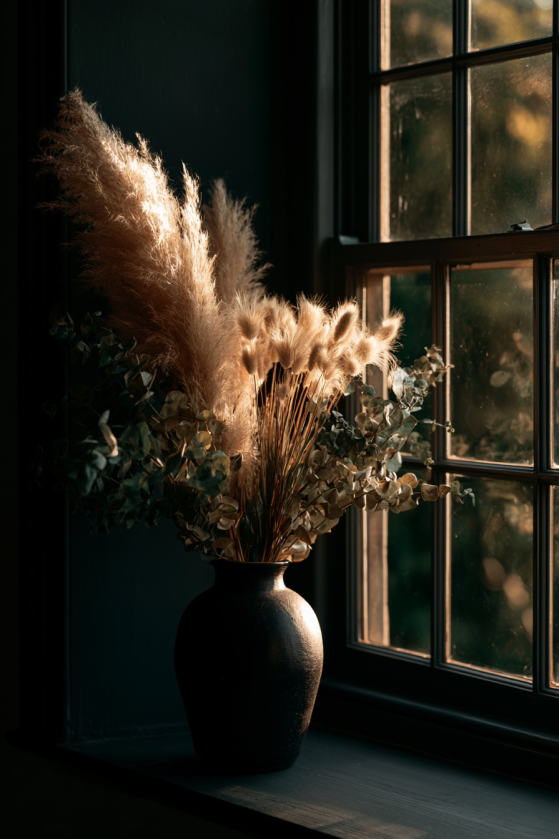
    A small bunch of wildflowers in a dark stoneware vase. A cluster of dried pampas grass in a black enamel pitcher. Single stems of eucalyptus in a narrow terracotta pot with a black glaze. Wherever you put them, flowers bring the garden inside and soften the whole aesthetic into something breathing and alive.

    Pulling It All Together

    The dark cottagecore kitchen isn’t built in a day — it’s assembled slowly, deliberately, the way a good stock is made. One beautiful object at a time. One ritual at a time.

    Start with the cast iron and the candles. Let the rest come.
  • How to Style a Gothic Reading Nook in 7 Steps (Dark Aesthetic Interior Guide)

    Disclosure: This post contains affiliate links. If you purchase through our links, we may earn a small commission at no extra cost to you. We only recommend things we genuinely love.

    Every house has a corner that wants to become something more.

    Maybe it’s the deep alcove beside the fireplace. Maybe it’s the window bay in the upstairs room where the light goes amber in the afternoons. Maybe it’s just a quiet patch of wall where something is waiting to be built.

    That corner wants to be a reading nook. A dark one.

    Not dark as in gloomy — dark as in intentional. Rich. Layered. The kind of space that wraps around you like an old wool coat and makes the rest of the world go quiet.

    Here is how to build it, step by step.

    Step 1: Choose a Corner That Has Potential for Shadow

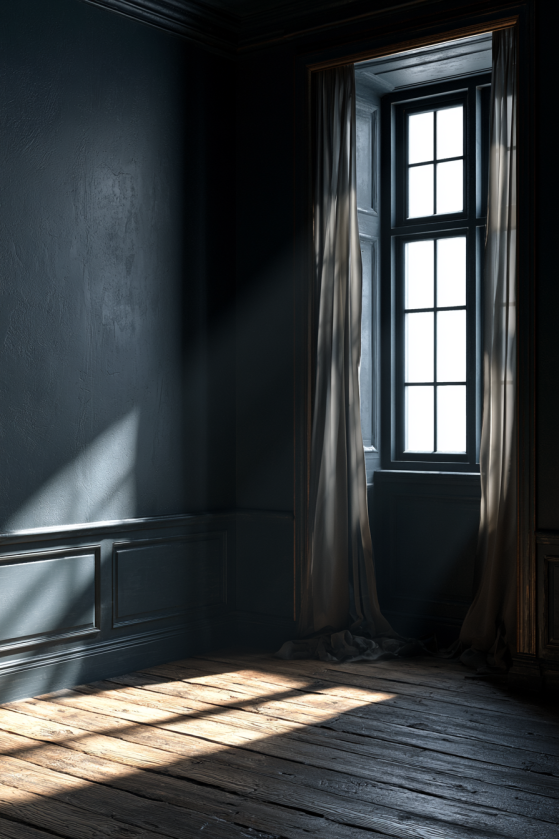
    Light is important in a reading nook — but so is the absence of it. Look for a corner that gets side light rather than overhead light. A window that faces north or catches afternoon shade. A wall nook where a single lamp can carve light dramatically from one direction only.

    Avoid spaces under harsh overhead lighting. You can always add warm light to a dark space. You can’t really subtract cold brightness from a too-bright one.

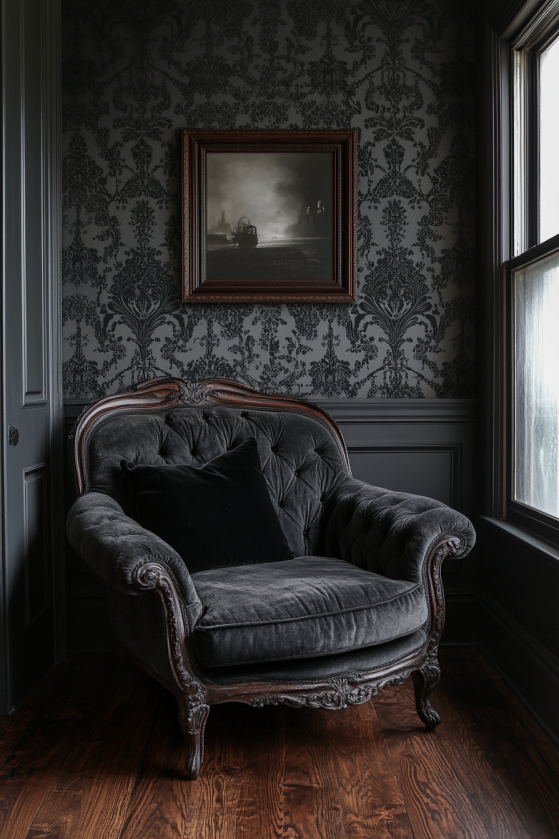
    Step 2: Anchor the Space with Dark-Painted Walls or a Rich Wallpaper

    If you can paint the reading nook differently from the rest of the room — do it. A single accent wall in deep charcoal, forest green, navy, or warm black creates an immediate sense of enclosure and drama.

    If you can’t paint (renting, or you want a softer commitment), consider a removable wallpaper in a botanical or gothic geometric pattern. Dark floral or arch-motif wallpapers are having a major moment and they dramatically elevate a small corner with minimal commitment.

    Step 3: Build the Shelf Layer

    A reading nook without shelves is just a seat. Shelves are what make it a nook.

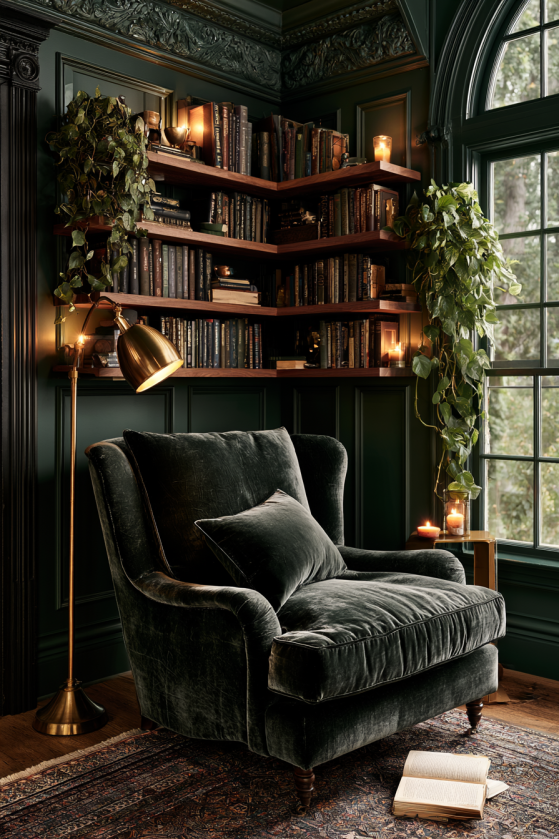
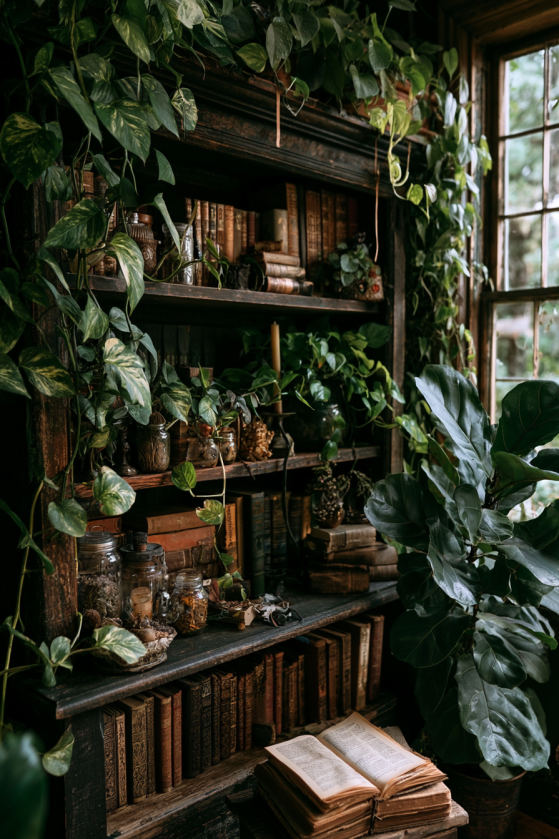
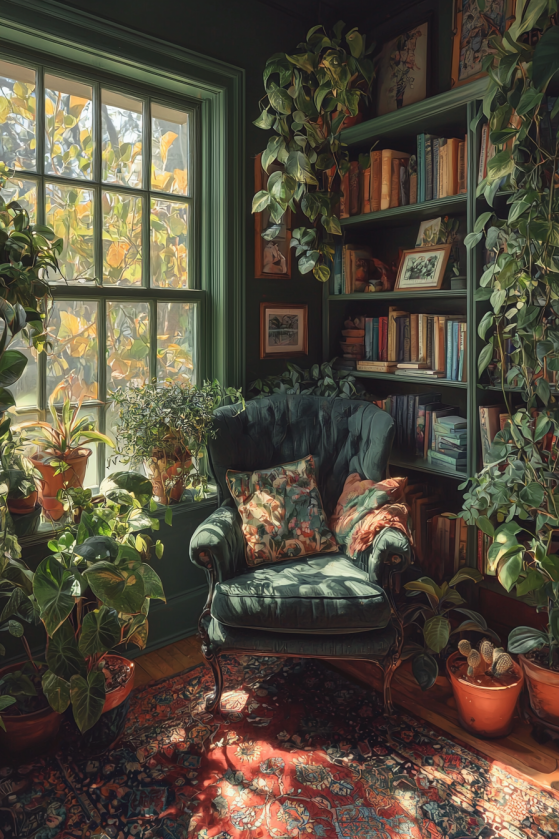
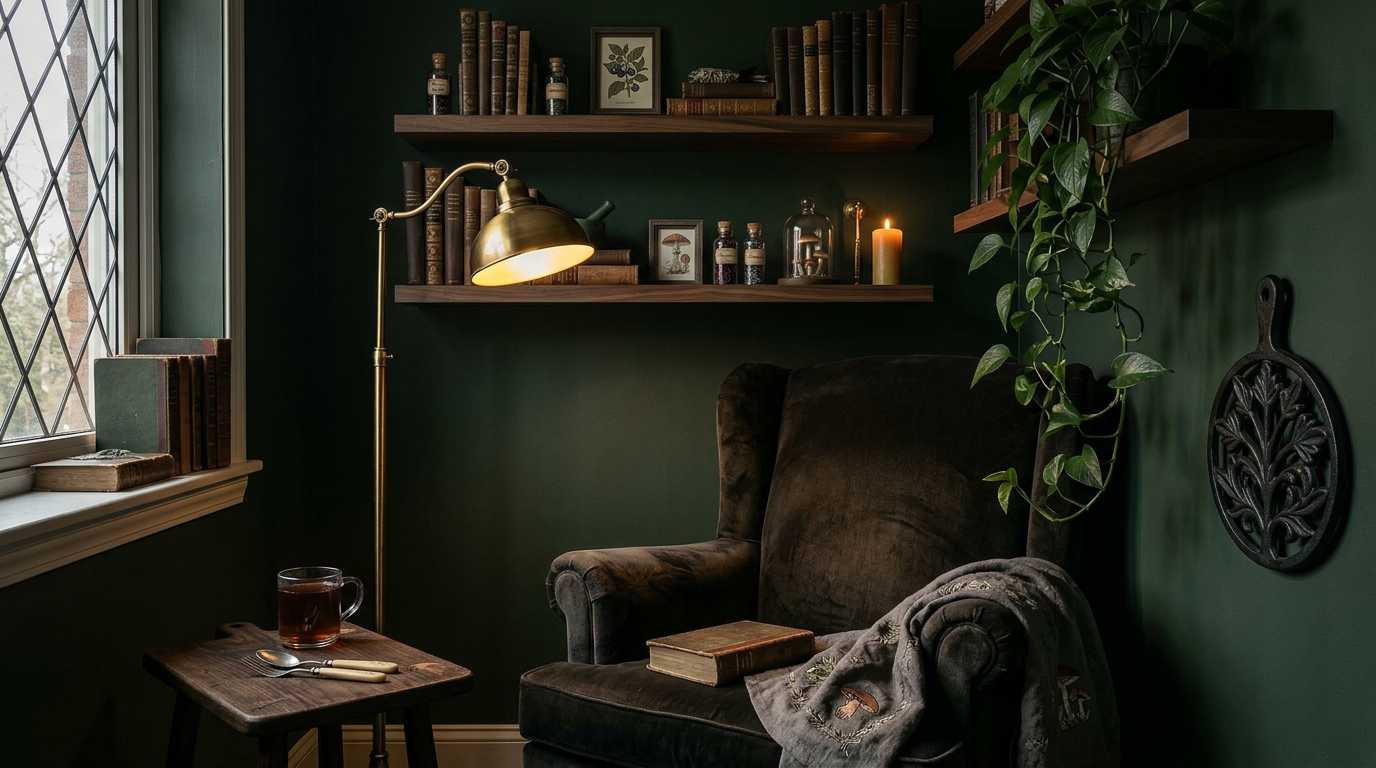
    Floating shelves in dark walnut or black-finished wood work beautifully. Stack them slightly asymmetrically — they don’t all need to be the same depth or height. Fill them with books spine-out, a few beautiful objects (a small framed print, a brass candle snuffer, a dark glass bottle), and at least one trailing plant.

    The shelves should feel like they’ve been collected over years, not assembled from one shopping cart.

    [AFFILIATE LINK: Floating Walnut Wall Shelves]

    Step 4: Choose Your Seating — Deep and Low

    The perfect reading nook seat is deep enough to curl into. Look for:

    • A low armchair with generous cushioning
    • A window seat with a thick cushion and bolster pillows
    • An oversized floor cushion or pouffe beside a low side table

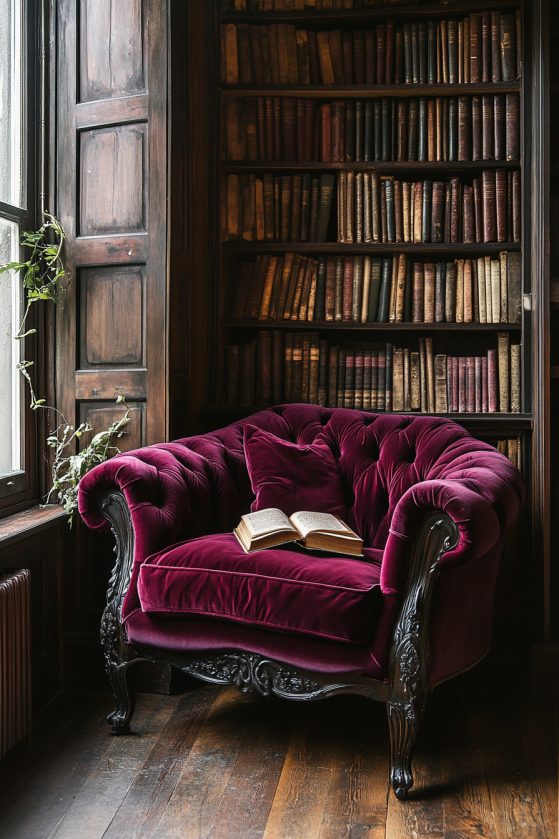
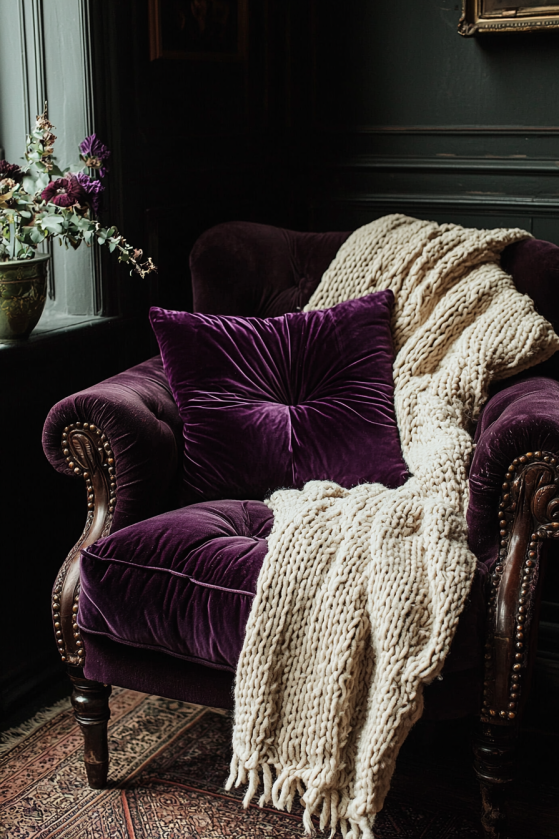
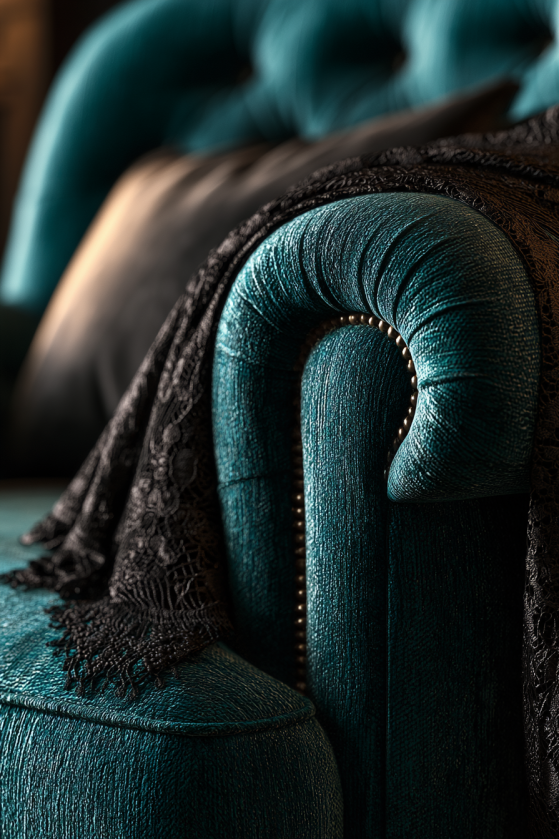
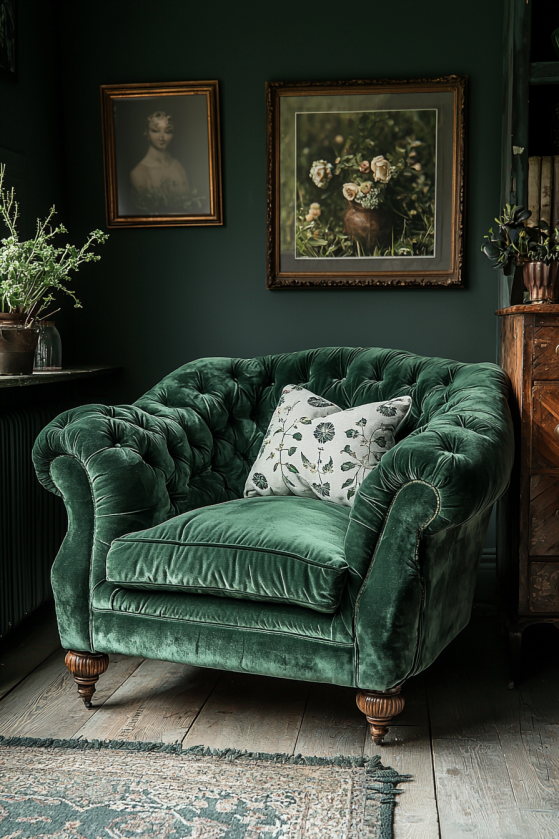
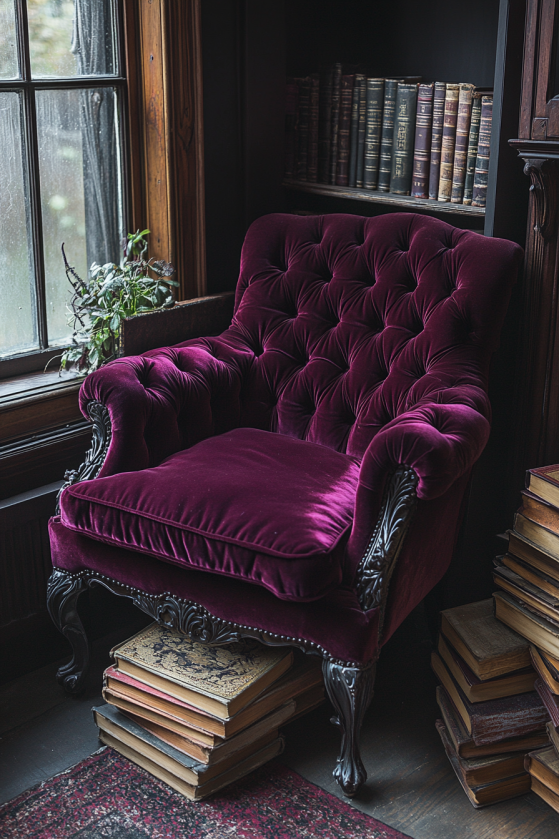
    Fabric matters here. Velvet, linen, or aged leather in muted, moody tones — bottle green, dusty plum, charcoal, rust — all work beautifully. Avoid synthetics that don’t age well. You want your nook to look better in three years than it does today.

    Step 5: Layer the Textiles

    One pillow is not a reading nook. You need:

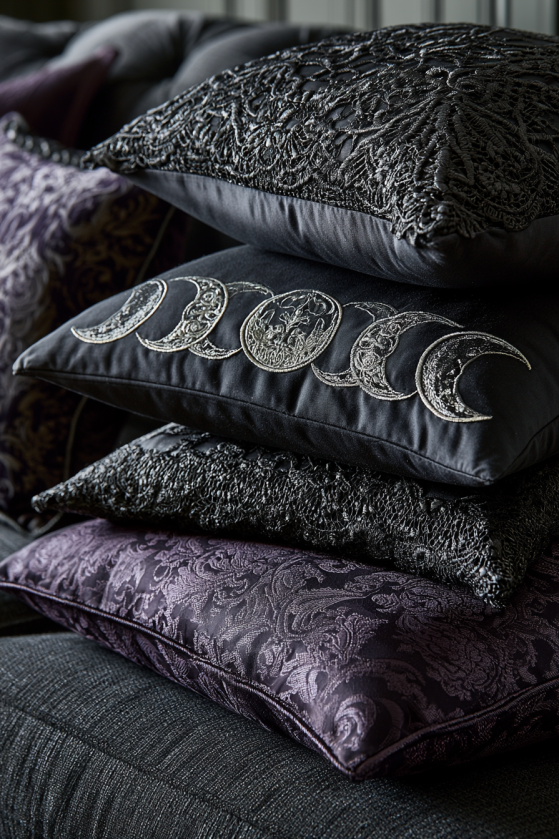
    • At least 2-3 throw pillows in different textures (velvet, knit, woven)
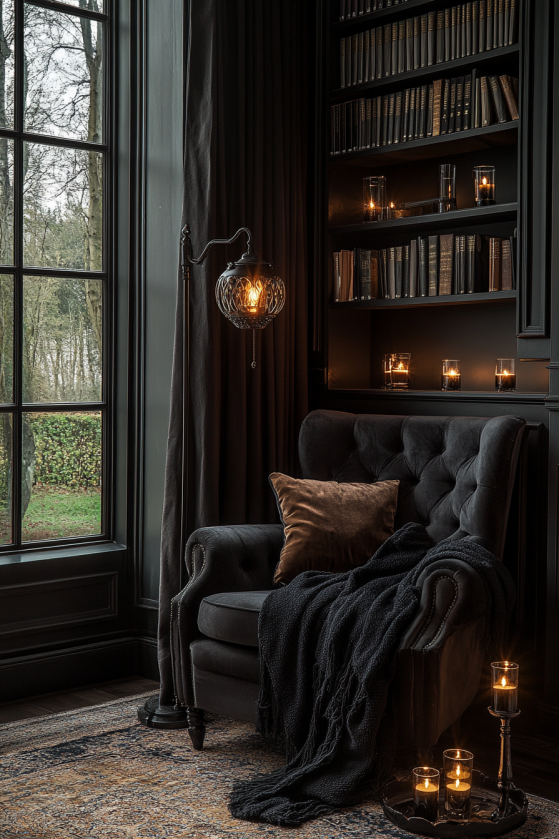
    • A throw blanket heavy enough to actually keep you warm
    • A rug beneath the chair if the floor is hard

    Don’t match everything perfectly. Gothic and dark cottagecore aesthetics reward layering — a velvet pillow beside a cable-knit throw beside a woven cushion is better than a matching set.

    [AFFILIATE LINK: Velvet Throw Pillow Covers — Deep Tones (set of 2)]

    [AFFILIATE LINK: Oversized Cable Knit Throw Blanket]

    Step 6: Build the Lighting System (Not Just One Lamp)

    The reading nook has two lighting modes: the reading light and the mood light.

    For reading: a clip-on or adjustable arm lamp positioned over your shoulder, bright enough to be practical without flooding the room.

    For mood: warm amber fairy lights tucked along the shelves. A beeswax taper on the side table. Perhaps a small salt lamp or amber-glassed lantern in the corner.

    When you’re reading, you use the reading light. When you’re not — when you’re just sitting and existing and being — you use the mood lights and let the space do its work.

    [AFFILIATE LINK: Beeswax Pillar Candle + Wrought Iron Holder]

    [AFFILIATE LINK: Adjustable Clip-On LED Reading Lamp]

    Step 7: Add Life — Plants, Botanicals, and Natural Texture

    A reading nook that breathes is one with living things in it.

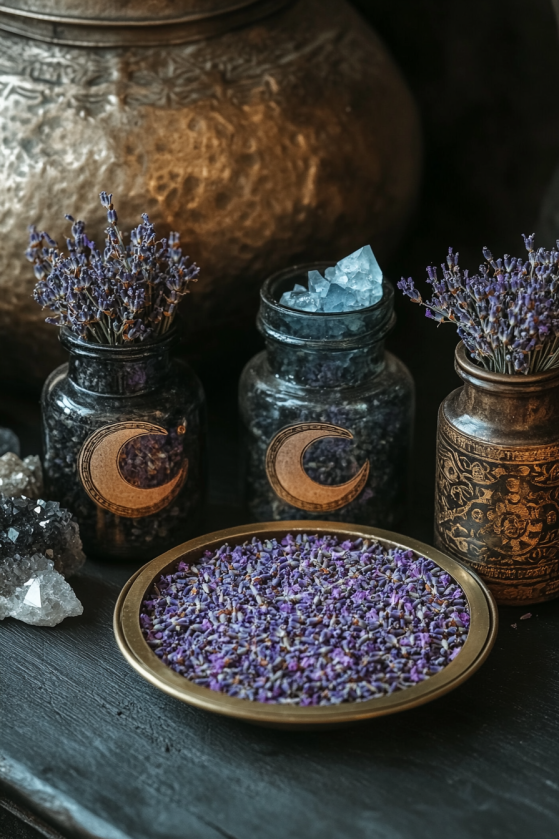
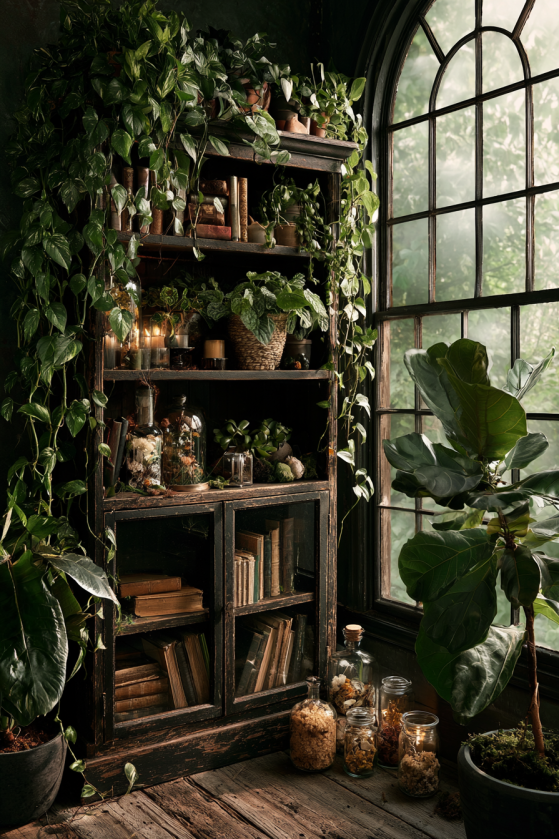
    A trailing pothos draped from a high shelf. A dark-leafed fiddle leaf fig in the corner. Dried botanicals in a glass apothecary jar on the lower shelf. A small pot of rosemary or thyme that fills the air with its particular warmth.

    Plants complete the space the way nothing else can. They turn a decorated corner into a living room.

    [AFFILIATE LINK: Trailing Pothos Plant (or Propagation Kit)]

    The Nook Is Ready. Now Go Read.

    You don’t need to do it all at once. Start with the wall color and the chair. Add the shelves. Let the textiles accumulate over time. Let the plants grow.

    A good reading nook takes time to become itself. Give it that time.

  • Castlecore Interior Design: The 8 Elements Every Gothic Home Needs

    Disclosure: This post contains affiliate links. We earn a small commission from qualifying purchases at no cost to you. We only ever recommend things we’d genuinely use ourselves.

    There’s a word for the ache you feel standing inside a very old building.

    It has stone walls and high ceilings and narrow windows that concentrate the light into something sharp and meaningful. The cold comes up through the floor. There are tapestries. Somewhere, a fire.

    The word is home.

    Castlecore interior design is for people who have always felt this ache. Who know that a space can be dramatic and warm simultaneously. Who understand that grandeur doesn’t require scale — it requires intention.

    Here are the 8 essential elements of a castlecore home.

    1. Heavy Textiles That Command Attention

    A castle without tapestries is just a building. Heavy woven textiles — tapestries, thick curtain panels, richly patterned throws — are what transform architecture into atmosphere.

    Look for:

    • Tapestry wall hangings in forest or hunting scenes, gothic arches, or dark botanical patterns
    • Floor-length velvet or jacquard curtain panels in deep jewel tones
    • Heavy wool or woven throws on every seating surface

    The rule in castlecore is that textiles should look as though they weigh something. They should have gravity. The light curtain panel that barely moves — not for you.

    [AFFILIATE LINK: Gothic Tapestry Wall Hanging — Forest Scene]

    [AFFILIATE LINK: Floor-Length Velvet Curtain Panels — Jewel Tones]

    2. Wrought Iron and Hammered Metal Hardware

    Iron is the metal of castles. Replace your standard brass or chrome hardware with wrought iron or blackened steel wherever you can — cabinet handles, door hinges, curtain rods, light fixture brackets, candle holders.

    Small changes compound quickly. Switching out ten drawer pulls doesn’t take a weekend; it takes an afternoon. But the cumulative effect is substantial. The whole room shifts in register.

    [AFFILIATE LINK: Wrought Iron Cabinet Hardware Set]

    3. Stone Texture — Real or Simulated

    The floor. The fireplace surround. An accent wall. Stone is the visual and tactile foundation of castlecore and even a single stone-textured surface can anchor the whole aesthetic.

    If you have stone already — show it. If you don’t, consider:

    • Exposed brick that you’ve allowed to stay unpainted
    • Faux stone wallpaper panels that read convincingly in lamplight
    • A slate or limestone tile accent in the entryway or hearth area

    Don’t fake it too hard. One honest stone-adjacent surface is worth more than a whole room trying.

    4. Candelabras and Multi-Flame Candle Arrangements

    Castles were lit by fire. Your home can honor that.

    A tall iron candelabra in the corner of the living room. A cluster of mismatched taper candles on the mantle. A pendant candle chandelier above the dining table.

    Candle arrangement is the fastest and most affordable path into castlecore. A $30 iron floor candelabra and a pack of beeswax tapers transforms a room’s entire atmosphere after dark.

    [AFFILIATE LINK: Tall Iron Floor Candelabra (3-arm)]

    5. Dark-Stained or Reclaimed Wood Accents

    Dark wood — ebonized oak, aged walnut, reclaimed timber with a blackened finish — grounds the castlecore aesthetic in something earthy and ancient.

    Look for dark wood in:

    • Exposed ceiling beams
    • Chunky floating shelves
    • A statement dining table with a dark stain
    • Picture frames and mirror frames in deep walnut or black-painted wood

    The grain and imperfection of real wood matters here. Avoid synthetic wood panels that read as flat and modern.

    6. Arched or Gothic-Detail Mirrors

    Mirrors are functional and decorative, but in a castlecore home they also suggest architecture. An arched mirror on the wall implies a window or doorway that isn’t there — it extends the sense of space and drama simultaneously.

    Look for mirrors with:

    • Gothic arch or pointed arch frames
    • Intricate ironwork or ornate dark-metal frames
    • Antiqued or foxed glass that reflects warmly rather than crisply

    A large arched floor mirror leaned against a dark wall is one of the highest-impact castlecore moves you can make for under $200.

    [AFFILIATE LINK: Gothic Arch Wall Mirror — Antiqued Metal Frame]

    7. Rich, Dark Paint Colors

    This is where commitment is required.

    Castlecore does not survive in white rooms. It needs walls the color of midnight forest, dark stone, deep plum, or aged burgundy. Farrow & Ball’s Railings, Pitch Black, and Mole’s Breath are the gold standard — but excellent dupes exist from Benjamin Moore, Sherwin-Williams, and Clare.

    If full wall commitment is too much, paint the ceiling. A dark ceiling lowers the perceived height of the room and creates immediate atmospheric drama. It’s one of the most transformative things you can do to a room without touching the walls.

    [AFFILIATE LINK: Farrow & Ball Railings (No. 31) — Sample Pot]

    8. Books — Used as Architecture

    Books are the furniture of a castlecore interior. Not just as objects to read, but as material. Stack them in tall shelves from floor to ceiling where possible. Group them by color and size as much as by subject. Let some face spine-in for texture.

    A castlecore home smells faintly of old paper. It has books in unexpected places — on the stairs, on the kitchen shelf, on the bathroom windowsill. Books make a room feel inhabited and intelligent and in time.

    Building the Castle Takes Time

    None of this happens in a weekend order. The castlecore interior is assembled the way a real castle was built: stone by stone, year by year, with an understanding that the best interiors are never quite finished.

    Start with the candelabra and the curtains. Paint one wall. Find an arched mirror. Let it grow from there.