Disclosure: This post contains affiliate links. If you purchase through our links, we may earn a small commission at no extra cost to you. We only recommend things we genuinely love.
Every house has a corner that wants to become something more.
Step 1: Choose a Corner That Has Potential for Shadow
Maybe it’s the deep alcove beside the fireplace. Maybe it’s the window bay in the upstairs room where the light goes amber in the afternoons. Maybe it’s just a quiet patch of wall where something is waiting to be built.
That corner wants to be a reading nook. A dark one.
Not dark as in gloomy — dark as in intentional. Rich. Layered. The kind of space that wraps around you like an old wool coat and makes the rest of the world go quiet.
Here is how to build it, step by step.
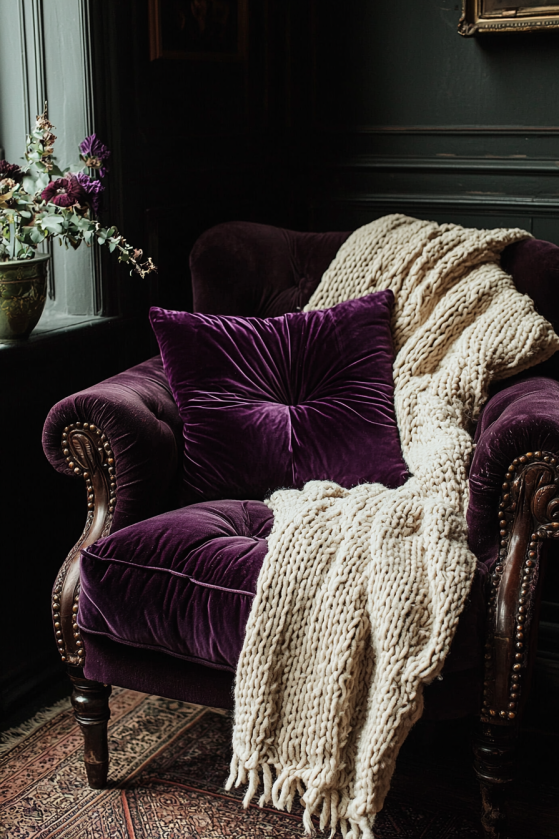
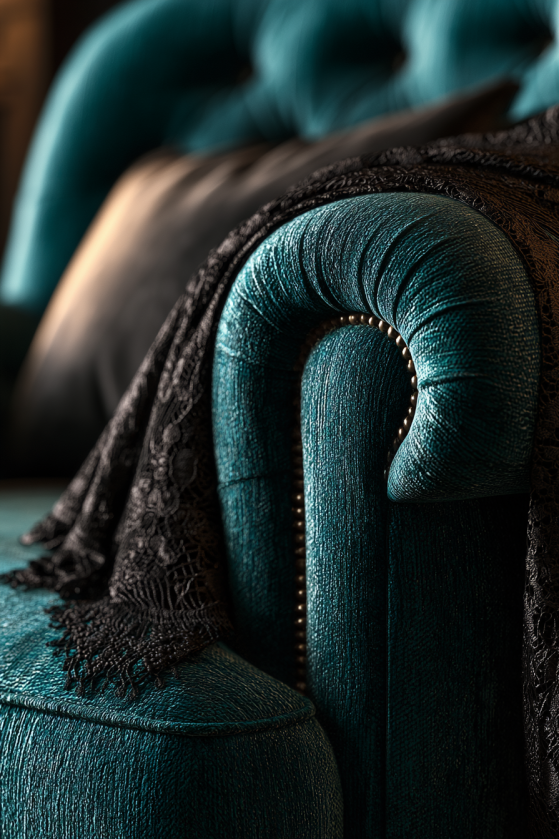
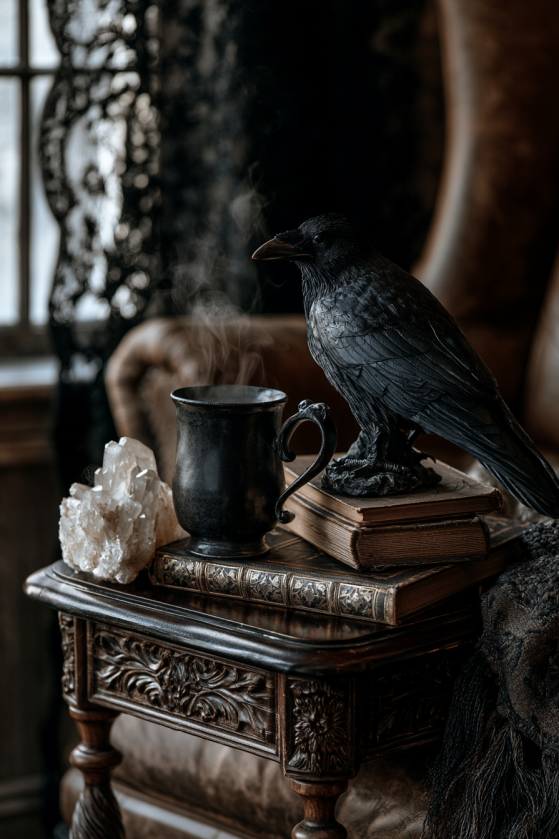

Shop This Look — Shop the Reading Nook Look
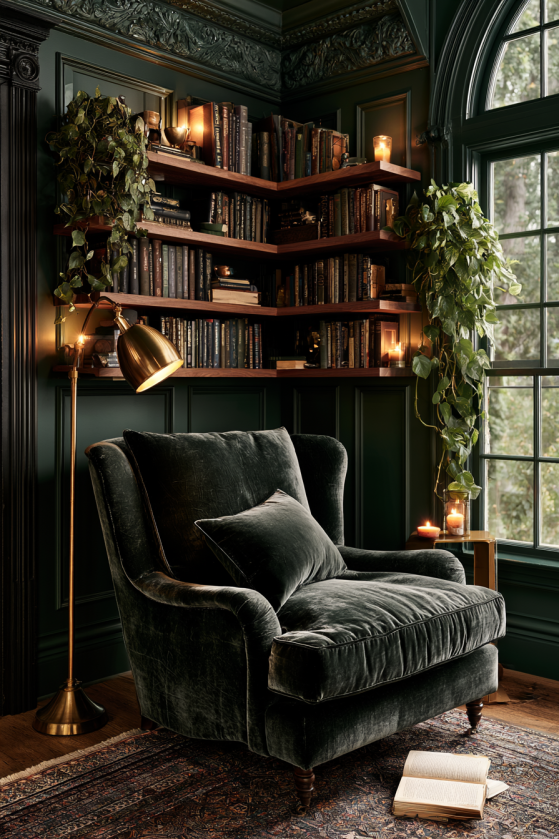
- Green Velvet Armchair (wayfair)- Traditional Green Velvet Caster Chair (Kathy KUO Home), Velvet Arm Chairs (amazon), Velvet Armchair (Anthropologie)
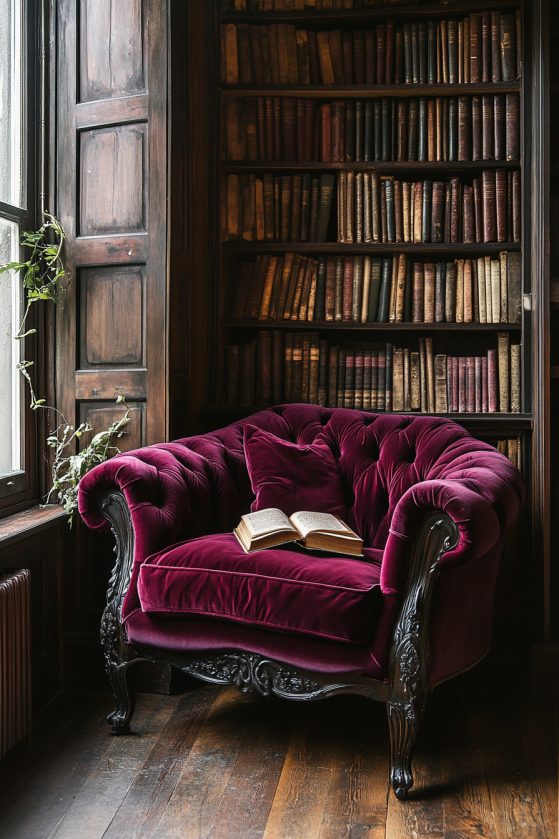
- Deep Plum Velvet Tufted Armchair (Amazon) Burgundy Tufted Velvet Armchair
- Brass Adjustable Floor Lamp (Amazon) , Bronze Adjustable Floor Lamps (Amazon)
- Natural or Charcoal Linen Curtains (Etsy)
- Cream or Natural Chunky Cable-Knit Throw – (Etsy)
- Black Raven or Crow Statue (Etsy gothic black raven statue / dark academia crow figurine)
- Dried Lavender Bundles – (Etsy)
- Gothic or Dark Academia Labels – Etsy
- Glass Apothecary Jars – Etsy
- Crystals – Etsy
- Brass Bowls and Curiosities
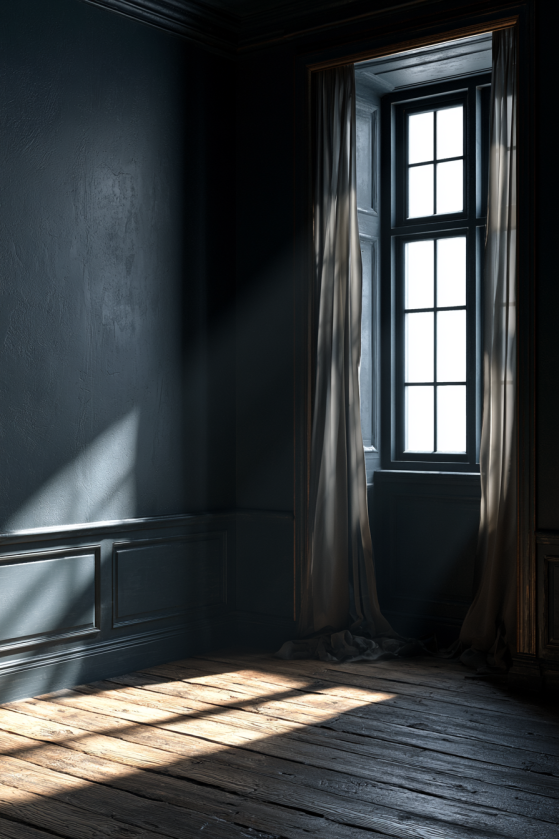
Light is important in a reading nook — but so is the absence of it. Look for a corner that gets side light rather than overhead light. A window that faces north or catches afternoon shade. A wall nook where a single lamp can carve light dramatically from one direction only.
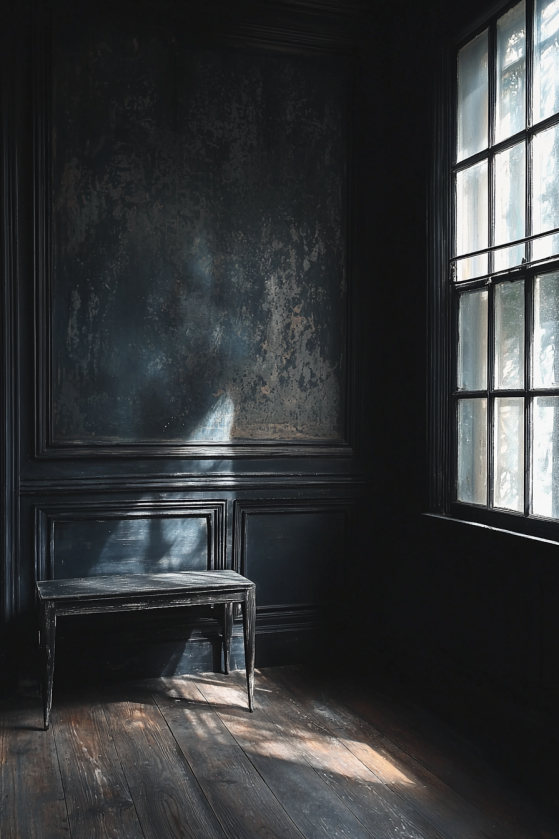
Avoid spaces under harsh overhead lighting. You can always add warm light to a dark space. You can’t really subtract cold brightness from a too-bright one.
Step 2: Anchor the Space with Dark-Painted Walls or a Rich Wallpaper
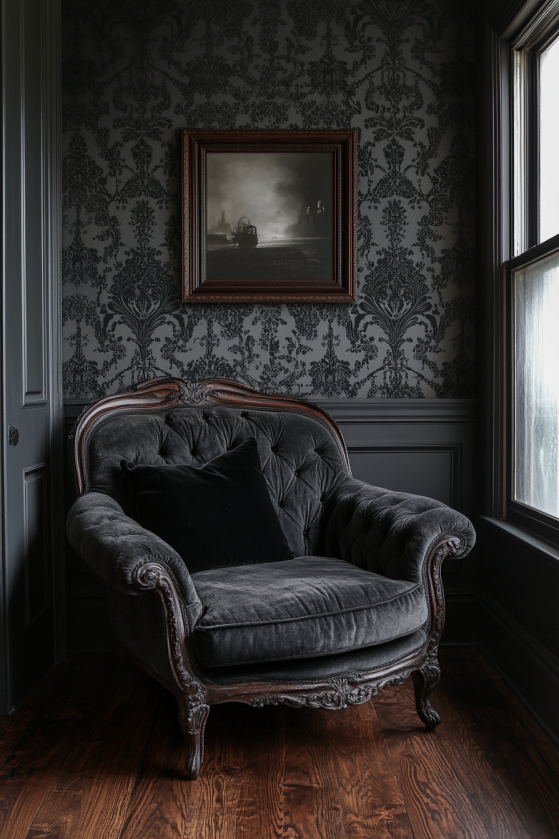
If you can paint the reading nook differently from the rest of the room — do it. A single accent wall in deep charcoal, forest green, navy, or warm black creates an immediate sense of enclosure and drama.
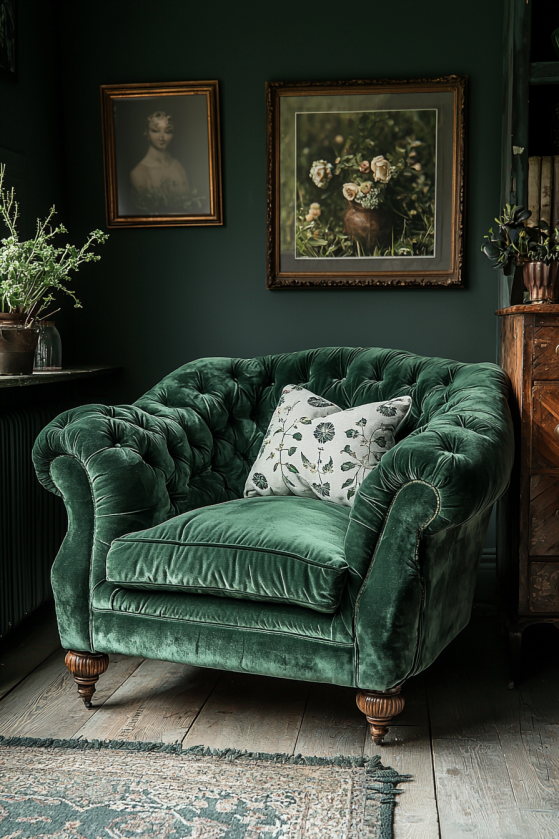
If you can’t paint (renting, or you want a softer commitment), consider a removable wallpaper in a botanical or gothic geometric pattern. Dark floral or arch-motif wallpapers are having a major moment and they dramatically elevate a small corner with minimal commitment.
Shop the Anchor — Walls, Chair & Layers
- Gothic Damask Peel & Stick Wallpaper (Etsy)
- Gothic Dark Academia Wall Papers (Amazon)
- Dark Floral or Botanical wallpaper (Etsy)
- Dark Botanical Gothic Wallpaper (Amazon)
- Deep Charcoal or Warm Black Paint : Sherwin-Williams Iron Ore (SW 7069)
- Forest green: Benjamin Moore Forest Floor Paint – Fine paints
- Gray Tufted Velvet Armchair (Wayfair)- Gray Tufted Velvet Armchair
- Green Chesterfield or Club Chair – (Wayfair)
- Framed Moody Landscape or Dark Botanical Prints
Step 3: Build the Shelf Layer
A reading nook without shelves is just a seat. Shelves are what make it a nook.
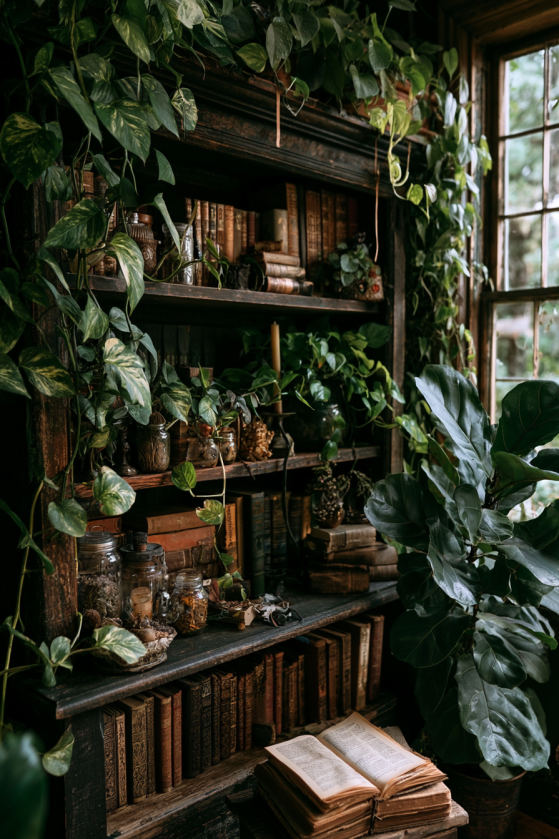

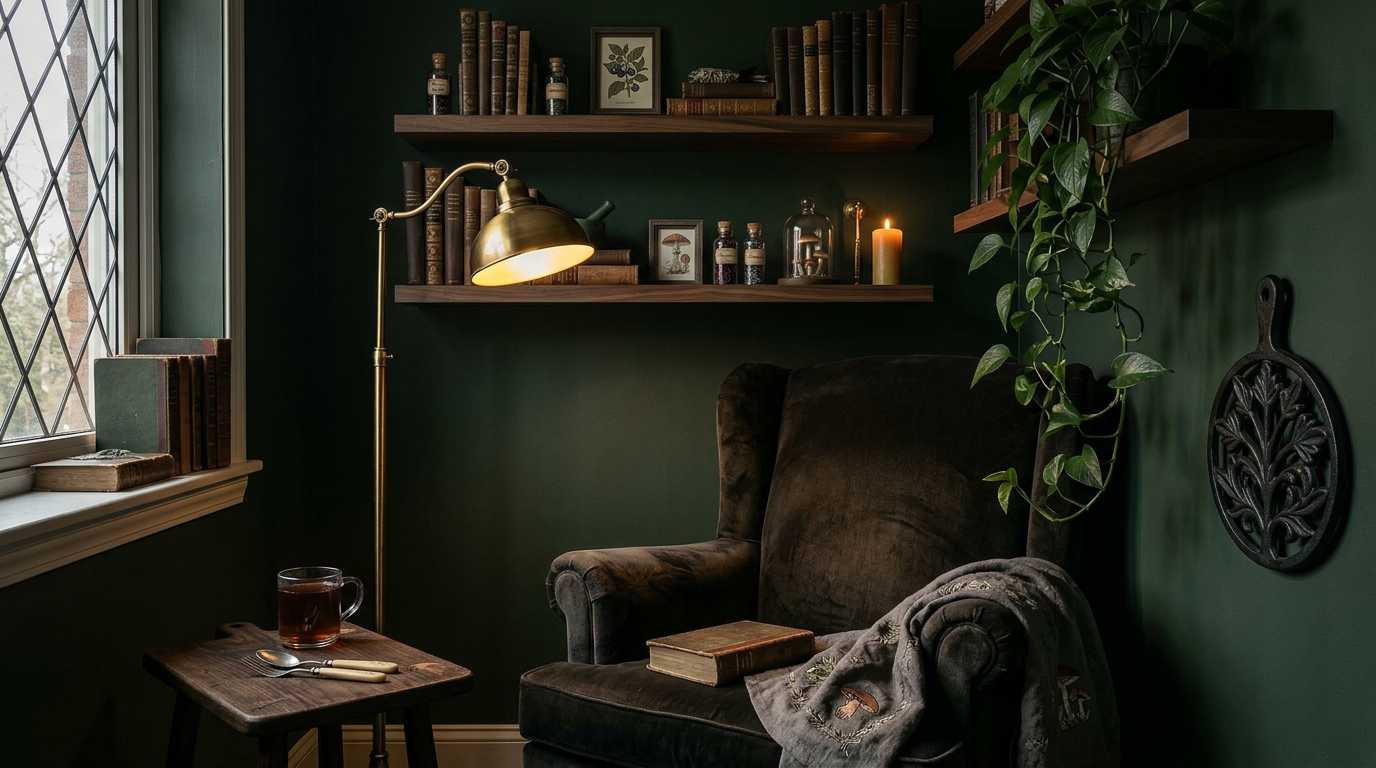
Floating shelves in dark walnut or black-finished wood work beautifully. Stack them slightly asymmetrically — they don’t all need to be the same depth or height. Fill them with books spine-out, a few beautiful objects (a small framed print, a brass candle snuffer, a dark glass bottle), and at least one trailing plant.
The shelves should feel like they’ve been collected over years, not assembled from one shopping cart.
Step 4: Choose Your Seating — Deep and Low
The perfect reading nook seat is deep enough to curl into. Look for:
- A low armchair with generous cushioning
- A window seat with a thick cushion and bolster pillows
- An oversized floor cushion or pouffe beside a low side table
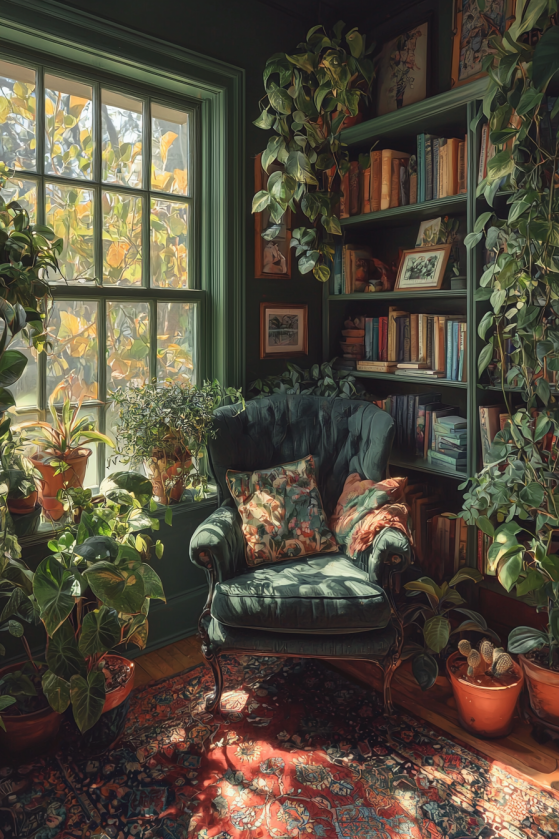
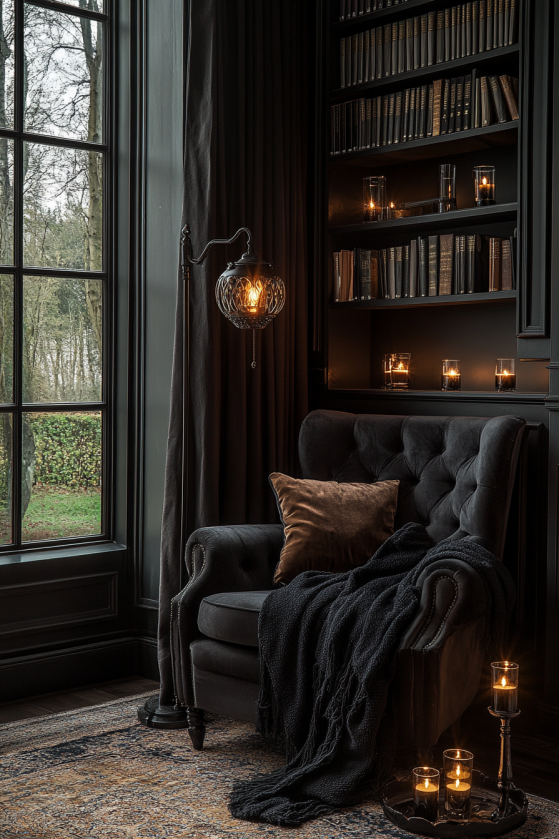
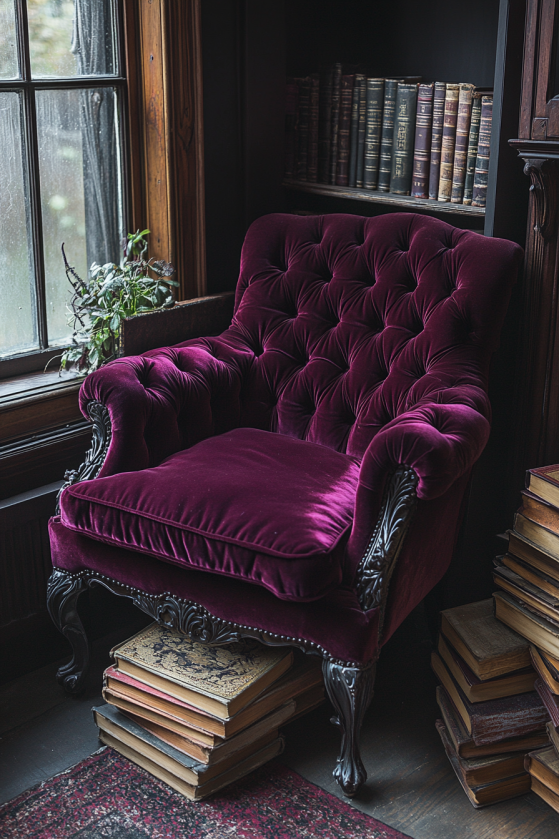
- Green Velvet Armchair (wayfair)- Traditional Green Velvet Caster Chair (Kathy KUO Home), Velvet Arm Chairs (amazon), Velvet Armchair (Anthropologie)
- Deep Plum Velvet Tufted Armchair (Amazon) Burgundy Tufted Velvet Armchair
- Brass Adjustable Floor Lamp (Amazon) , Bronze Adjustable Floor Lamps (Amazon)
- Natural or Charcoal Linen Curtains (Etsy)
- Cream or Natural Chunky Cable-Knit Throw – (Etsy)
- Black Raven or Crow Statue (Etsy gothic black raven statue / dark academia crow figurine)
- Dried Lavender Bundles – (Etsy)
- Gothic or Dark Academia Labels – Etsy
- Glass Apothecary Jars – Etsy
- Crystals – Etsy
- Brass Bowls and Curiosities
Fabric matters here. Velvet, linen, or aged leather in muted, moody tones — bottle green, dusty plum, charcoal, rust — all work beautifully. Avoid synthetics that don’t age well. You want your nook to look better in three years than it does today.
Step 5: Layer the Textiles
One pillow is not a reading nook. You need:
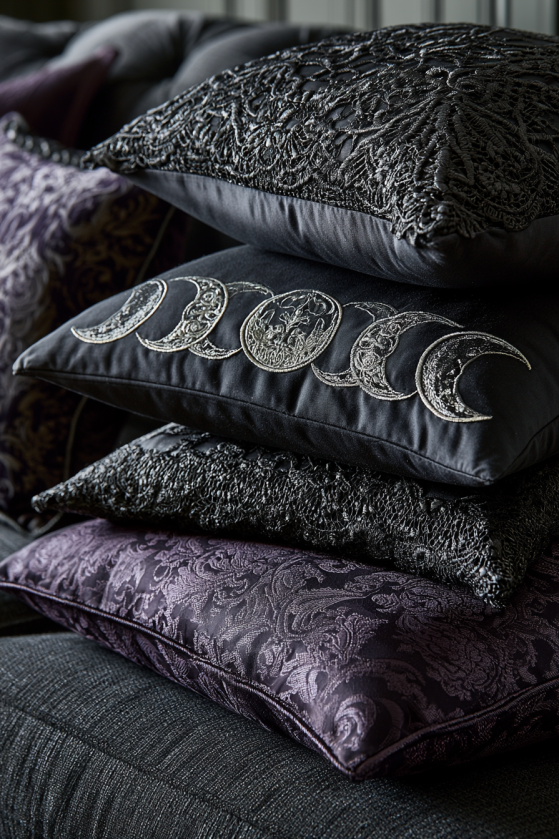
- At least 2-3 throw pillows in different textures (velvet, knit, woven)
- A throw blanket heavy enough to actually keep you warm
- A rug beneath the chair if the floor is hard
Don’t match everything perfectly. Gothic and dark cottagecore aesthetics reward layering — a velvet pillow beside a cable-knit throw beside a woven cushion is better than a matching set.
Step 6: Build the Lighting System (Not Just One Lamp)
The reading nook has two lighting modes: the reading light and the mood light.
For reading: a clip-on or adjustable arm lamp positioned over your shoulder, bright enough to be practical without flooding the room.
For mood: warm amber fairy lights tucked along the shelves. A beeswax taper on the side table. Perhaps a small salt lamp or amber-glassed lantern in the corner.
When you’re reading, you use the reading light. When you’re not — when you’re just sitting and existing and being — you use the mood lights and let the space do its work.
Step 7: Add Life — Plants, Botanicals, and Natural Texture
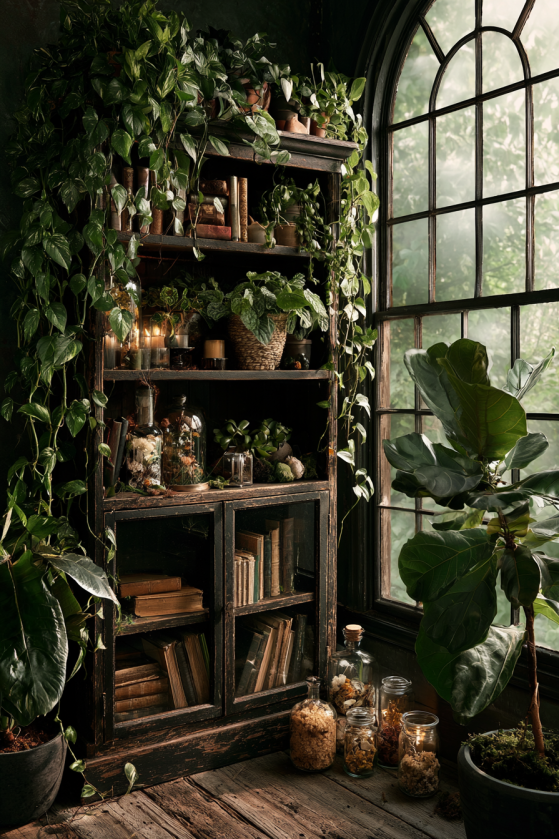
A reading nook that breathes is one with living things in it.
A trailing pothos draped from a high shelf. A dark-leafed fiddle leaf fig in the corner. Dried botanicals in a glass apothecary jar on the lower shelf. A small pot of rosemary or thyme that fills the air with its particular warmth.
Plants complete the space the way nothing else can. They turn a decorated corner into a living room.
The Nook Is Ready. Now Go Read.
You don’t need to do it all at once. Start with the wall color and the chair. Add the shelves. Let the textiles accumulate over time. Let the plants grow.
A good reading nook takes time to become itself. Give it that time.
Leave a Reply