Tag: dark cottagecore

  • Where Shadows Bloom and Soup Simmers: The Dark Cottagecore Kitchen You’ve Been Dreaming Of

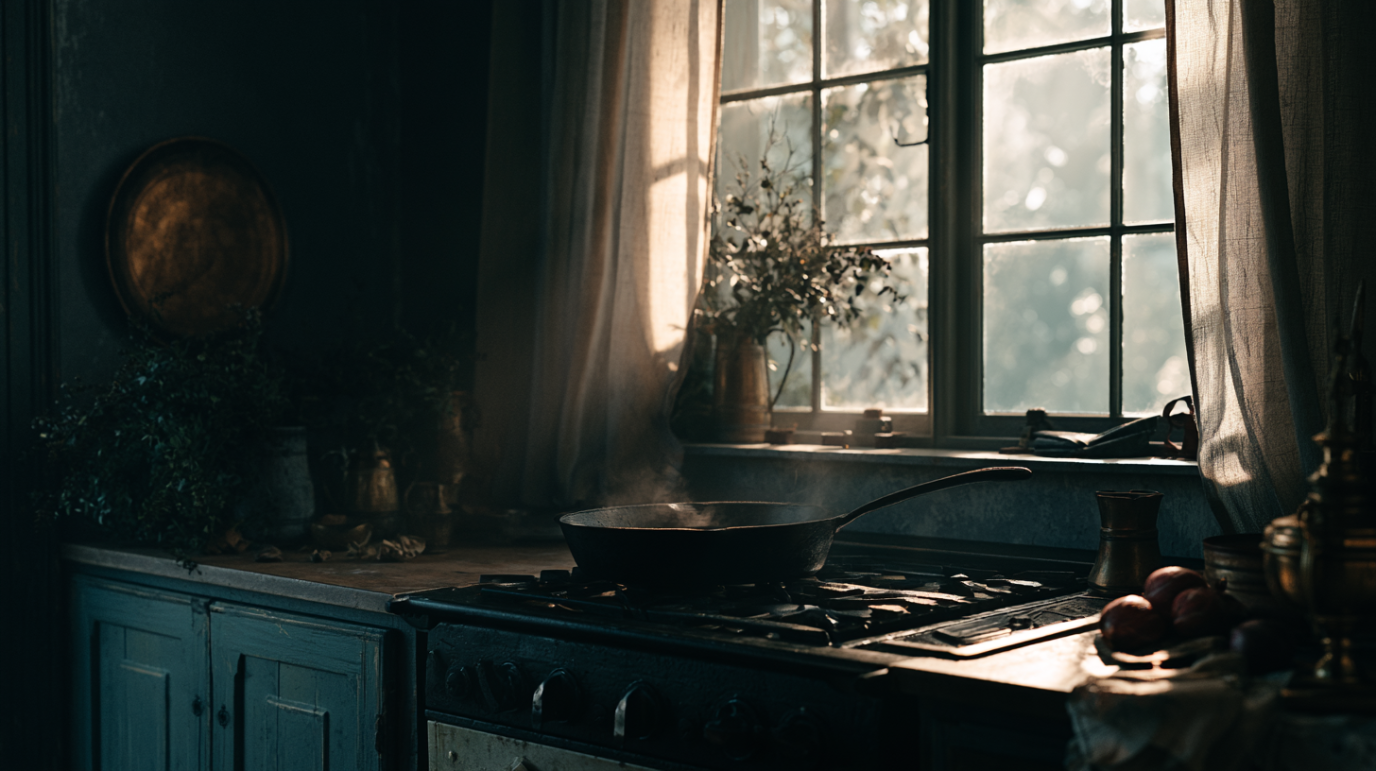
    Step inside. The kettle hums low on a black iron stove. Bundles of dried lavender and rosemary hang like sleeping bats from a ceiling beam worn smooth by decades of hands. A single tallow candle stutters on the windowsill, casting amber pools across dark slate tiles and a worn oak table dusted in flour.
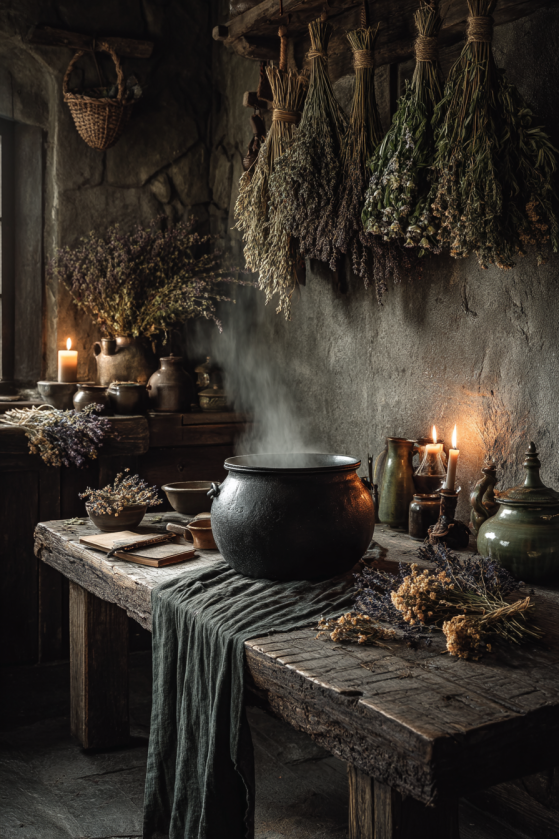
    This is not your grandmother’s farmhouse kitchen.

    This is something older. Something more honest. This is the dark cottagecore kitchen aesthetic — and if your soul has ever ached for a place that feels both wildly beautiful and beautifully strange, you already know exactly what this feels like.


    What Is the Dark Cottagecore Kitchen Aesthetic?
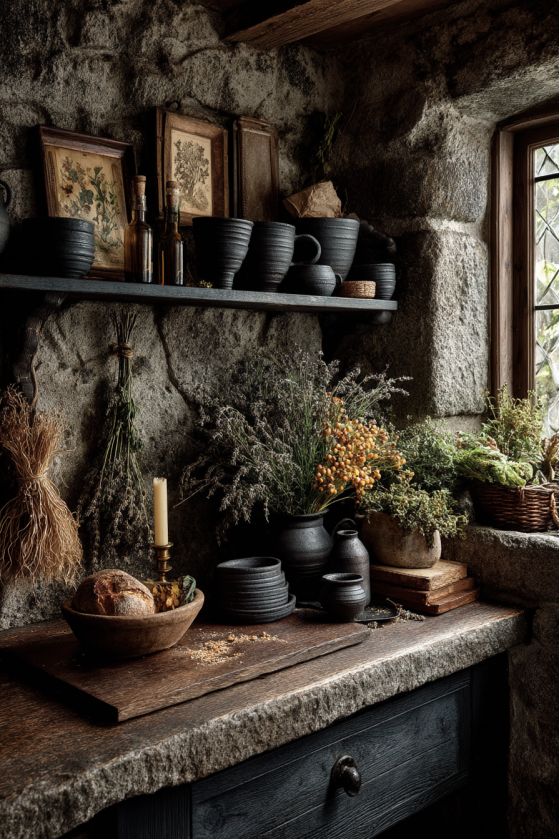
    Cottagecore, at its heart, is a love letter to slow living, handmade things, and the natural world. But dark cottagecore dips that letter in ink instead of watercolor.

    Where classic cottagecore kitchens lean toward white linen and sunlit jars of honey, the dark cottagecore kitchen leans into:

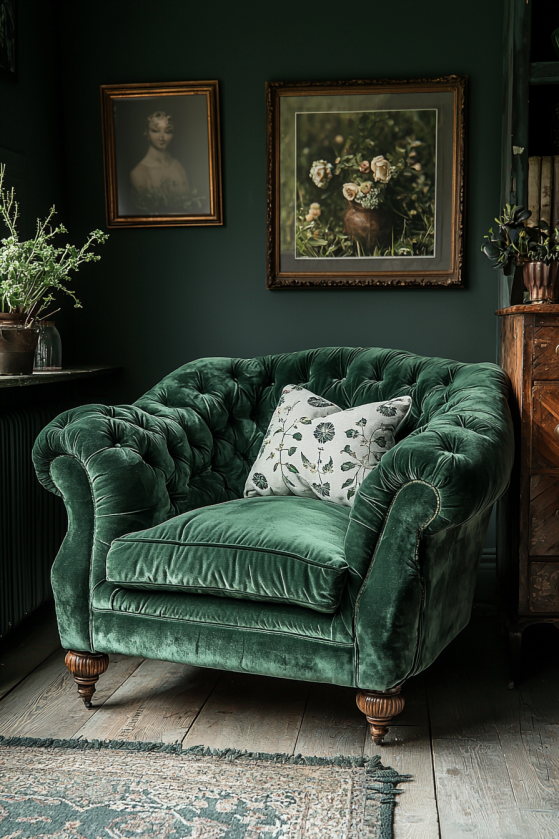
    • Deep, moody color palettes — forest green, charcoal, blackened walnut, plum, and stone grey
    • Worn, organic textures — rough-hewn wood, handmade ceramic crockery, aged copper, cast iron
    • Witchy, foraged, and folk-magic vibes — dried herb bundles, mortar and pestles, amber glass bottles, beeswax candles
    • A sense of living with the land, not just decorating with it
    • Gothic undertones softened by the warmth of a wood fire and the smell of bread baking

    Think: a healer’s cottage at the edge of a dark wood. A Victorian herbalist’s workspace. A fairy tale kitchen where something is always simmering and the walls know your name.
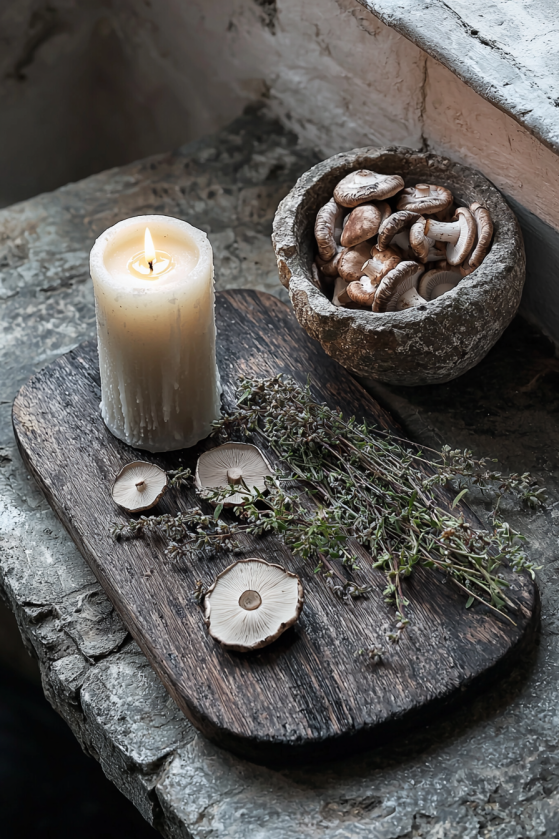

    The Palette: Dark, Rich, and Alive

    The color story of a dark cottagecore kitchen is not cold or harsh — it is deep and warm, like the forest floor after rain.

    Dark forest green cabinetry is perhaps the most iconic choice. It feels ancient and alive at once. Pair it with matte black hardware — hand-forged iron pulls, if you can find them — and suddenly your kitchen feels like it belongs to someone who knows the names of every plant in the hedgerow.

    Charcoal and slate grey walls bring drama without closing in. A blackened wood island anchors the room like a great old tree. Aged brass and unlacquered copper catch candlelight in a way that feels almost magical.

    Don’t be afraid of black. A matte black ceiling, a black shiplap wall, or even simply black window frames can transform an ordinary kitchen into something utterly atmospheric.

    Affiliate tip: [Dark Forest Green Peel-and-Stick Wallpaper] and [Matte Black Cabinet Hardware Sets] are two of the most-pinned dark cottagecore kitchen finds right now — and they work beautifully in rentals too.


    The Materials: Handmade, Foraged, and Time-Worn

    The dark cottagecore kitchen is not a showroom. It is a living workspace, and every surface tells a story.

    Wood

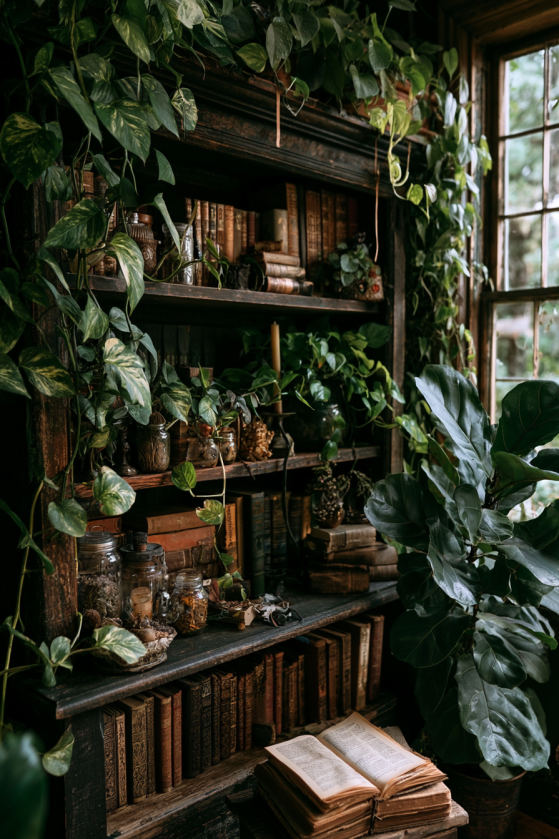
    Choose wood that has lived a little. Dark walnut, ebonized oak, reclaimed barnwood, rough-hewn pine darkened with age or stain. Exposed ceiling beams are a dream. Open shelving in dark-stained wood, lined with ceramic crocks and amber bottles, is the aesthetic in one single image.

    Stone

    Slate floors. Soapstone countertops. A rough stone backsplash. These materials breathe and age. They feel like the earth beneath your feet, because they are.

    Ceramics and Pottery

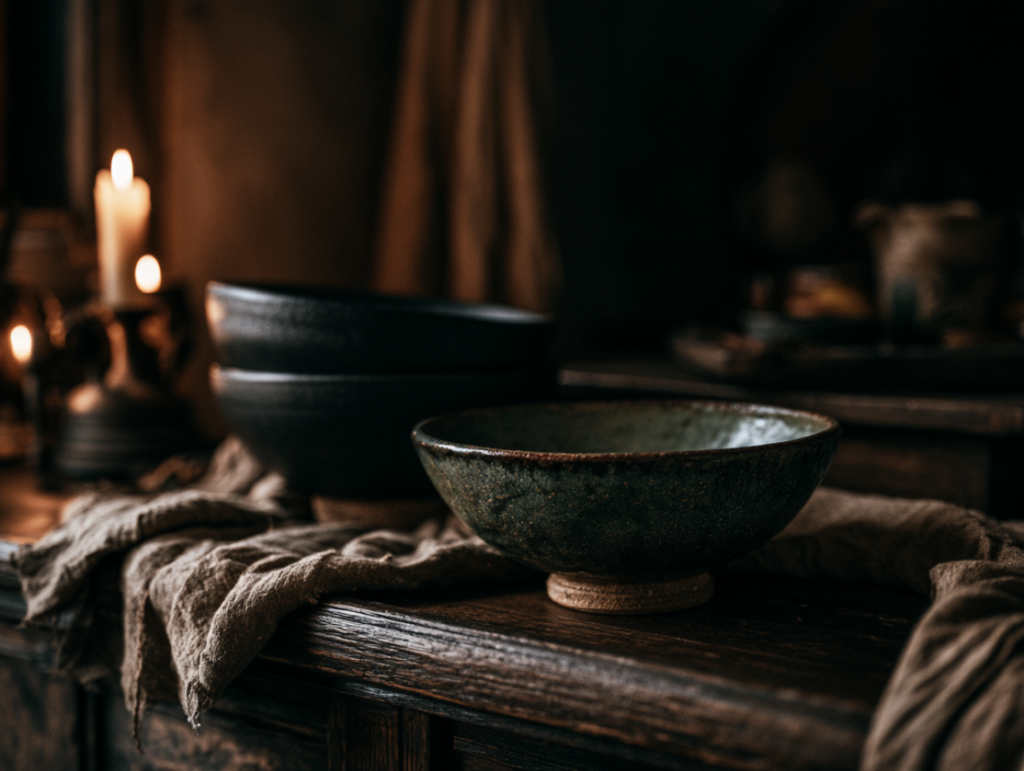
    This is where the kitchen becomes yours. Handthrown mugs in dark clay, speckled grey or earthy brown. A heavy stoneware mixing bowl. A crockpot with a lid you could lose yourself in.

    [Handmade Dark Clay Pottery Sets] and [Speckled Stoneware Dinnerware Collections] are two affiliate categories that consistently convert for the dark cottagecore niche.

    Cast Iron

    A well-seasoned cast iron skillet hanging from a ceiling rack is not just a cooking tool in a dark cottagecore kitchen — it is almost devotional. The same goes for a Dutch oven in deep navy or forest green enamel.


    The Details: Where the Magic Lives

    It is in the details that a dark cottagecore kitchen becomes truly enchanted.

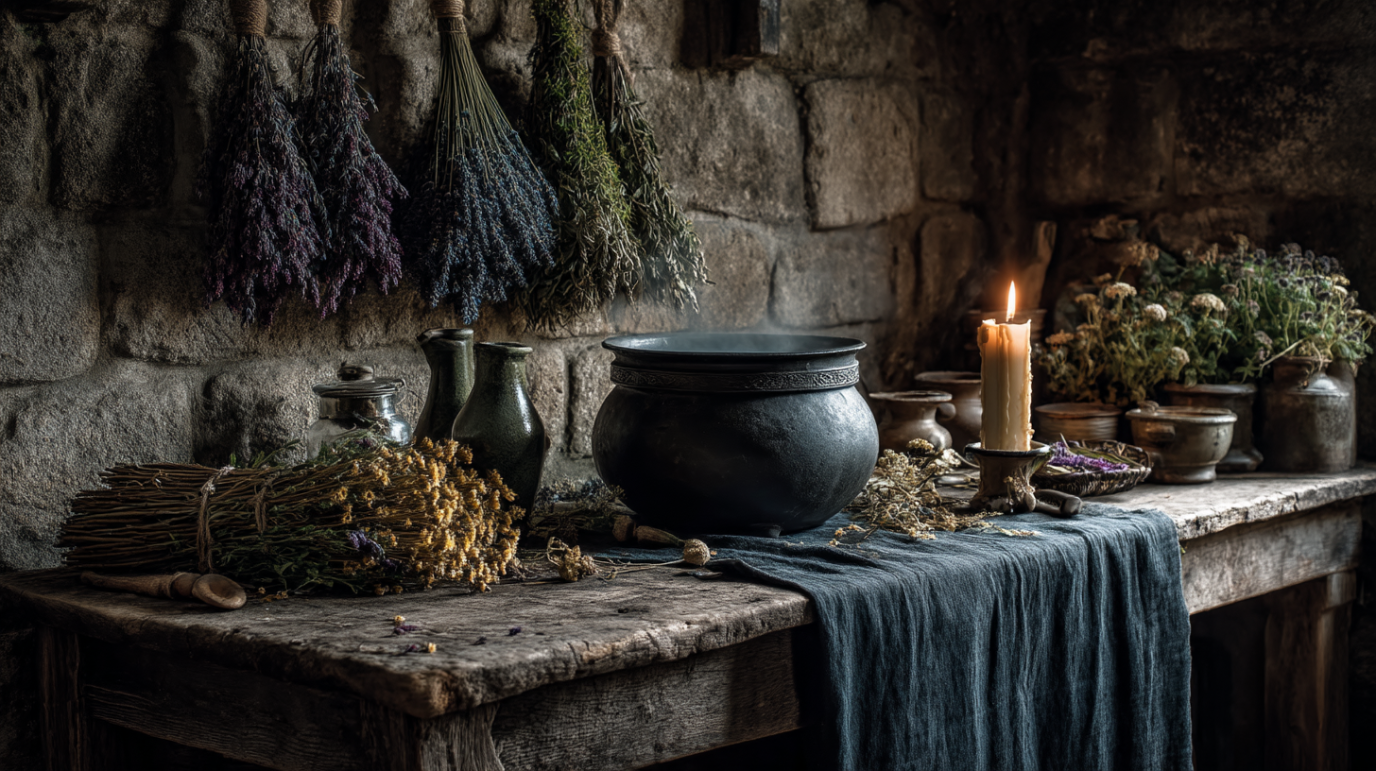
    Dried herb bundles hanging from the ceiling beams are the single most transformative thing you can add to any kitchen. Lavender, rosemary, thyme, wormwood, mugwort, yarrow. Tie them with natural twine and hang them in clusters. The scent alone will change the entire feeling of the room.

    Amber and dark glass bottles filled with vinegars, oils, or simply collected as objects of beauty. Antique apothecary bottles. Brown medicine bottles found at estate sales. They catch the light and hold it like a secret.

    Beeswax and tallow candles over electric light whenever possible. A candelabra on the table. A single taper in a blackened iron holder on the windowsill. Candlelight is not decorative in a dark cottagecore kitchen — it is essential.

    A mortar and pestle in dark stone or aged marble, sitting out on the counter always. It is both functional and deeply, irreducibly beautiful.

    Woven baskets and wreath forms for storing garlic, onions, dried flowers. Pressed botanical prints in dark frames. A hand-lettered list of herbs and their uses, hung near the stove.

    Affiliate picks: [Dried Herb and Botanical Bundle Kits], [Vintage Amber Glass Bottle Collections], [Beeswax Taper Candle Sets], and [Dark Stone Mortar and Pestle Sets] are all high-converting items in this niche on both Pinterest and Etsy.


    The Feeling: This Is Why People Love It

    Dark cottagecore kitchens are popular right now not because of a trend, but because they offer something our modern world is desperately hungry for.

    Slowness. A kitchen where you knead bread by hand and steep tea in a handmade pot.

    Belonging. A kitchen that feels like it has always been yours. Like it was waiting.

    Mystery. A kitchen where the light is low and the shadows are friendly and something beautiful is always on the stove.

    Connection. To the land, to plants, to the rhythm of seasons, to the long unbroken thread of women who have cooked in spaces like this for hundreds of years.

    This aesthetic says: I am not rushing. I am here. I am home.


    How to Start Your Dark Cottagecore Kitchen (Even in a Rental)

    You do not need to tear out your cabinets. The dark cottagecore aesthetic is deeply adaptable:

    1. Start with textiles. Dark linen dish towels, a deep-toned window curtain, a woven runner on the table. Immediate transformation.
    2. Add dried herbs. Hang a bundle of lavender or rosemary from a cabinet knob. Cost: almost nothing. Effect: extraordinary.
    3. Replace one or two pieces of cookware. A dark enamel Dutch oven or cast iron skillet changes the visual story of your whole stove.
    4. Swap your canister set. Dark ceramic or stoneware canisters instead of plastic or white enamel.
    5. Light differently. Add one small lamp or candle holder to your counter. Change the light, change everything.
    6. Find one beautiful bottle. An amber apothecary bottle filled with olive oil. A dark glass bud vase with a single dried flower. One object, one shift.

    Save This Look to Your Dark Cottagecore Pinterest Board

    If you’ve fallen in love with this aesthetic — and we have a feeling you have — explore our curated Dark Cottagecore Kitchen boards on Pinterest for hundreds of images, product finds, and styling inspiration.

    From moody green kitchen cabinet ideas to the most beautiful cast iron collections we’ve ever seen, to DIY dried herb bundle tutorials and the best dark cottagecore Etsy shops, it’s all waiting for you.

    Pin this post to save it for when you’re ready to transform your kitchen into the most beautiful, atmospheric space you’ve ever cooked in.


    Disclosure: This post contains affiliate links. If you purchase through one of our links, we may earn a small commission at no extra cost to you. We only recommend products we genuinely love and believe in.

  • 10 Dark Cottagecore Kitchen Essentials That Feel Like a Fairytale Farmhouse

    Disclosure: This post contains affiliate links. If you purchase through these links, we may earn a small commission at no extra cost to you. We only recommend products we genuinely love.

    There’s a particular kind of morning that belongs to the dark cottagecore kitchen.

    The kind where cold grey light filters through linen curtains. Where a cast iron skillet sits heavy on a gas flame. Where the whole room smells of woodsmoke and black coffee and something faintly herbal — dried rosemary, maybe, or the last of the lavender bundles hung upside down above the window.

    If you’ve ever wanted your kitchen to feel less like a showroom and more like a place where something slow and magical is always simmering — you’re in the right place.

    Dark cottagecore kitchens aren’t afraid of shadows. They welcome them. They lean into worn textures, deep colors, candlelight, and the kind of utilitarian beauty that comes from using real tools in a real kitchen.

    Here are ten essentials that will make your kitchen feel like it belongs in a fairytale farmhouse at the edge of a dark wood.

    1. A Well-Seasoned Cast Iron Skillet

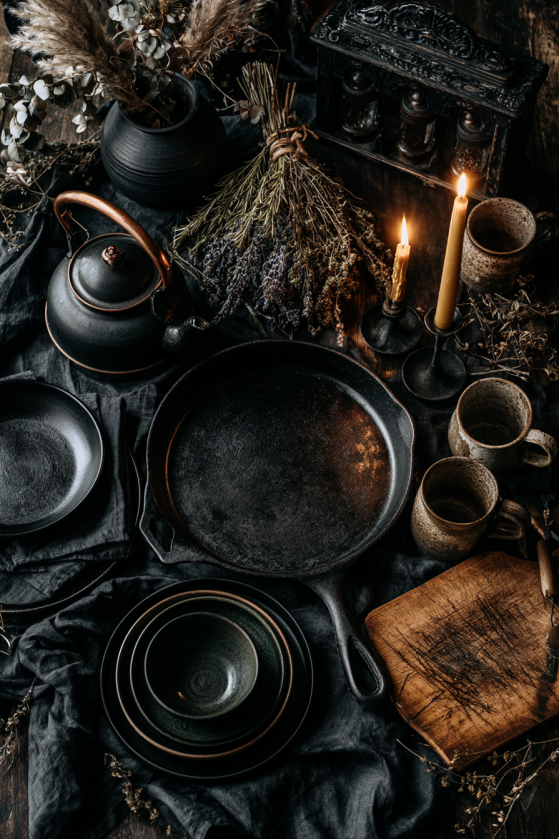
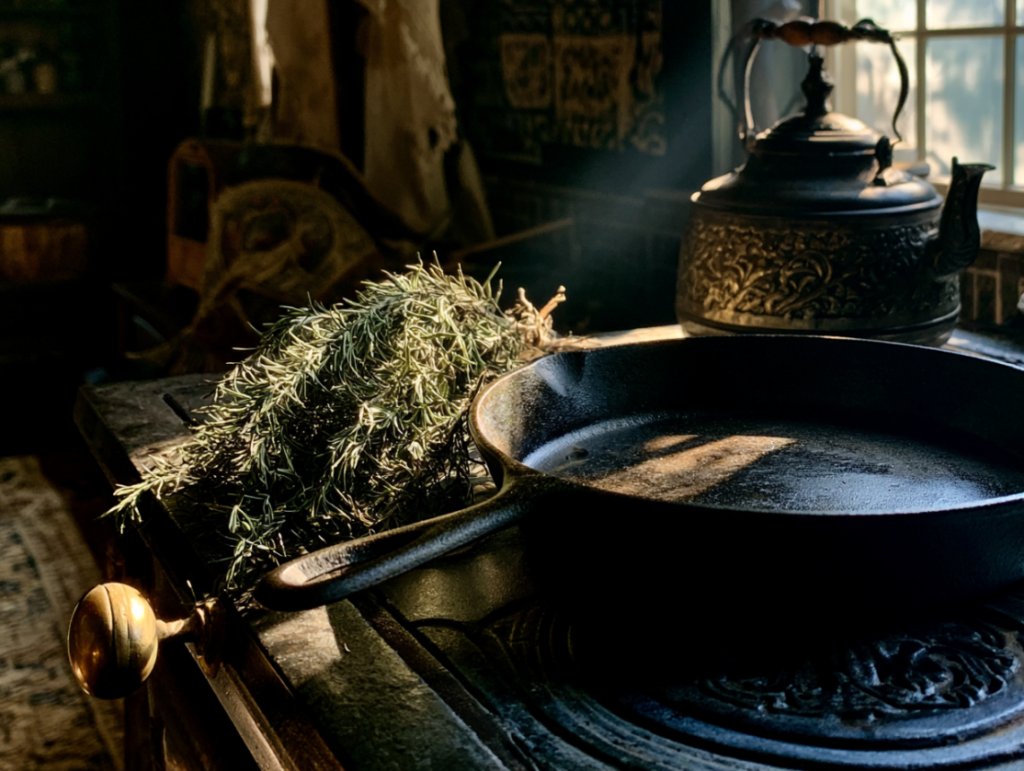
    Nothing grounds a dark cottagecore kitchen like cast iron. Heavy, dependable, quietly beautiful in the way only things with history can be. A good cast iron skillet develops character with every use — it’s seasoned by your cooking, not by a factory. Lodge makes legendary skillets that last generations. Place it on the stove even when it’s not in use. It belongs there.

    [AFFILIATE LINK: Lodge 12-Inch Cast Iron Skillet]

    2. Dark Ceramic Mixing Bowls

    Step away from stainless steel. Dark ceramics — in deep slate, matte black, or moody forest green — carry the handmade, earthy energy of cottagecore without sacrificing function. Look for a nesting set you can leave on the counter. They’re art when empty and joy when full of bread dough.

    3. Linen Tea Towels in Neutral Darks

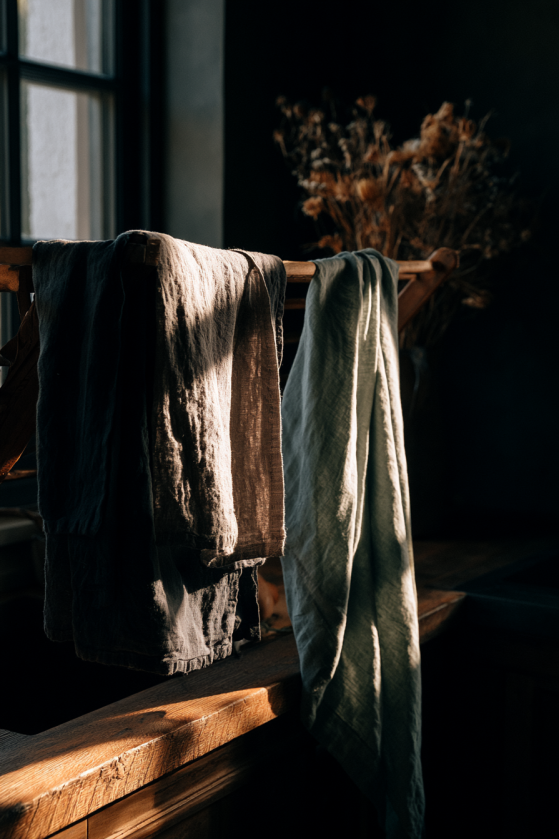
    Charcoal. Oatmeal. Dusty sage. Washed-linen tea towels drape over oven handles and fold over wooden drying racks in a way that makes the whole kitchen feel like a still life. They should look like they’ve been washed a hundred times and are better for it.

    [AFFILIATE LINK: Linen Tea Towel Set — Stonewashed]

    4. A Copper or Black Enamel Kettle

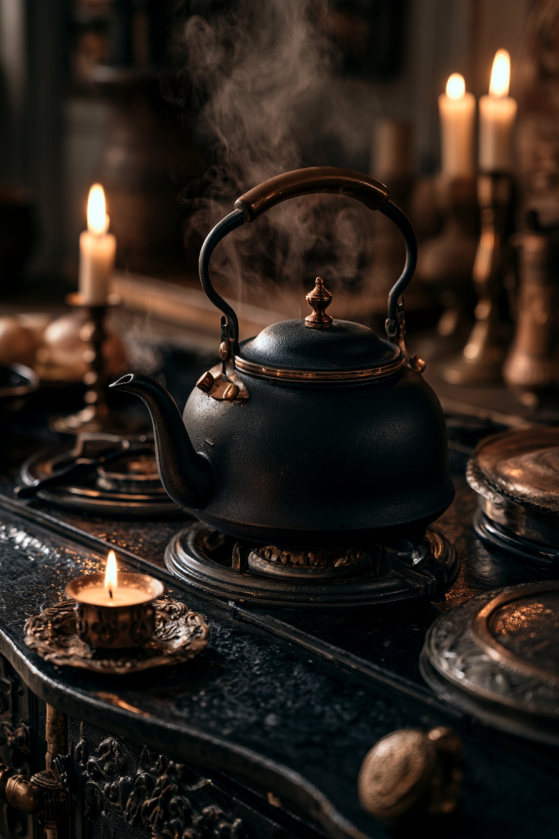
    There is something almost ceremonial about a beautiful kettle on the stove. A matte black enamel kettle or a hammered copper one catches the morning light differently than plastic will ever manage. Boil your water slowly. Let it be a ritual.

    [AFFILIATE LINK: Matte Black Enamel Stovetop Kettle]

    5. Dried Herb Bundles

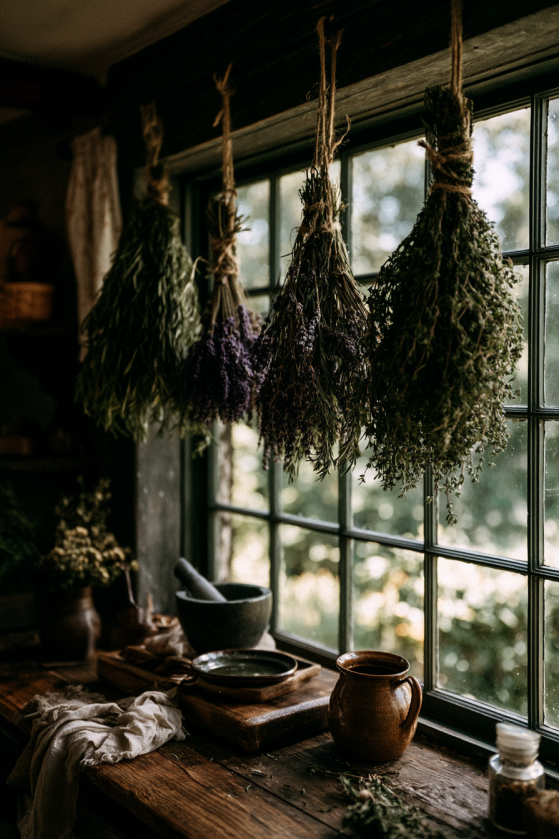
    This is both decor and pantry. Hang dried rosemary, lavender, thyme, and sage bundles from a ceiling hook or a wooden dowel above the kitchen window. They perfume the air with something ancient and practical. You can forage your own or buy beautiful pre-dried bundles from herbal suppliers on Etsy.

    6. Beeswax Taper Candles and Simple Holders

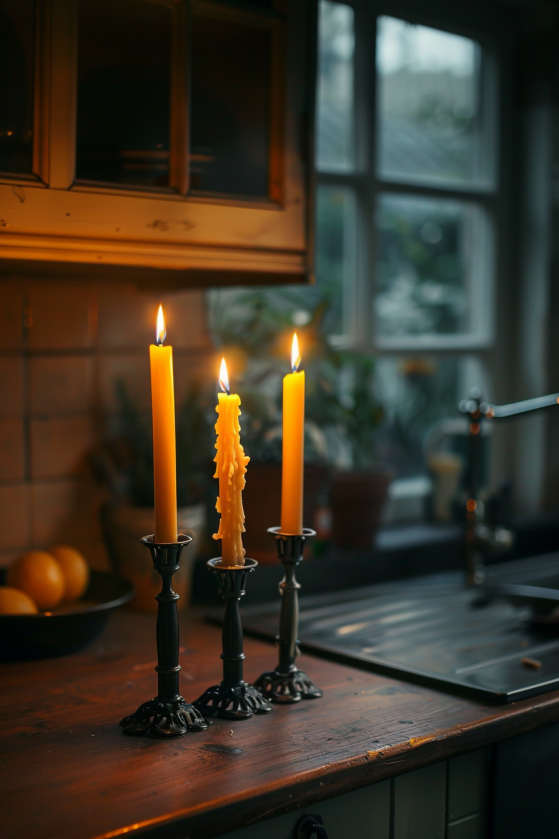
    Dark cottagecore kitchens are not fluorescent. In the evening — even just for dinner prep — light a taper candle. Beeswax burns cleaner and smells faintly of honey and wildflowers. Simple wrought-iron holders or turned wooden ones are all you need.

    [AFFILIATE LINK: Beeswax Taper Candles (set of 12)]

    7. A Wooden Cutting Board with Character

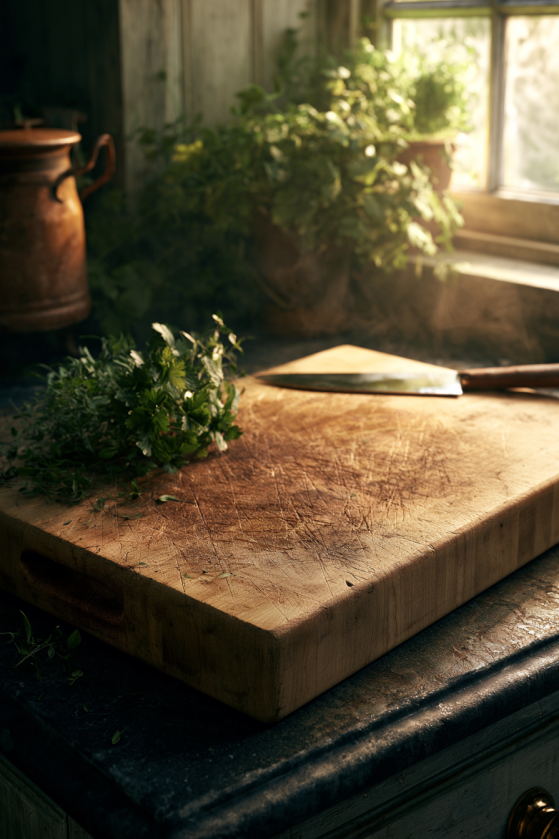
    Not a pristine end-grain showpiece. A wooden board with knife scars and oil stains and a story. Edge-grain maple or walnut boards develop a patina over years of honest use. Let them. Boos Blocks are the gold standard for kitchen boards that last decades.

    [AFFILIATE LINK: John Boos Maple Cutting Board]

    8. Stoneware Mugs in Earth Tones

    The mug matters. Thick-walled stoneware in forest green, ash grey, or speckled cream holds heat longer and feels grounding in your hands in a way that thin porcelain never will. Small pottery studios and Etsy ceramicists make the most beautiful ones — each slightly imperfect, each unmistakably handmade.

    [AFFILIATE LINK: Stoneware Mug Set — Earthy Tones]

    9. A Dark-Painted or Distressed Spice Rack

    Bring your spice collection out of the cabinet and onto the wall. A small black-painted wooden spice rack hung beside the stove, filled with glass jars and small tins, becomes one of the most atmospheric features in a dark cottagecore kitchen. Label with chalkboard tags or hand-stamped kraft labels.

    10. Fresh or Dried Flowers in a Dark Vessel

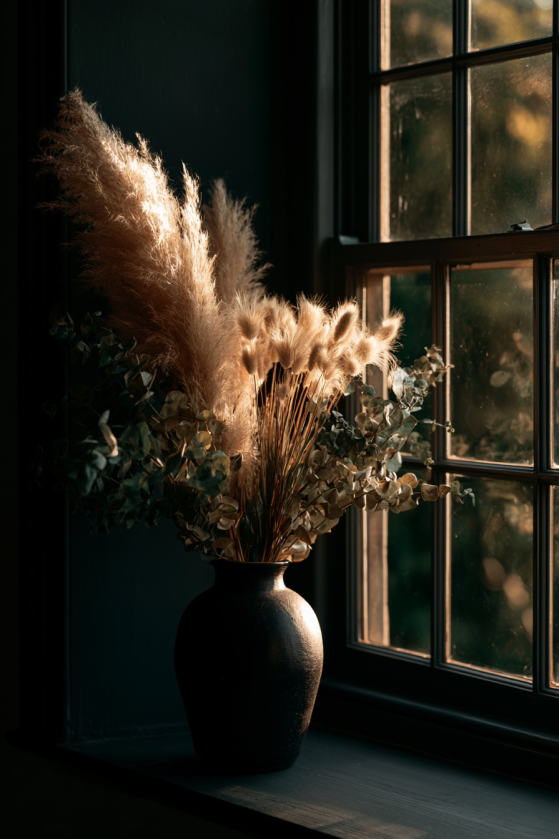
    A small bunch of wildflowers in a dark stoneware vase. A cluster of dried pampas grass in a black enamel pitcher. Single stems of eucalyptus in a narrow terracotta pot with a black glaze. Wherever you put them, flowers bring the garden inside and soften the whole aesthetic into something breathing and alive.

    Pulling It All Together

    The dark cottagecore kitchen isn’t built in a day — it’s assembled slowly, deliberately, the way a good stock is made. One beautiful object at a time. One ritual at a time.

    Start with the cast iron and the candles. Let the rest come.

  • How to Style a Gothic Reading Nook in 7 Steps (Dark Aesthetic Interior Guide)

    Disclosure: This post contains affiliate links. If you purchase through our links, we may earn a small commission at no extra cost to you. We only recommend things we genuinely love.

    Every house has a corner that wants to become something more.

    Maybe it’s the deep alcove beside the fireplace. Maybe it’s the window bay in the upstairs room where the light goes amber in the afternoons. Maybe it’s just a quiet patch of wall where something is waiting to be built.

    That corner wants to be a reading nook. A dark one.

    Not dark as in gloomy — dark as in intentional. Rich. Layered. The kind of space that wraps around you like an old wool coat and makes the rest of the world go quiet.

    Here is how to build it, step by step.

    Step 1: Choose a Corner That Has Potential for Shadow

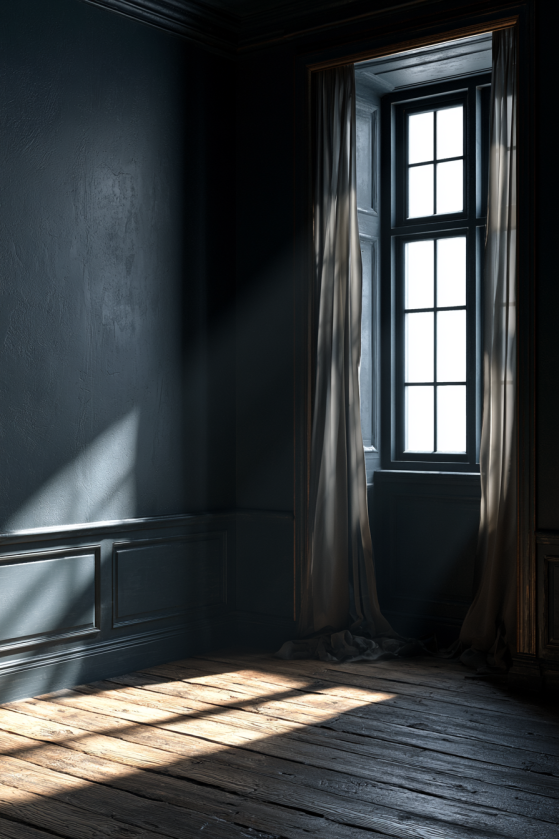
    Light is important in a reading nook — but so is the absence of it. Look for a corner that gets side light rather than overhead light. A window that faces north or catches afternoon shade. A wall nook where a single lamp can carve light dramatically from one direction only.

    Avoid spaces under harsh overhead lighting. You can always add warm light to a dark space. You can’t really subtract cold brightness from a too-bright one.

    Step 2: Anchor the Space with Dark-Painted Walls or a Rich Wallpaper

    If you can paint the reading nook differently from the rest of the room — do it. A single accent wall in deep charcoal, forest green, navy, or warm black creates an immediate sense of enclosure and drama.

    If you can’t paint (renting, or you want a softer commitment), consider a removable wallpaper in a botanical or gothic geometric pattern. Dark floral or arch-motif wallpapers are having a major moment and they dramatically elevate a small corner with minimal commitment.

    Step 3: Build the Shelf Layer

    A reading nook without shelves is just a seat. Shelves are what make it a nook.

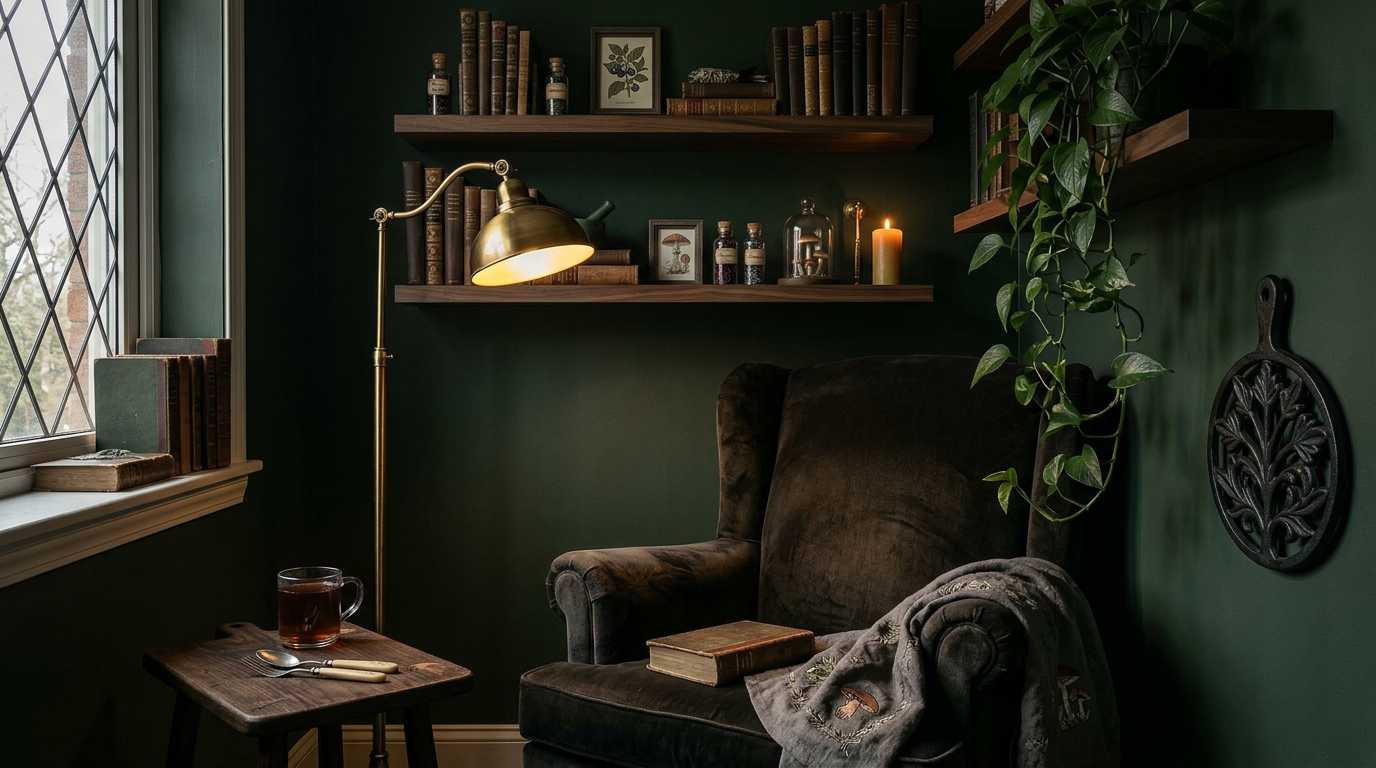
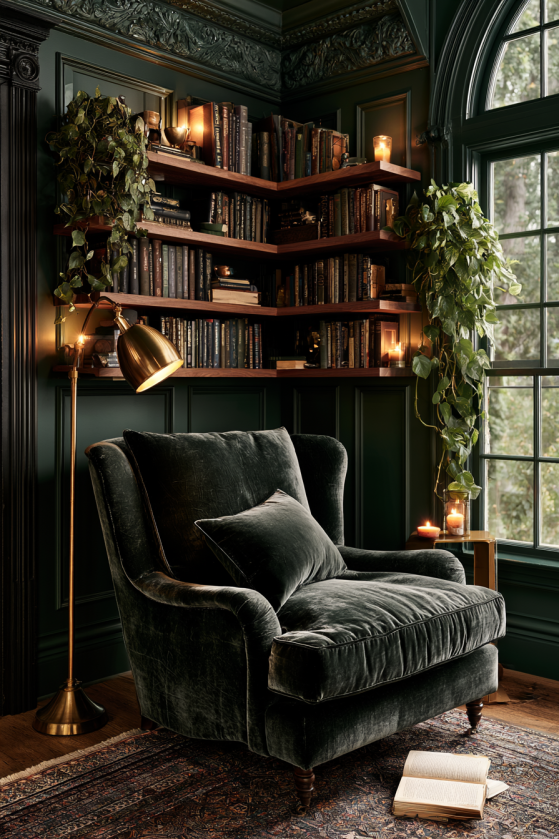
    Floating shelves in dark walnut or black-finished wood work beautifully. Stack them slightly asymmetrically — they don’t all need to be the same depth or height. Fill them with books spine-out, a few beautiful objects (a small framed print, a brass candle snuffer, a dark glass bottle), and at least one trailing plant.

    The shelves should feel like they’ve been collected over years, not assembled from one shopping cart.

    [AFFILIATE LINK: Floating Walnut Wall Shelves]

    Step 4: Choose Your Seating — Deep and Low

    The perfect reading nook seat is deep enough to curl into. Look for:

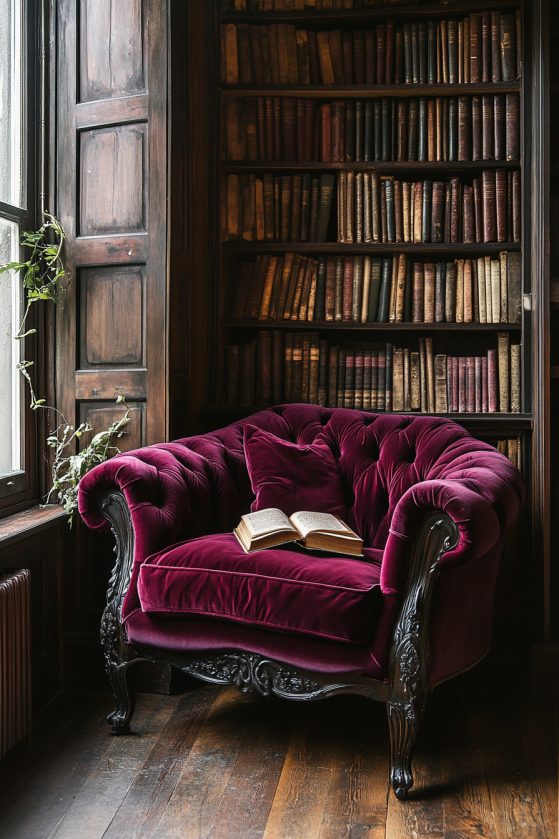
    • A low armchair with generous cushioning
    • A window seat with a thick cushion and bolster pillows
    • An oversized floor cushion or pouffe beside a low side table

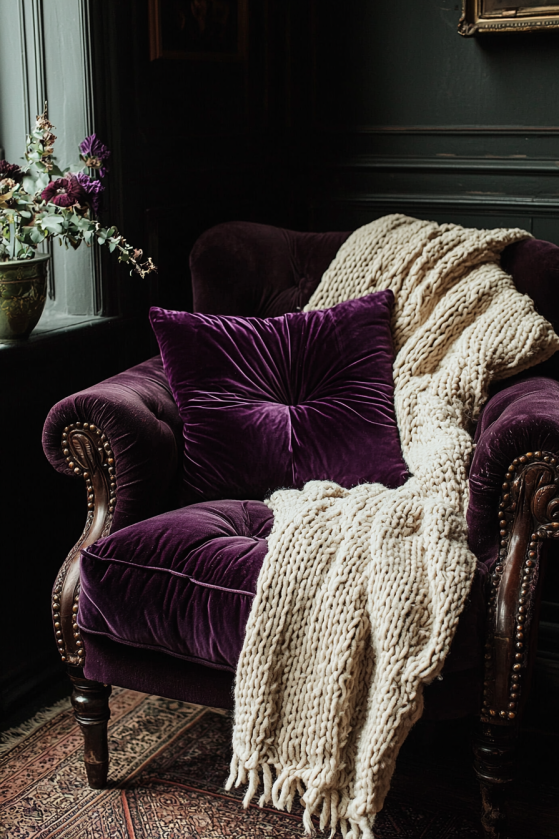
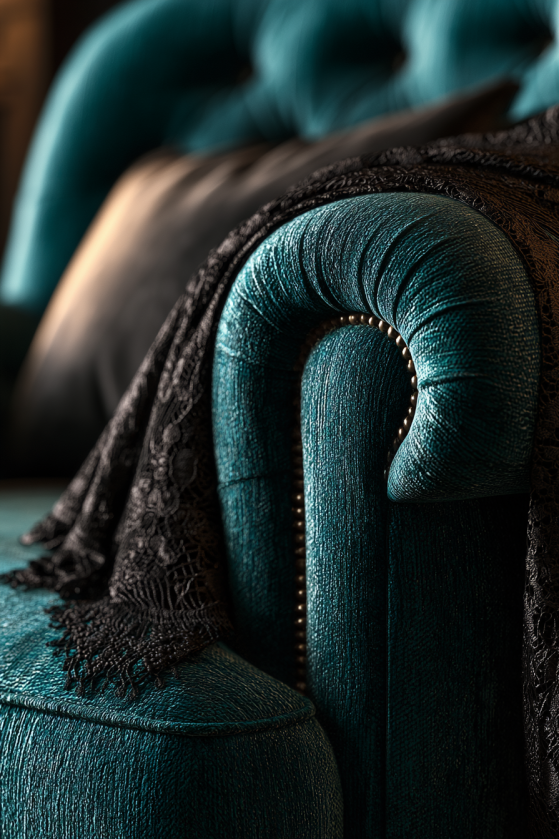
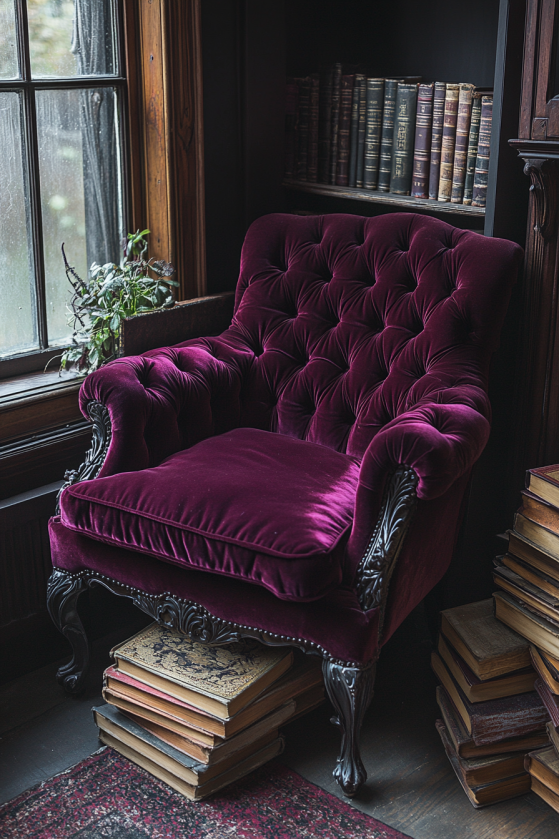
    Fabric matters here. Velvet, linen, or aged leather in muted, moody tones — bottle green, dusty plum, charcoal, rust — all work beautifully. Avoid synthetics that don’t age well. You want your nook to look better in three years than it does today.

    Step 5: Layer the Textiles

    One pillow is not a reading nook. You need:

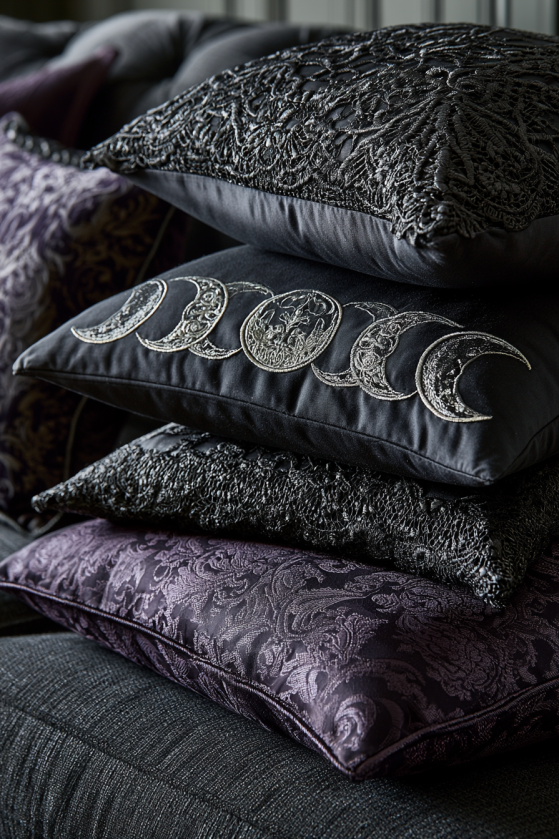
    • At least 2-3 throw pillows in different textures (velvet, knit, woven)
    • A throw blanket heavy enough to actually keep you warm
    • A rug beneath the chair if the floor is hard

    Don’t match everything perfectly. Gothic and dark cottagecore aesthetics reward layering — a velvet pillow beside a cable-knit throw beside a woven cushion is better than a matching set.

    [AFFILIATE LINK: Velvet Throw Pillow Covers — Deep Tones (set of 2)]

    [AFFILIATE LINK: Oversized Cable Knit Throw Blanket]

    Step 6: Build the Lighting System (Not Just One Lamp)

    The reading nook has two lighting modes: the reading light and the mood light.

    For reading: a clip-on or adjustable arm lamp positioned over your shoulder, bright enough to be practical without flooding the room.

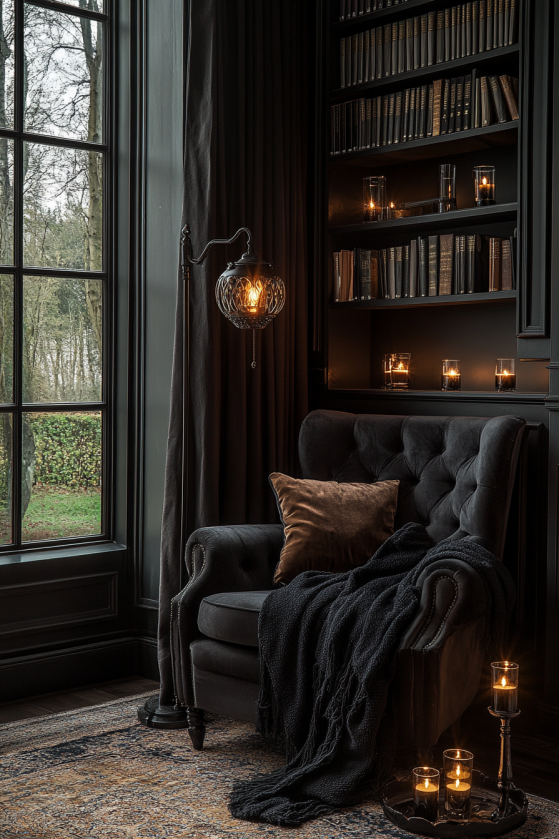
    For mood: warm amber fairy lights tucked along the shelves. A beeswax taper on the side table. Perhaps a small salt lamp or amber-glassed lantern in the corner.

    When you’re reading, you use the reading light. When you’re not — when you’re just sitting and existing and being — you use the mood lights and let the space do its work.

    [AFFILIATE LINK: Beeswax Pillar Candle + Wrought Iron Holder]

    [AFFILIATE LINK: Adjustable Clip-On LED Reading Lamp]

    Step 7: Add Life — Plants, Botanicals, and Natural Texture

    A reading nook that breathes is one with living things in it.

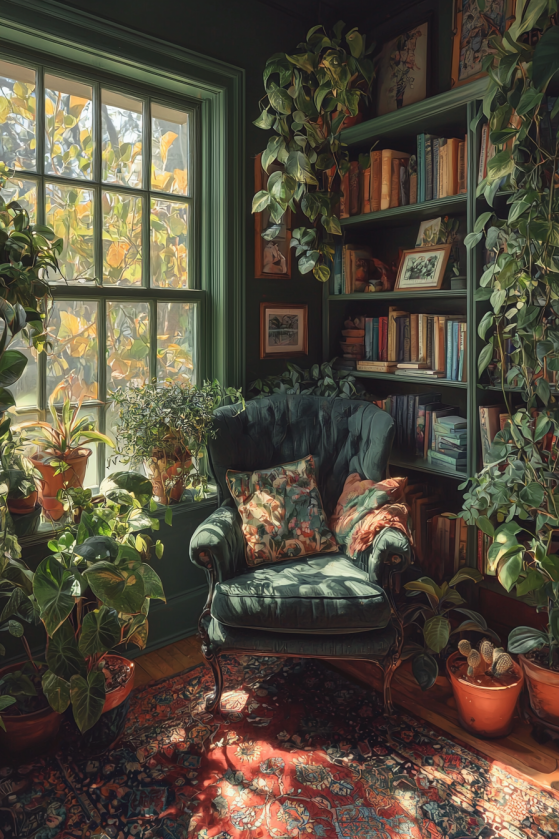
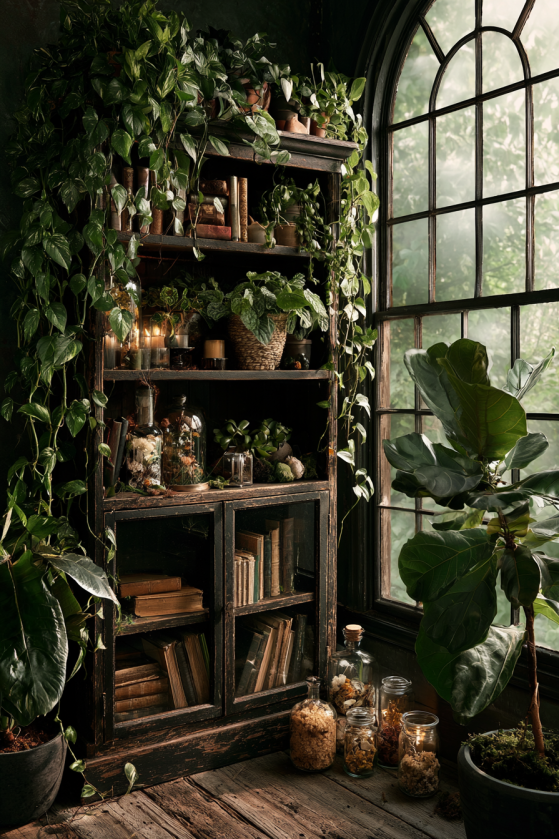
    A trailing pothos draped from a high shelf. A dark-leafed fiddle leaf fig in the corner. Dried botanicals in a glass apothecary jar on the lower shelf. A small pot of rosemary or thyme that fills the air with its particular warmth.

    Plants complete the space the way nothing else can. They turn a decorated corner into a living room.

    [AFFILIATE LINK: Trailing Pothos Plant (or Propagation Kit)]

    The Nook Is Ready. Now Go Read.

    You don’t need to do it all at once. Start with the wall color and the chair. Add the shelves. Let the textiles accumulate over time. Let the plants grow.

    A good reading nook takes time to become itself. Give it that time.